MiTAC at GTC 2026: Unveiling Servers with Unseen CPUs and Solidigm SSDs for AI
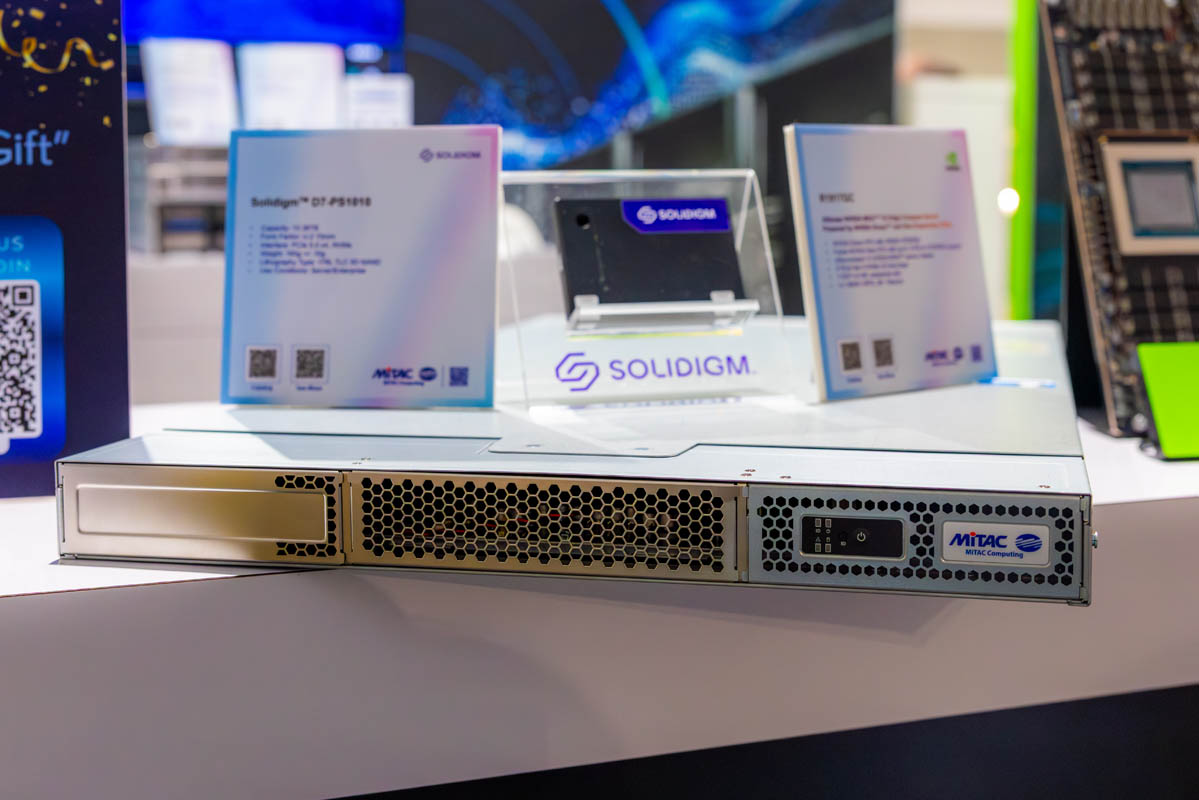
At NVIDIA GTC 2026, MiTAC captured industry attention by showcasing two new servers poised to redefine AI infrastructure capabilities. These systems stand out for integrating next-generation CPUs, previously unseen on the market, alongside powerful GPUs and Solidigm SSD storage units. The announcement underscores hardware manufacturers' commitment to delivering cutting-edge solutions for the growing demands of artificial intelligence workloads, particularly for Large Language Model inference and training.
MiTAC's presentation at GTC, a key event for innovation in computational acceleration, offers a glimpse into the future directions of data center hardware. For CTOs, DevOps leads, and infrastructure architects, the introduction of new server platforms is a significant indicator of the technological evolution required to manage increasingly complex and data-intensive AI models.
Technical Details and Implications for AI Workloads
The MiTAC servers presented integrate a strategic combination of components. The next-generation CPUs play a crucial role in managing general-purpose computing operations, workload orchestration, and data preparation for GPUs. While specific details of these CPUs remain undisclosed, their "next-gen" nature suggests significant improvements in core count, operating frequencies, and memory management capabilities—all fundamental elements for reducing latency and increasing overall system throughput.
GPUs, the beating heart of AI acceleration, work in synergy with CPUs to execute the complex mathematical operations required for LLM training and inference. VRAM capacity and memory bandwidth are critical parameters that determine the size of models that can be loaded and the speed at which operations are processed. The addition of high-performance Solidigm SSDs ensures fast and reliable access to datasets, minimizing I/O bottlenecks and supporting efficient data pipelines, which are essential for feeding GPUs with the necessary data without interruption.
The On-Premise Deployment Context
The introduction of such advanced servers is particularly relevant for organizations prioritizing on-premise or hybrid deployments. The choice of self-hosted infrastructures, like those offered by MiTAC, is often driven by the need to maintain full control over data, ensuring sovereignty and compliance with stringent regulations such as GDPR. Air-gapped environments, where external connectivity is limited or absent, benefit enormously from robust and autonomous hardware solutions.
Furthermore, Total Cost of Ownership (TCO) analysis plays a fundamental role. While the initial investment (CapEx) for on-premise hardware might be higher than initial cloud operational costs (OpEx), many companies find a more favorable TCO in the long run, especially for intensive and predictable AI workloads. The ability to customize hardware, optimize resources, and directly manage security are decisive factors for many enterprise realities. For those evaluating on-premise deployments, AI-RADAR offers analytical frameworks on /llm-onpremise to assess these trade-offs.
Future Prospects for AI Infrastructure
The continuous evolution of hardware, as demonstrated by MiTAC's innovations, is a fundamental pillar for the widespread development and adoption of artificial intelligence. The availability of servers with increasingly powerful CPUs and GPUs, supported by high-speed storage, allows addressing growing computational challenges, from training multimodal models to managing real-time inference for critical applications.
For technology decision-makers, monitoring these innovations is essential for planning future investments and building resilient and scalable AI infrastructures. The synergy between CPUs, GPUs, and storage is key to unlocking the full potential of LLMs and other AI applications, ensuring that companies can innovate while maintaining control, security, and cost-efficiency of their operations.





💬 Comments (0)
🔒 Log in or register to comment on articles.
No comments yet. Be the first to comment!