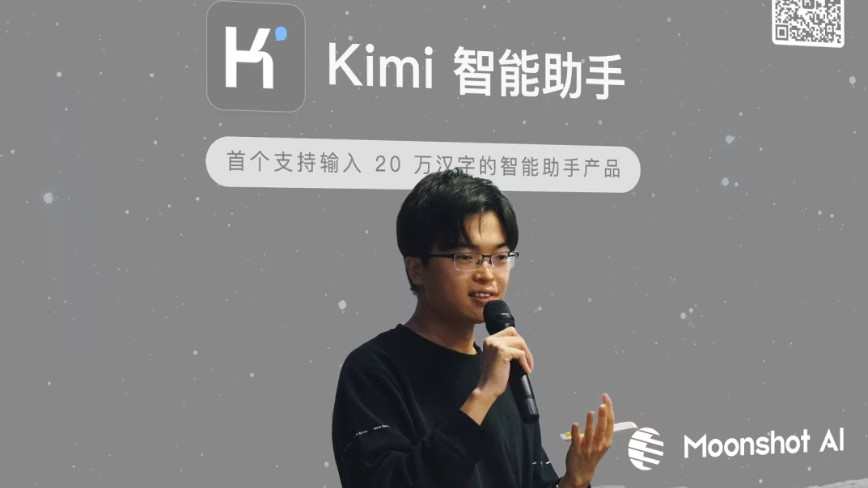
Kimi Developer Moonshot AI Heads for Hong Kong Listing: The VIE Structure Shift
Moonshot AI, the Beijing-based company behind the popular Kimi chatbot and valued at approximately $20 billion, has informed its shareholders of a significant strategic decision: the dismantling of its Variable Interest Entity (VIE) structure. This move paves the way for a potential public listing in Hong Kong, an event that could mark one of the most substantial IPOs in the Chinese artificial intelligence sector.
The choice to abandon the VIE structure is not coincidental; it comes after Beijing authorities made it clear that exemptions for such configurations were unlikely. For Moonshot AI, this transition represents a fundamental step to comply with regulatory directives and access new capital through Hong Kong's financial markets, thereby solidifying its position in the competitive global LLM landscape.
Understanding the VIE Structure and China's Regulatory Landscape
Variable Interest Entity structures have for years been a crucial mechanism for Chinese companies seeking to attract foreign investment and list on international markets, circumventing restrictions on foreign ownership in strategic sectors. Through complex contractual agreements, VIEs allow foreign investors to exert economic control over a Chinese company without directly owning its shares, thus bypassing local regulations.
However, in recent years, the Chinese government has intensified its scrutiny of these structures, prompting many companies to reconsider their approach. The growing emphasis on data sovereignty and national security has led to a tightening of rules, making VIEs less attractive and riskier for companies seeking long-term stability and compliance. Moonshot AI's decision reflects this general trend, highlighting the regulatory pressure faced by Chinese tech companies.
Implications for the Chinese AI Sector
Moonshot AI's potential listing in Hong Kong, following the dismantling of its VIE structure, sends a clear signal to the global market and the Chinese AI sector. It demonstrates companies' willingness to adapt to an evolving regulatory environment while simultaneously seeking growth and funding opportunities. For the Chinese AI sector, particularly LLM developers, this could indicate a growing preference for domestic or regional listings over international ones, such as those in the United States, which have become more complex due to geopolitical tensions.
This evolution might also influence deployment decisions and investment strategies for companies operating with LLMs. While some may continue to explore cloud options for their flexibility, others, especially those with stringent data sovereignty requirements or operating in air-gapped environments, might strengthen their commitment to self-hosted and on-premise solutions. The need to balance capital access and regulatory compliance becomes a key factor in strategic planning.
Future Outlook for Moonshot AI and the Industry
With the Kimi chatbot, Moonshot AI has established itself as a significant player in the LLM landscape, offering competitive capabilities in a rapidly expanding market. The transition towards a Hong Kong listing could provide the company with the necessary capital to accelerate the development of its models, invest in hardware infrastructure for inference and training, and expand its reach.
The success of this IPO will be closely watched by other Chinese AI startups and international investors, serving as a potential model for future market operations. In an era where data control and regulatory compliance are paramount, the ability of companies like Moonshot AI to navigate these complex scenarios while maintaining innovation will be crucial for their growth and for the overall direction of the artificial intelligence industry.





💬 Comments (0)
🔒 Log in or register to comment on articles.
No comments yet. Be the first to comment!