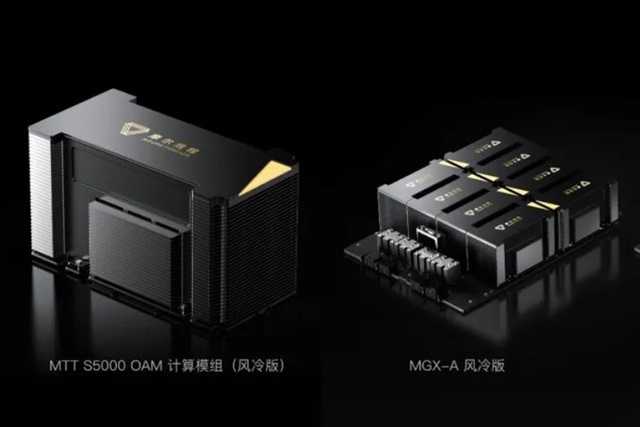
Moore Threads and Lightwheel.ai: A Step Towards Technological Autonomy
Moore Threads, an emerging player in the Chinese GPU manufacturing landscape, has announced the construction of a complete embodied AI stack, entirely made in China. This initiative, which involves collaboration with Lightwheel.ai, is part of a global context of increasing attention to technological sovereignty and the ability to internally develop and control critical artificial intelligence infrastructures.
The project by Moore Threads and Lightwheel.ai is not limited to the production of individual components but aims for vertical integration that encompasses the entire ecosystem, from underlying hardware to software frameworks and AI models. This holistic approach is crucial for ensuring not only performance but also security and compliance with local regulations, aspects that are increasingly relevant for companies and institutions.
Understanding "Embodied AI Stacks"
The concept of an "embodied AI stack" refers to an integrated set of hardware and software technologies that enable artificial intelligence systems to interact with the physical world, often through robotics or other physical devices. This includes not only the ability to process data and make decisions but also to perceive the environment, move, and manipulate objects in real-time. The complexity of such systems requires a robust and optimized architecture, where every component of the stack, from silicon to Large Language Models (LLM) and vision models, must work in perfect synergy.
Building a complete embodied AI stack involves addressing significant challenges, including optimizing performance for inference and training, managing VRAM and latency, and integrating various software modules. A "China-made" approach to this stack means that every layer, from GPUs to development frameworks, is designed and produced with the goal of reducing dependence on foreign technologies, ensuring tighter control over innovation and the supply chain.
Implications for On-Premise Deployment and Data Sovereignty
Moore Threads' initiative has profound implications for on-premise deployment strategies, especially for organizations operating in contexts where data sovereignty and regulatory compliance are absolute priorities. An entirely domestically developed "embodied AI stack" offers unprecedented control over the entire AI pipeline, from data collection to model execution, eliminating reliance on external cloud infrastructures or hardware with potential undocumented vulnerabilities.
For companies and institutions evaluating self-hosted alternatives for AI/LLM workloads, such a stack can represent a strategic solution. It allows sensitive data to be kept within operational boundaries, facilitating compliance with regulations like GDPR or local equivalents, and ensuring air-gapped environments when necessary. Although the initial investment (CapEx) for a bare metal deployment might be higher, the long-term Total Cost of Ownership (TCO), combined with the benefits in terms of security and control, can make this choice economically advantageous. For organizations evaluating the adoption of on-premise AI solutions, AI-RADAR offers analytical frameworks and insights on /llm-onpremise to navigate the complex trade-offs between costs, performance, and control.
Future Prospects and Strategic Trade-offs
The development of an entirely domestic embodied AI stack, such as the one undertaken by Moore Threads and Lightwheel.ai, represents a significant strategic move in the global technological landscape. This approach not only aims to strengthen a nation's technological independence but also stimulates internal innovation and the creation of a robust local AI ecosystem. However, building such a stack also entails considerable challenges, including the need to attract qualified talent, invest heavily in research and development, and compete with already mature and globally consolidated technological ecosystems.
The trade-offs between adopting global solutions and developing local alternatives are complex. Global solutions often offer a wide range of functionalities, extensive support, and a well-established developer community. In contrast, domestic solutions, while ensuring greater control and sovereignty, may require a longer maturation period and greater integration effort. The choice will ultimately depend on the strategic priorities of each organization, balancing performance, costs, security, and technological independence.








💬 Comments (0)
🔒 Log in or register to comment on articles.
No comments yet. Be the first to comment!