Musk Aims at the Heart of Semiconductor Production with TeraFab
Elon Musk, known for his ambitions spanning from automotive to space, now appears to be decisively targeting the core of the semiconductor industry. ASML CEO Peter Wennink has confirmed direct talks with Musk, revealing his "extreme seriousness" about a chipmaking megaproject named TeraFab. The initiative, which aims to build a facility in Texas with an estimated investment of $119 billion, marks a potential turning point in the global silicon production landscape.
This move comes amidst a growing demand for advanced chips, essential for fueling the explosion of artificial intelligence and Large Language Models (LLM). The ability to produce cutting-edge semiconductors has become a strategic priority for many nations and companies, given its importance for technological innovation and economic security.
The Context of Semiconductor Manufacturing
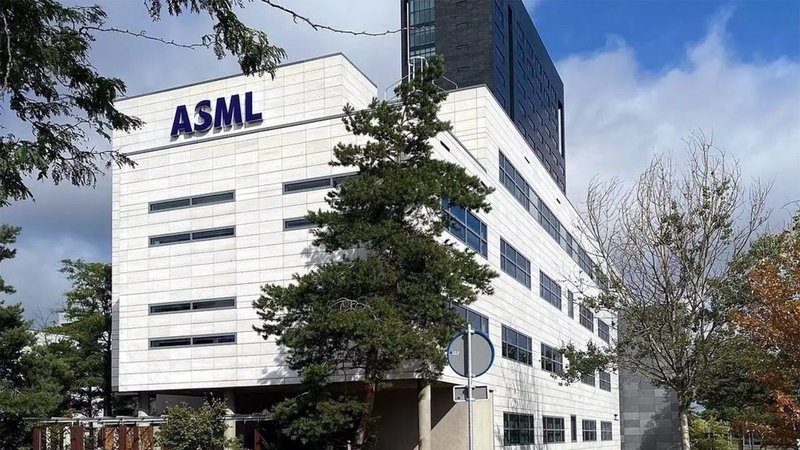
Semiconductor manufacturing is an extremely complex and capital-intensive undertaking. It requires massive investments in research and development, specialized infrastructure, and precision machinery, such as that provided by ASML, the world leader in EUV (Extreme Ultraviolet) lithography equipment. The creation of a new chip factory, or "fab," is a multi-year project involving considerable technological and financial risks.
Global reliance on a limited number of chip manufacturers has highlighted supply chain vulnerabilities, especially during periods of crisis. A project like TeraFab could help diversify production and strengthen resilience, offering new options for companies seeking stable silicon supplies for their AI infrastructures. For those evaluating on-premise deployment of LLMs and other AI workloads, hardware availability and predictability are critical factors.
Implications for AI Infrastructure and TCO
The impact of a new mega-fab on the availability and cost of AI hardware could be significant. Increased production capacity for advanced chips, particularly GPUs and AI-specific accelerators, could mitigate current supply chain bottlenecks. This, in turn, could influence the Total Cost of Ownership (TCO) for companies investing in self-hosted or hybrid AI infrastructures.
Data sovereignty and control over infrastructure are priorities for many organizations, especially in regulated sectors. The possibility of accessing more localized and diversified chip production could strengthen these strategies, reducing reliance on foreign suppliers and improving supply chain security. The availability of AI-specific silicon is crucial for optimizing inference and training performance, enabling companies to manage complex workloads with high VRAM and throughput requirements.
Future Prospects and Trade-offs
The TeraFab project, with its colossal investment, represents a long-term vision that will take years to fully materialize. Building a facility of this scale involves significant engineering, logistical, and workforce challenges. However, if successful, it could redefine the dynamics of the semiconductor market and, consequently, the artificial intelligence ecosystem.
For companies choosing between cloud-based AI deployment and self-hosted infrastructure, hardware availability and cost stability are decisive factors. AI-RADAR, for instance, offers analytical frameworks on /llm-onpremise to evaluate the trade-offs between these different strategies, considering aspects such as TCO, data sovereignty, and hardware specifications. Musk's initiative, while still in its early stages, underscores the strategic importance of chip production for the future of AI.





💬 Comments (0)
🔒 Log in or register to comment on articles.
No comments yet. Be the first to comment!