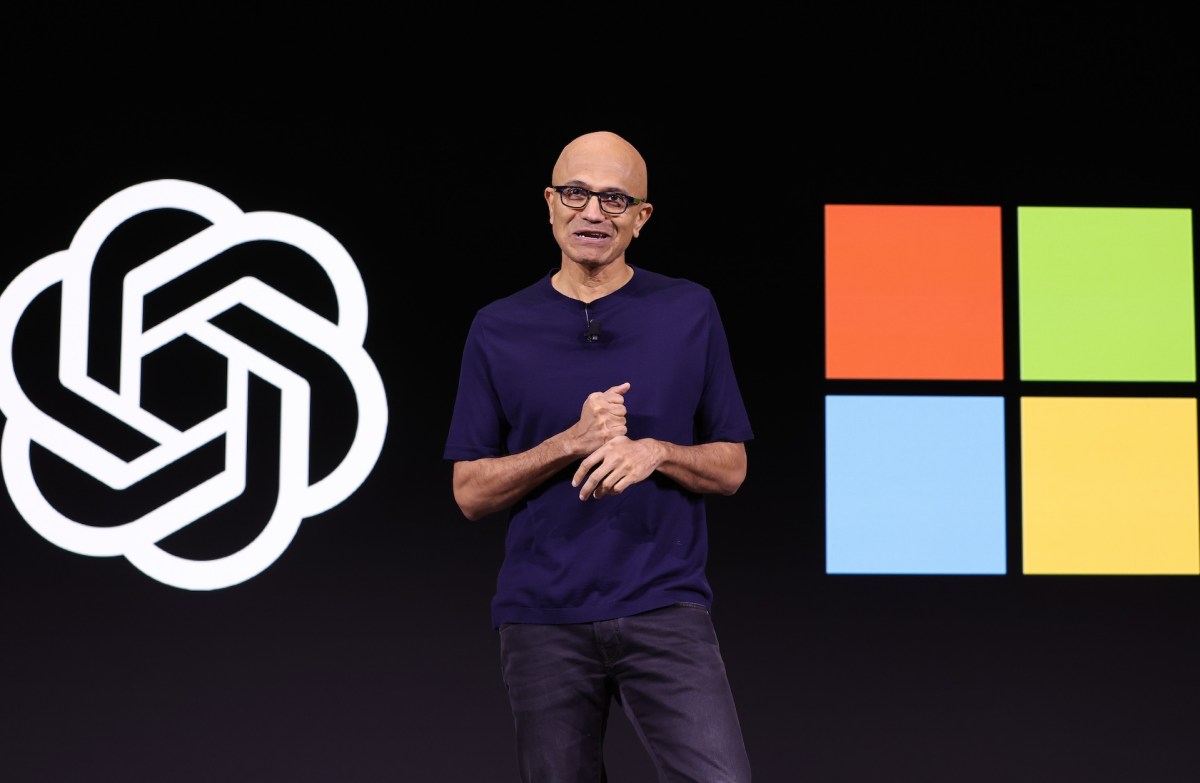
Satya Nadella sent a loud signal. In a company blog post published Monday, Microsoft’s CEO warned enterprises about the hidden dangers of using proprietary artificial intelligence models, explicitly naming those from Anthropic and, surprisingly, OpenAI. The statement tastes like paradox for anyone who remembers Microsoft bet over ten billion dollars on ChatGPT itself, but embedded within this warning is a far broader strategic game, poised to reshape the balance between cloud, on-premise deployment, and technological sovereignty.
The intervention is no bolt from the blue. For months, enterprises have been questioning the real cost of closed models: unpredictable usage fees, dependence on APIs that can change overnight, no auditing of processed data, and—not least—the fear of handing sensitive information to servers beyond their control. When a software giant that hosts half the world’s cloud workloads tells you to be careful with other people’s models, the message is clear: the AI battlefield is shifting toward infrastructure controllability.
So why would Nadella shoot himself in the foot? The apparent contradiction dissolves when you look at the multi-model strategy Microsoft has been quietly weaving. Azure AI Studio now offers access to open models like Llama, Mistral, and Jamba, alongside GPT-4. The goal is to become the neutral hub where any company can orchestrate inference, fine-tuning, and retrieval-augmented generation, provided it stays inside the Azure ecosystem. The warning thus serves to redirect enterprise attention from “which model to choose” to “where I run it and who controls my data.”
Who hears this alarm? Chiefly CISOs and compliance officers, who have fought for years to keep financial, healthcare, or industrial documents out of third-party hands. Nadella’s warning legitimizes their anxieties and offers cover to push for self-hosted or hybrid architectures, where inference happens on internally managed nodes. It’s no coincidence that on-premise serving frameworks—such as vLLM, TGI, or Ollama—are seeing explosive adoption just in the weeks following the post.
Then there’s the Total Cost of Ownership dimension. Closed-access models bill per token, with opaque dynamics that make large-scale spending hard to predict. Those who migrate to open models optimized with quantization (INT8 or FP16) and run them on dedicated hardware—say, a GPU cluster with enough VRAM to sustain wide context windows—can achieve cost predictability and manageable latency internally. Read between the lines, Nadella’s message is a confession: the “per-token” business model isn’t sustainable for everyone.
A thorny knot remains: the warning comes from the company that turned the OpenAI deal into a formidable competitive edge. Many analysts see Nadella’s move as a play to contain Anthropic’s rise more than a denunciation of systemic flaws in proprietary models. The timing is suspicious: Amazon just poured another 4 billion into Anthropic, and European antitrust regulators are tightening scrutiny of AI market concentration. Casting doubt on a competitor’s reliability without casting shadows on your own partner is a move as old as it is effective.
The deepest side effect, however, concerns those building independent inference stacks. Enterprises already operating in air-gapped environments, or those mandated by regulation (GDPR, banking rules) to keep data within national borders, receive an unintentional assist from Microsoft’s CEO: if even the cloud providers warn against closed models, the path toward self-hosted sovereignty looks smoother. For those evaluating on-premise deployment, AI-RADAR offers frameworks to analyze these trade-offs without rushing into poorly calibrated decisions.
The open question is whether the wave of caution will translate into concrete investment in dedicated infrastructure. GPUs for training and inference remain scarce, and upfront purchase costs stay high. Yet the direction is unequivocal: the market is learning to decouple the model from the vendor, preparing for an ecosystem in which data sovereignty will no longer be up for negotiation.



💬 Comments (0)
🔒 Log in or register to comment on articles.
No comments yet. Be the first to comment!