Nanya and the Expansion of Nvidia's AI Memory Offering
Nanya Technology, a well-established player in the memory sector, has announced its entry into Nvidia's dedicated artificial intelligence memory ecosystem, bringing LPDDR technology with it. This integration marks a significant evolution in the landscape of hardware options available for AI workloads, offering technical decision-makers new variables to consider when designing their infrastructures. Nanya's introduction of LPDDR expands the range of memory solutions that can be paired with Nvidia GPUs, a crucial aspect for optimizing performance and costs across various deployment scenarios.
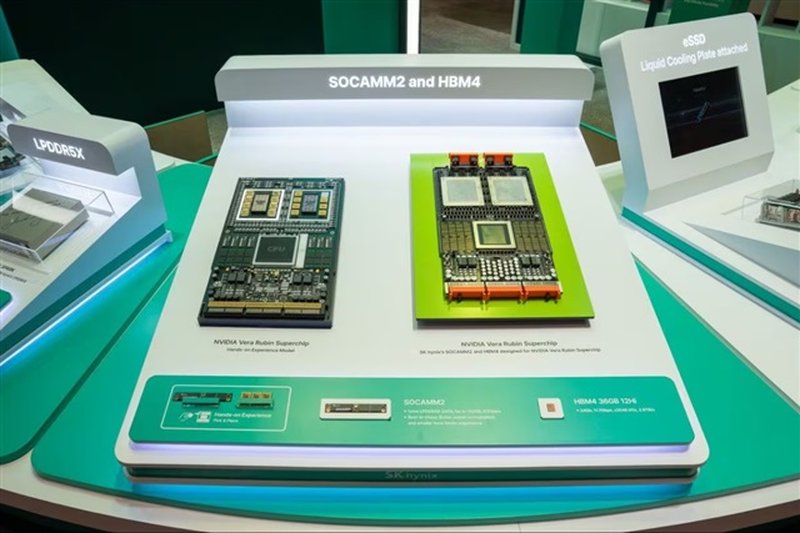
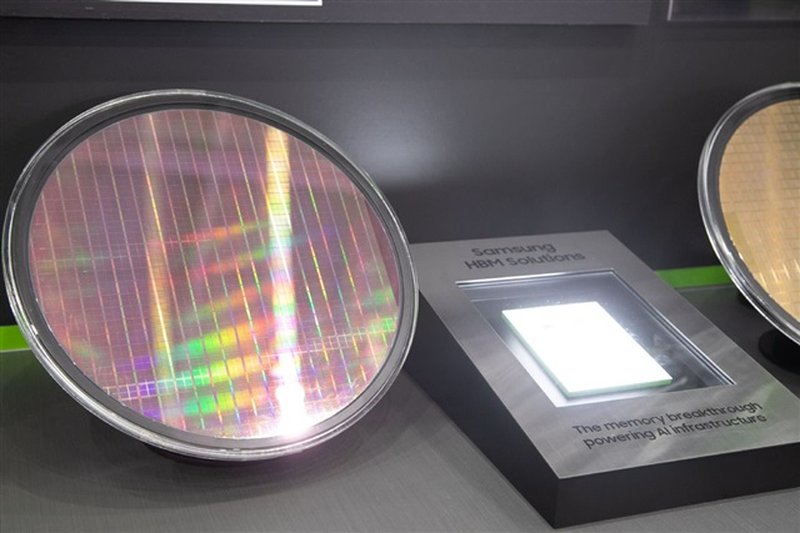
Traditionally, high-end Nvidia GPUs for AI have relied on HBM (High Bandwidth Memory) to ensure extremely high throughput, essential for training Large Language Models (LLM) and other compute-intensive applications. However, the integration of LPDDR suggests a strategy aimed at covering a broader range of needs, particularly those that balance performance, power consumption, and physical footprint. This diversification is fundamental in a market where AI computing demands extend from the data center to the network edge.
LPDDR: Characteristics and Implications for AI Workloads
LPDDR (Low Power Double Data Rate) memory is known for its high power efficiency and compact form factor, characteristics that have made it a prevalent choice in mobile devices and embedded systems. In the context of artificial intelligence, the adoption of LPDDR can translate into significant advantages for scenarios where power consumption and space are primary constraints. For example, AI deployments at the edge, compact servers for on-premise inference, or integrated solutions require components that minimize energy and physical footprint without excessively compromising computing capabilities.
While LPDDR may not match the extreme bandwidth offered by HBM memories used in flagship GPUs for intensive training, it can represent an optimal solution for inference of quantized LLMs or smaller models that require moderate memory throughput but with superior power efficiency. This technological choice allows for balancing cost per bit and power consumption, factors that directly impact the Total Cost of Ownership (TCO) of an AI infrastructure, especially for companies aiming for self-hosted or air-gapped deployments.
Considerations for On-Premise Deployments and Data Sovereignty
The expansion of memory options with LPDDR offers CTOs and infrastructure architects greater flexibility in designing on-premise AI solutions. The ability to use more efficient memory can reduce cooling and power requirements, lowering operational costs and simplifying integration into resource-constrained environments. This is particularly relevant for organizations prioritizing data sovereignty and compliance, choosing to keep AI workloads within their own infrastructural boundaries.
The choice between different memory types, such as LPDDR, GDDR, or HBM, becomes a strategic trade-off that goes beyond raw performance. It is necessary to carefully evaluate the type of AI model to be run, latency and throughput requirements, the power budget, and available space. For those evaluating on-premise deployments, AI-RADAR offers analytical frameworks on /llm-onpremise to assess the trade-offs between different hardware and software architectures, helping to make informed decisions that align technical capabilities with business objectives and operational constraints.
Future Prospects and the Importance of Hardware Diversification
Nanya's entry with LPDDR into the Nvidia AI ecosystem underscores a broader trend in the industry: the need for diversified hardware solutions to address the growing variety of artificial intelligence applications and requirements. There is no "one-size-fits-all" solution for all AI workloads; rather, the market is moving towards a more granular offering that allows companies to optimize their infrastructures for specific use cases.
This diversification is an advantage for enterprises seeking to maximize efficiency and minimize the TCO of their AI investments. The availability of LPDDR alongside options like HBM and GDDR enables technical teams to select the most suitable GPU and memory combination, whether for a supercomputer training complex models or an edge server for real-time inference with power constraints. The ability to choose the right memory is a key factor for the success of AI deployments, ensuring that resources are allocated efficiently to achieve stated goals.





💬 Comments (0)
🔒 Log in or register to comment on articles.
No comments yet. Be the first to comment!