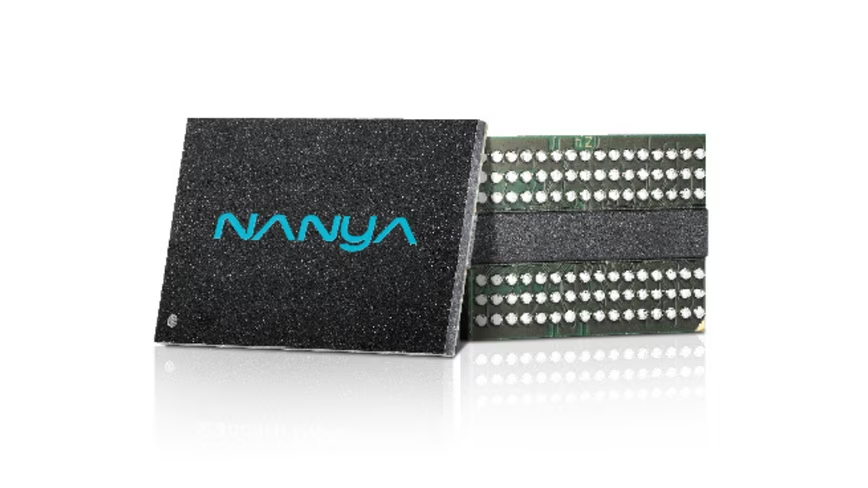
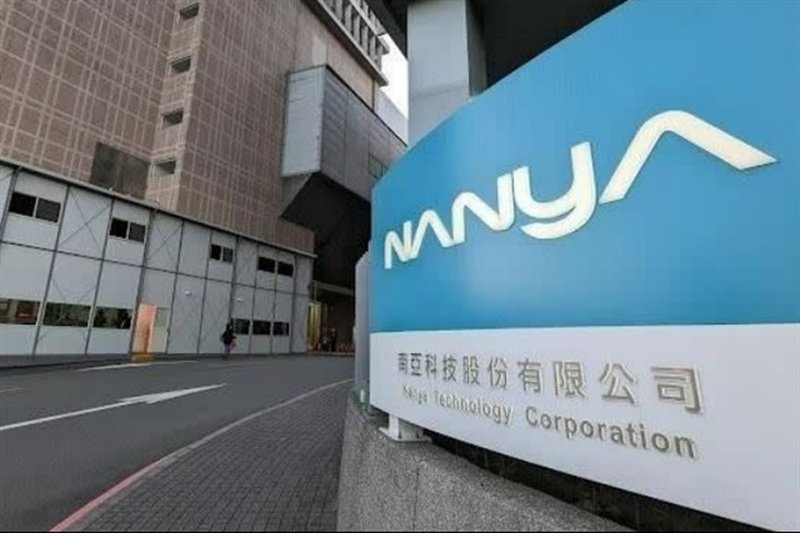
For years, Nanya Technology was the classic second-tier player in the DRAM market — the Taiwanese manufacturer that Samsung, SK Hynix, and Micron watched without much concern. Then the AI boom arrived and the math changed. Nanya has announced roughly $6 billion in investment for 2027, a race to expand capacity and wedge itself into a memory shortage that is throttling data center scalability.
The prize is high-bandwidth memory (HBM), which has become the new black gold of artificial intelligence. Nvidia GPUs and competing accelerators devour HBM3e, and demand is growing far faster than the supply that the three incumbents can deliver. Nanya, which until yesterday contented itself with niches and modest volumes, now sees an opening: the structural mismatch between production capacity and actual need is so wide that it justifies a dimensional leap that, for a company of its size, amounts to a refoundation.
The deep analysis here is less about Nanya itself than about the signal this move sends. For decades the memory market was a ruthless oligopoly, with towering barriers to entry and synchronized investment cycles designed to crush newcomers. AI is shattering that pattern. The hunger for memory is so violent that it makes entry attractive for traditionally marginal players, altering incentives. If Nanya manages to carve out a meaningful slice, the second-order effect would be greater supply diversification, which helps tamp down the price spikes that today strangle on-premise and private cloud deployments. For those building local infrastructure for LLMs, having a credible third or fourth HBM supplier means reducing dependence on a handful of giants and, potentially, lowering the Total Cost of Ownership of hardware.
The third-order consequences are even more structural. Nanya’s huge capital injection could accelerate a restructuring of the entire supply chain: if AI demand persists, other niche manufacturers might follow, fragmenting a market that was until now firmly held by the top three. But there is a flip side. The risk of a mid-term overcapacity is concrete: if today’s memory hunger stabilizes or if optimized inference technologies reduce VRAM needs, those massive investments would become a sunk cost. Samsung and Micron, for their part, could retaliate with a pre-emptive price war to suffocate the challenger.
In any case, Nanya’s bet certifies that the AI boom is no ephemeral phenomenon for the hardware supply chain. It is rewriting industrial hierarchies, opening spaces that previously did not exist. For those evaluating on-premise, the message is twofold: on one hand, memory supply could expand, easing bottlenecks; on the other, the investment cycle becomes more unpredictable, and with it cost planning. Anyone who bet everything on the stability of the DRAM cartel will have to update their models.






💬 Comments (0)
🔒 Log in or register to comment on articles.
No comments yet. Be the first to comment!