
Rising Tensions in Nashville: A Local Conflict with Global Repercussions
In Nashville, a local dispute is escalating, potentially impacting the global AI infrastructure landscape. At the heart of the conflict is an AI data center and concerns raised by an adjacent zoo, which have quickly garnered significant community attention. The issue gained widespread visibility through a petition that has surpassed 330,000 signatures and the involvement of renowned artist Brad Paisley, who has joined the cause.
This mobilization has prompted Nashville authorities to consider implementing a sweeping ban on hyperscale data centers. Such an initiative, if enacted, would set a significant precedent, reflecting a growing public sensitivity towards the environmental and social impact of large technological infrastructures, particularly those dedicated to intensive AI workloads.
The Hyperscale Context and Implications for AI Infrastructure
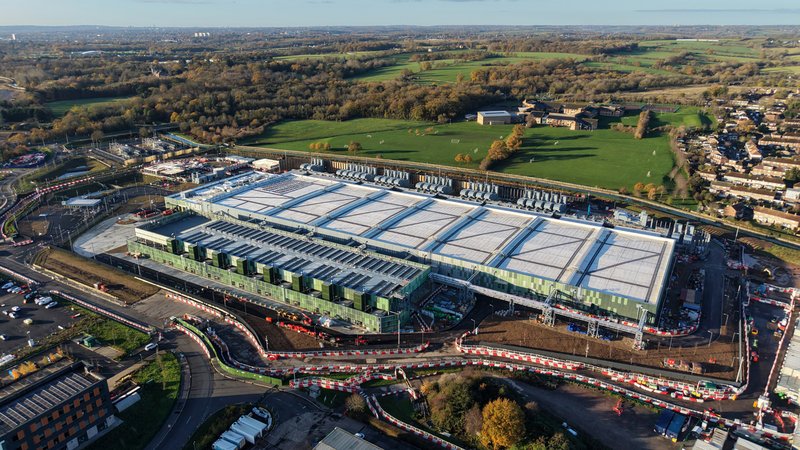
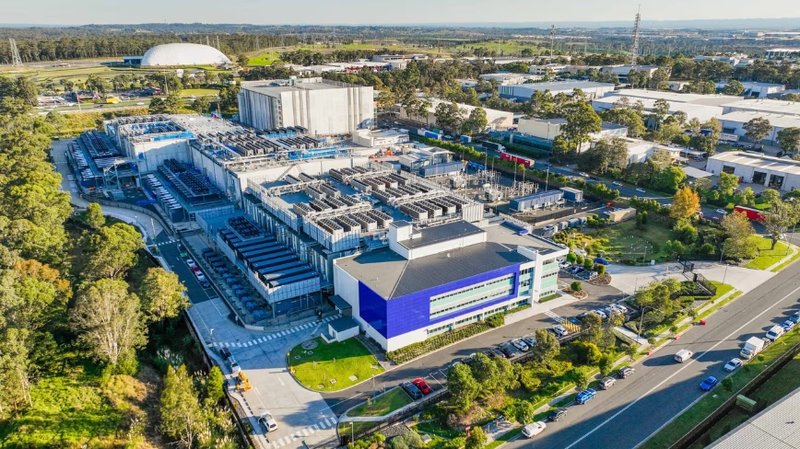
Hyperscale data centers are facilities designed to host thousands of servers, offering massive computing and storage capabilities essential for training and inference of Large Language Models (LLM) and other complex AI workloads. However, their operation entails extremely high energy consumption and often significant heat and noise emissions, factors that can create friction with surrounding communities.
Nashville's potential ban on such facilities underscores a growing trend: the evaluation of AI infrastructure is no longer limited to technical metrics like throughput or latency but increasingly includes environmental, social, and local acceptance considerations. This scenario could accelerate the search for alternatives to large-scale deployments, prompting companies to reconsider the architecture of their AI pipelines.
Data Sovereignty and TCO: The On-Premise Alternative
Facing restrictions on hyperscale data centers, organizations may lean more decisively towards on-premise or hybrid deployment models. Adopting a self-hosted infrastructure offers tangible benefits in terms of data sovereignty, allowing direct control over the location and management of sensitive information—a crucial aspect for regulatory compliance (e.g., GDPR) and air-gapped environments.
From a Total Cost of Ownership (TCO) perspective, on-premise deployment requires a higher initial investment (CapEx) for acquiring specific hardware, such as GPUs with high VRAM (e.g., A100 80GB or H100 SXM5) and adequate cooling systems. However, it can offer more predictable operational costs (OpEx) in the long term and greater energy efficiency if the infrastructure is optimized for specific workloads. For those evaluating on-premise deployments, complex trade-offs exist, which AI-RADAR explores in detail on /llm-onpremise, providing analytical frameworks to compare different options.
Future Perspectives for AI Deployment
The situation in Nashville is a clear indicator of how AI deployment decisions are becoming increasingly complex, transcending mere technological choices. Companies developing or utilizing LLMs and other AI applications must consider not only performance and costs but also the environmental impact, sustainability, and social acceptance of their infrastructures.
This context drives a shift towards more distributed solutions, edge computing, or smaller-scale data centers, integrated more harmoniously into urban and environmental fabrics. The ability to balance intensive computing needs with civic and environmental responsibilities will become a distinguishing factor for the success and sustainability of AI projects in the near future.







💬 Comments (0)
🔒 Log in or register to comment on articles.
No comments yet. Be the first to comment!