
The Era of Autonomous Earth Observation: NAVI-Orbital Redefines Limits
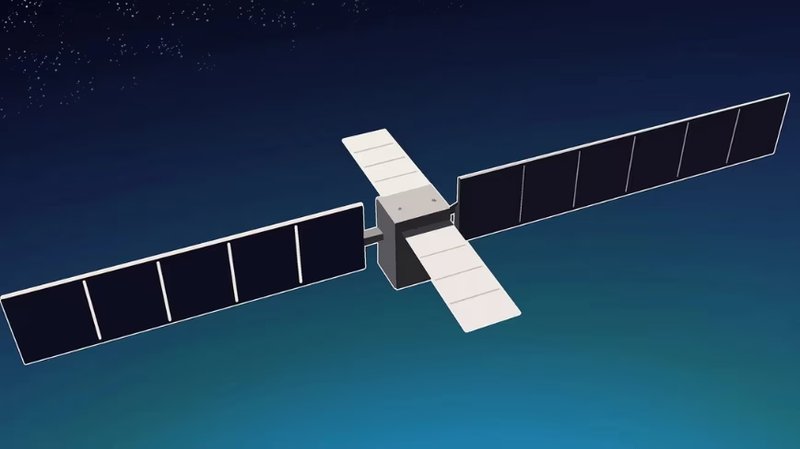
The increasing volume of data generated by Earth observation systems is rapidly outpacing downlink bandwidth and human processing capabilities. This discrepancy creates a widening gap between onboard data collection and the availability of actionable intelligence on the ground. In this context, NAVI-Orbital emerges as an innovative software system designed to operate on a Low Earth Orbit (LEO) spacecraft.
On April 16, 2026, NAVI-Orbital achieved a significant milestone, performing the first in-orbit demonstration of a vision-language model capable of autonomous multi-modal inference entirely onboard. This represents a crucial step towards resolving the challenges associated with space data management, opening new perspectives for the efficiency and timeliness of observation operations.
Technical Architecture and System Capabilities
The core of NAVI-Orbital is a local vision-language model, based on Gemma 3, which enables a range of advanced functionalities. The model can autonomously classify each captured scene, produce a detailed text description of its content and the relationships between its features, and even respond to operator follow-up requests through natural language dialogue. This intuitive interaction replaces traditional command sequences, significantly simplifying system re-tasking via plain-English prompts.
NAVI-Orbital's orchestration is managed by a graph-based state machine, implemented with LangGraph, which coordinates dedicated agents for detection and dialogue. Processing occurs entirely onboard the satellite, leveraging hardware-accelerated GPU inference on satellite-class edge computers. It is important to note that the system operates without the need for specific fine-tuning for the flight instrument, demonstrating the robustness and versatility of the model in a “zero-shot” context.
Implications for Edge Deployment and Data Sovereignty
The results achieved by NAVI-Orbital are promising. Ground benchmarking recorded an 88.16% accuracy on a 7,960-image dataset (AID benchmark), complemented by Flatsat validation and live in-orbit captures of newly acquired, previously unseen Earth imagery, including uncorrected YAM-9 imagery, processed directly onboard. This data confirms the feasibility of running foundation models on resource-constrained edge hardware.
The primary goal of this approach is to invert the conventional “acquire-then-downlink-everything” paradigm, which overloads downlink bandwidth. Through semantic compression of Earth observations directly in orbit, NAVI-Orbital drastically reduces the amount of data to be transmitted to the ground, sending only the most relevant and already processed information. This not only optimizes bandwidth usage but also accelerates decision-making, providing near real-time intelligence. For organizations evaluating on-premise or edge deployments, solutions like NAVI-Orbital highlight the trade-offs between local processing capabilities and bandwidth requirements, with direct implications for data sovereignty and latency.
Future Prospects and Strategic Considerations
The NAVI-Orbital demonstration represents a turning point for Earth observation and the application of Large Language Models in extreme environments. The ability to process complex data directly at the source, on hardware with energy and computational constraints, paves the way for a new generation of autonomous systems, not only in space but also in other critical edge applications, such as remote surveillance or industrial automation.
For CTOs, DevOps leads, and infrastructure architects, this development underscores the importance of considering edge processing as a strategic component for AI/LLM workloads. The possibility of reducing reliance on constant connectivity and maintaining control over sensitive data directly at the point of acquisition offers significant advantages in terms of TCO, compliance, and security. For those evaluating on-premise deployments, AI-RADAR offers analytical frameworks on /llm-onpremise to assess trade-offs and optimize infrastructure decisions in these emerging scenarios.










💬 Comments (0)
🔒 Log in or register to comment on articles.
No comments yet. Be the first to comment!