
There's a long-circulating, hard-to-prove idea that explains a lot about this industry: Anthropic and OpenAI may lack any truly secret algorithmic sauce. Their competitive moat could simply be scale — models with parameter counts so out of reach that any replication attempt becomes futile. Rumors pin Opus at 5 trillion parameters and Mythos/Fable at possibly 10 trillion, while open models remained stuck below the 1-trillion mark. Only recently has that ceiling been broken by DeepSeek V4 and the new Kimi K3, and the perceived quality jump coincides with the size increase.
If this reading is correct, OpenAI and Anthropic’s dominance rests on a purely infrastructural advantage: access to hyperscalable compute clusters and the capital to saturate them. That’s not comforting for organizations evaluating on-premise deployment. A 5-trillion-parameter LLM, even for inference, demands VRAM and memory bandwidth that only make sense today in the cloud or in datacenters with a few hundred top-tier nodes. Outside that hardware oligopoly, direct adoption remains a mirage — at least until techniques like quantization and efficient fine-tuning shrink the footprint radically.
Yet the picture is shifting. Open models surpassing one trillion parameters aren’t just a symbolic milestone; they break a psychological and industrial barrier. It demonstrates that cutting-edge hardware, now accessible to players like DeepSeek, can be assembled outside the three major Western cloud providers. For enterprises weighing a self-hosted LLM, the message is twofold: data sovereignty becomes thinkable even for frontier models, but the TCO of a cluster capable of running inference at this scale remains prohibitive without obsessive optimization and efficient serving pipelines.
A subtler implication lurks beneath. If the moat is pure compute, then the real “secret sauce” might lie elsewhere: in proprietary data, curation workflows, and the feedback cycles used to align these models. Scale and data are two sides of the same coin, and managing training pipelines across tens of thousands of GPUs is non-trivial know-how. Parameter democratization does not automatically yield capability democratization. It may instead shift competition from pure model architecture toward data engineering and deployment tooling — a battleground where on-premise still has cards to play.
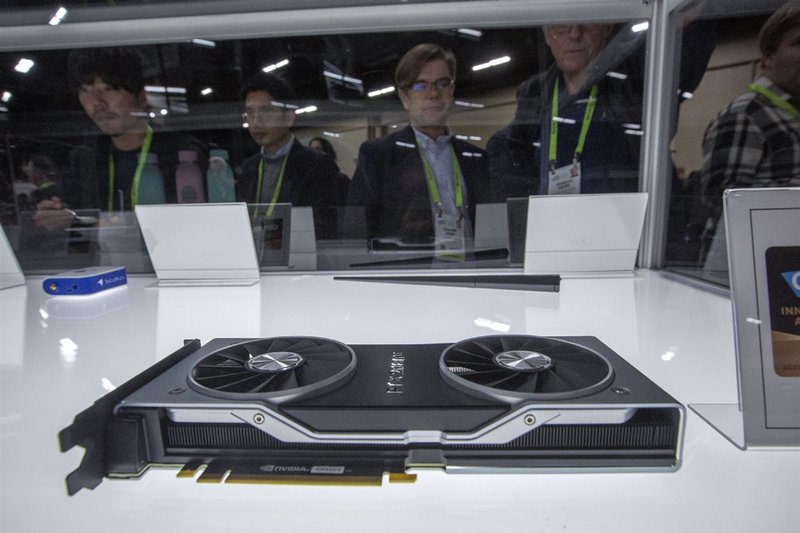
The losers in this scenario are labs that bet solely on smaller models, hoping efficiency would bridge the gap. If the empirical “more parameters = better performance” rule continues to hold, the market will reward those who can scale. The winners, however, are the hardware ecosystem: GPUs with ever-growing HBM memory, NVLink and InfiniBand interconnects, and everything that makes a 5-trillion-parameter model a manageable workload. For AI-RADAR readers, the real question isn’t whether the next open model will hit 10 trillion parameters, but whether compression techniques and hybrid architectures will make those models executable in a physical rack under your own control.





💬 Comments (0)
🔒 Log in or register to comment on articles.
No comments yet. Be the first to comment!