
Governor Kathy Hochul has signed an order temporarily halting approvals for new large data centers in New York. It is the first time an entire US state has frozen permitting for the physical infrastructure powering AI, with an explicit rationale: the uncontrolled expansion must not come at the expense of residents’ electricity bills, water supplies, or local decision-making authority.
The move puts a pipeline of projects under review on ice and casts doubt on future investments. But the louder signal reaches beyond a single state: it is an official acknowledgment that the cost of AI development is migrating from corporate ledgers into a matter of political economy.
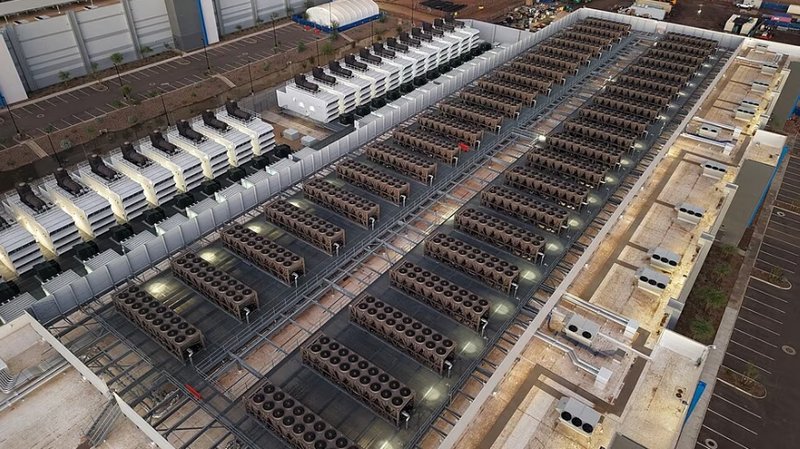
The data center boom of the past two years has strained already fragile power grids and increasingly contested water basins. A midsize facility can consume the equivalent of tens of thousands of homes and use millions of liters of water daily for cooling. As long as this growth was invisible or confined to remote areas, conflicts remained dormant. Now that generative AI demands ever-denser clusters – thousands of GPUs working in parallel, with workloads pushing consumption to new peaks – the territorial impact becomes impossible to ignore.
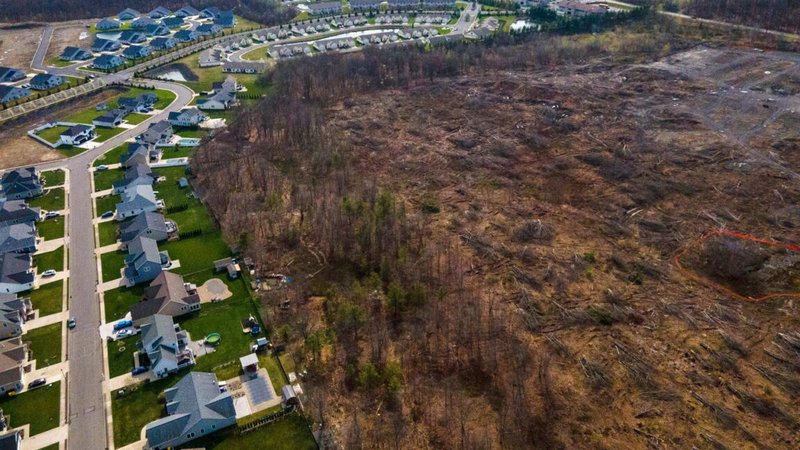
Here the breaking point. Hochul’s decision does not stand alone: it mirrors a wave of local resistance spreading through Virginia, Arizona, Ireland, and the Netherlands, where data centers compete with agriculture for water or saturate transmission lines. The temporary halt is a wake-up call for anyone planning large-scale on-premise compute capacity: permitting risks becoming a top-tier factor, on par with hardware costs or GPU availability.
Paradoxically, the attempt to return control to local communities could accelerate even greater concentration. Large cloud operators that secured permits and built massive facilities before the clampdown find themselves with an embedded competitive advantage: their existing infrastructure becomes a positional rent that is hard for new entrants to replicate. For companies that were considering bringing inference or fine-tuning in-house – perhaps for data sovereignty or TCO reasons – a new calculus emerges: the cost of a private data center is not just servers and power, but also the time and uncertainty involved in obtaining approvals.
The technical response will not be long in coming. If building new warehouses becomes harder, pressure shifts to efficiency: hardware delivering more performance per watt, immersion cooling solutions, model compression techniques such as aggressive quantization, and distributed architectures that leverage existing capacity instead of adding new. Edge computing, in particular, regains appeal: processing data close to the source, in smaller and less impactful facilities, could become a negotiated exit route, allowing regulators to approve less voracious projects.
Still, the game is far from over. The halt is temporary, and New York’s stance may soften if the industry negotiates trade-offs – priority access to renewable energy, waste heat reuse, community compensation. Meanwhile, every other jurisdiction is watching. Anyone deciding where to place AI workloads today faces a landscape in which administrative risk is becoming as structural as the semiconductor bottleneck.
For those evaluating on-premise deployment, there are complex trade-offs among control, latency, and regulatory costs that require multi-factor analysis. AI-RADAR offers analytical frameworks at /llm-onpremise to weigh these factors without prescriptive recipes.





💬 Comments (0)
🔒 Log in or register to comment on articles.
No comments yet. Be the first to comment!