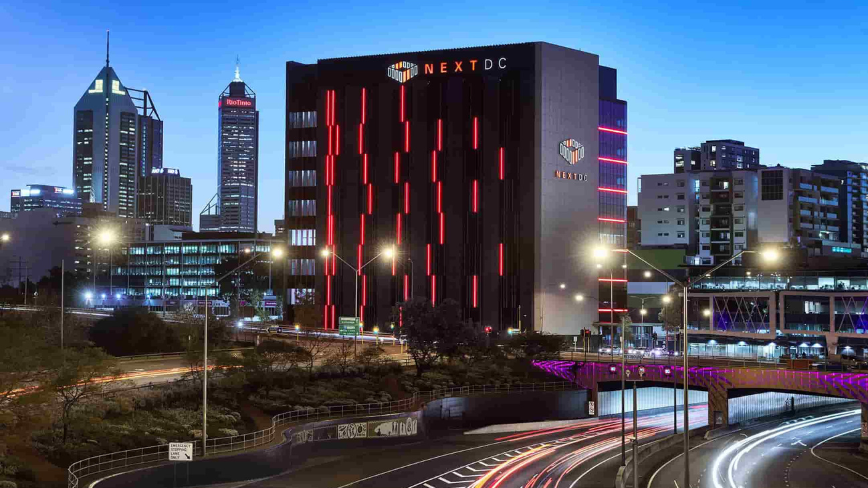
NEXTDC Bolsters Infrastructure with A$2.2 Billion Capital Plan
NEXTDC, an ASX-listed data center operator, has announced a significant A$2.2 billion capital plan. This strategic move aims to support the accelerated development of its infrastructure, at a time of increasing demand for computing and data storage capacity, particularly relevant for high-intensity workloads such as those related to artificial intelligence and Large Language Models (LLMs).
This investment underscores the growing importance of physical infrastructure in today's technological landscape. While discussions often focus on software and algorithms, the underlying hardware and data center network remain fundamental pillars for the deployment of AI solutions, both in cloud and, especially, on-premise contexts. NEXTDC's expansion fits into this framework, providing the necessary capacity to support future enterprise needs.
Financial Details and Expansion Projects
NEXTDC's financing plan is structured through several components. The company is raising A$1.5 billion through a fully underwritten equity offering, complemented by an expansion of its hybrid securities program for an additional A$700 million. A key element of this operation is the commitment from La Caisse de dépôt et placement du Québec, which has guaranteed a total investment of A$1.7 billion, demonstrating strong confidence in NEXTDC's growth strategy.
These funds are primarily allocated to accelerate the development of the S4 campus in Western Sydney. The expansion of a data center campus is a complex operation requiring substantial capital for the construction of new facilities, the installation of advanced power and cooling systems, and the provision of high-bandwidth connectivity. Such investments are crucial for creating environments capable of hosting next-generation computing infrastructure, essential for LLM inference and training.
Implications for AI Workloads and On-Premise Deployment
The expansion of data centers like NEXTDC's S4 campus has direct implications for organizations evaluating the deployment of AI and LLM workloads. The availability of local, modern infrastructure is a critical factor for companies that prioritize self-hosted or hybrid solutions over the public cloud. This approach offers greater control over data sovereignty, regulatory compliance, and security, which are fundamental aspects for regulated sectors or applications involving sensitive data.
A state-of-the-art data center must be capable of supporting the high power density required by the latest generation GPUs, such as NVIDIA H100s or AMD Instinct MI300X, which are the beating heart of LLM inference and training. This includes efficient cooling systems, redundant power supply, and high-speed network connectivity. For CTOs and infrastructure architects, choosing a data center partner with expansion capabilities ensures the scalability needed to meet the exponential growth of AI computing requirements, directly impacting the long-term Total Cost of Ownership (TCO).
Outlook and Market Context
NEXTDC's investment reflects a broader trend in the global market, where demand for digital infrastructure continues to outpace supply. Australia, in particular, is emerging as a technology hub, and the ability to host AI workloads locally is strategic for its digital economy. The availability of robust and scalable data centers is essential not only for large enterprises but also for startups and research centers developing new LLM-based applications.
For companies considering on-premise LLM deployment, the presence of operators like NEXTDC investing in future capacity is a positive signal. It offers alternatives to the cloud, allowing for a balance of performance, cost, and control. AI-RADAR, for instance, provides analytical frameworks on /llm-onpremise to help organizations evaluate the trade-offs between different deployment strategies, considering factors such as latency, throughput, and VRAM requirements for inference and fine-tuning. The continuous expansion of physical infrastructure is a prerequisite for innovation and the widespread adoption of artificial intelligence.











💬 Comments (0)
🔒 Log in or register to comment on articles.
No comments yet. Be the first to comment!