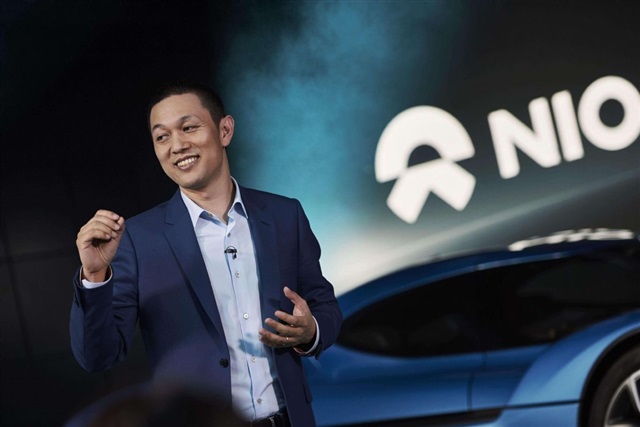
Nio Pursues In-House Chips to Cut Costs and Nvidia Reliance
Nio, the Chinese high-end electric vehicle manufacturer, has announced a significant strategic move: the development of its own proprietary chips. This initiative aims to reduce dependence on external suppliers, particularly Nvidia, and to curb the production costs of its vehicles. Nio's decision aligns with a broader trend in the technology sector, where companies seek greater control over their supply chain and hardware performance.
The choice to invest in custom silicio development is often driven by the need to optimize performance for specific workloads. In the context of electric vehicles, this can mean dedicated processors for autonomous driving AI, battery management, or infotainment systems. Having internally designed chips allows a company to integrate hardware and software more cohesively, potentially unlocking efficiencies that off-the-shelf components cannot offer. For companies evaluating on-premise deployment of AI solutions, the ability to customize hardware is a key factor in maximizing throughput and minimizing latency, crucial aspects for real-time inference.
The Value of Vertical Hardware Control
Nio's strategy reflects a growing awareness of the value of vertical control, especially in hardware. Relying on external suppliers like Nvidia, while providing access to cutting-edge technologies, can entail constraints in terms of cost, availability, and customization. Developing in-house chips, although requiring significant initial investments in research and development, can lead to long-term benefits. These include a reduction in Total Cost of Ownership (TCO), greater flexibility in system design, and enhanced technological sovereignty. For companies operating in sensitive sectors or requiring air-gapped environments, direct control over hardware is fundamental to ensure compliance and security.
However, this path is not without its challenges. Semiconductor design and manufacturing are extremely complex and costly processes, requiring specialized expertise and advanced infrastructure. Companies must balance potential savings and performance advantages with the risks associated with internal development, including time-to-market and managing a more complex supply chain for the chip components themselves. Nio's decision highlights a strategic trade-off: accepting higher CapEx in the short term to gain greater control and potential operational savings (OpEx) in the long run.
Implications for the Industry and Supply Chain
Nio's move could have significant implications for the entire automotive industry and the semiconductor supply chain. If other electric vehicle manufacturers were to follow suit, the demand for off-the-shelf chips from suppliers like Nvidia might decrease, pushing them to innovate further or diversify their offerings. At the same time, there could be greater fragmentation in the automotive chip market, with increasingly specialized and proprietary solutions.
For companies working with Large Language Models (LLM) or other intensive AI workloads, the lesson is clear: control over hardware can be a competitive differentiator. Whether for on-premise deployment due to data sovereignty concerns or cost optimization, the ability to influence or design the underlying hardware offers a strategic advantage. AI-RADAR, for example, offers analytical frameworks on /llm-onpremise to evaluate the trade-offs between adopting standard solutions and developing customized infrastructures, providing useful tools for complex deployment decisions.
Future Prospects for Hardware Innovation
Nio's decision to develop in-house chips marks an important turning point, underscoring the increasing importance of hardware innovation in the automotive and broader technology sectors. As the industry continues to push the boundaries of artificial intelligence and autonomous driving, the ability to control every aspect of the technology stack, from silicio to software, will become increasingly crucial. This trend is not limited to electric vehicles but extends to all sectors where efficiency, security, and customization of AI workloads are priorities.
Investing in proprietary chips is a long-term bet that, if executed well, can provide Nio with a lasting competitive advantage in terms of performance, cost, and technological independence. It will be interesting to observe how this strategy will influence the competitive landscape and whether other market players will follow this path towards greater vertical integration and tighter control over fundamental hardware.








💬 Comments (0)
🔒 Log in or register to comment on articles.
No comments yet. Be the first to comment!