
The Japanese industrial gas giant Nippon Sanso has announced a sharp price increase: over 30% more for helium. The official reason points directly to instability in the Middle East, which is constricting global supply. For those working in data centers and on-premise computing, this is not marginal macroeconomic news. Helium is a silent but irreplaceable technical ingredient in semiconductor production, and a surge this steep translates into a chain of costs that ultimately reaches the GPUs inside self-hosted servers.
Helium behind every chip: from lithography to AI infrastructure
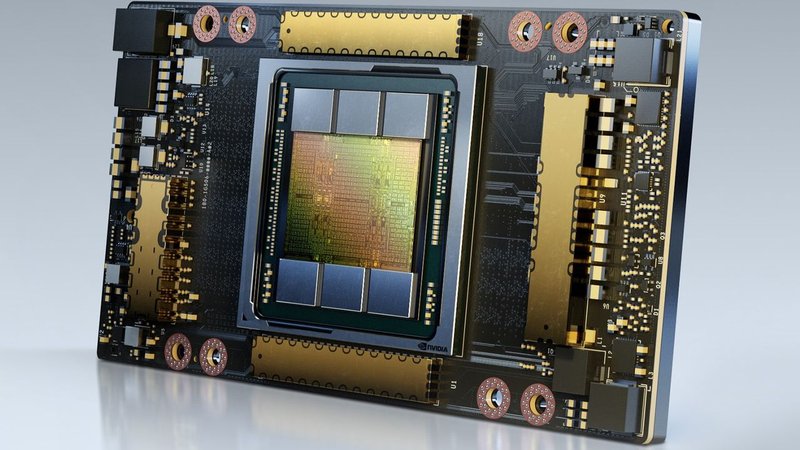
Silicon wafers are not born in any ordinary vacuum. The lithographic process that etches billions of transistors onto a chip demands controlled environments and extremely precise tools. Helium, with its chemical inertness and efficient heat transfer, is used in the vacuum chambers of lithography machines (such as ASML’s), in leak testing, and in cooling superconducting magnets. Even a small fluctuation in the cost of this gas propagates down the entire production chain. For on-premise AI infrastructure, which depends on accelerators like NVIDIA GPUs or custom ASICs, the raw material hits the racks as the final hardware price. A 30% helium hike does not vanish without a trace: it adds to the rising costs of substrates, HBM memory, and advanced packaging, squeezing the budgets of those who have opted for local computing sovereignty.
A market under strain: instability and limited supply
Global helium production is unbalanced. A handful of natural gas extraction facilities, concentrated in Qatar, the United States, and Russia, release helium as a byproduct, and much of the capacity is tied to geopolitical dynamics. Nippon Sanso’s statement explicitly cites Middle Eastern instability: transportation bottlenecks and the volatility of exports from the Persian Gulf are driving spot prices up. Organizations that had based their expenditure forecasts on stable supplies now must recalculate the total cost of ownership (TCO) for AI clusters. The speed at which these inflationary pressures appear makes annual procurement planning difficult, especially for those who prefer on-premise deployments due to privacy or latency concerns.
On-premise hardware costs: when geopolitics enters TCO
The strategic advantage of keeping inference and training in-house – data control, GDPR compliance, reduced latency – collides with a global supply chain vulnerable to price shocks. The helium increase is not an isolated event: it is a signal of structural fragility that AI-RADAR tracks closely. For those evaluating on-premise deployment, server acquisition is not the only TCO item; fluctuations in technical commodities like helium can erode margins compared to cloud solutions, where the provider absorbs (at least short-term) component price hikes. However, workload scalability and sovereignty requirements do not bend to pricing alone. The analysis of trade-offs requires an accurate mapping of hardware dependencies, today more than ever exposed to exogenous factors.
Outlook: between stockpiling and structural fragility
Nippon Sanso’s announcement fuels an ongoing debate: the rush to accumulate GPUs cannot ignore supply chain resilience. Some players are considering long-term contracts with gas suppliers, while others are exploring production processes less dependent on helium, such as more efficient liquid cooling or new sealing materials. In any case, the semiconductor sector – and those relying on it for AI computing – faces a procurement risk that extends well beyond the chip itself. Middle Eastern instability is not just another piece of geopolitical news: for the IT architecture of the future, it represents a real cost variable that deserves a place in spreadsheets alongside price per FLOP and cost per token.







💬 Comments (0)
🔒 Log in or register to comment on articles.
No comments yet. Be the first to comment!