The meteoric rise and fall from Skiff to Notion Mail
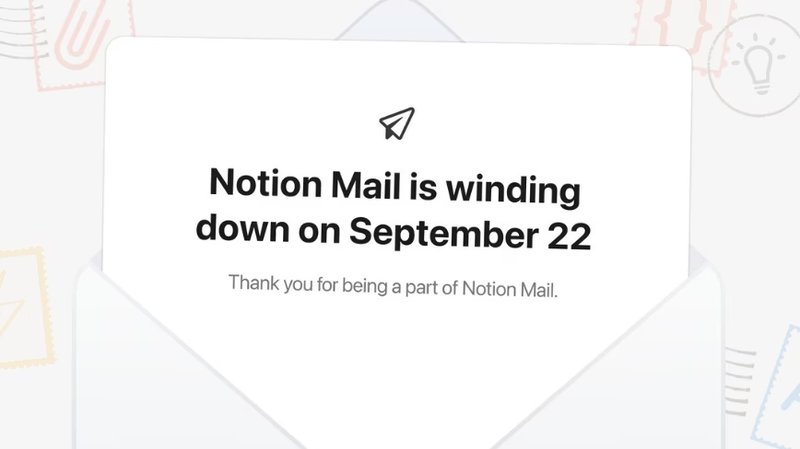
Notion's email adventure lasted just over a year. The San Francisco-based company announced it will shut down Notion Mail on September 22, discontinuing the Gmail client built from the ashes of Skiff, the encrypted email and productivity startup acquired in February 2024. The inbox will disappear across web, desktop, and iOS. The stated reason? Most Notion users no longer use email clients, instead relying on AI agents to handle their electronic correspondence.
From privacy to a strategic rethink
The Skiff acquisition had seemed promising: integrating an end-to-end encrypted email service into a fast-growing productivity suite. But within months, Notion had already turned off the servers hosting @skiff.com addresses, sparking discontent among early adopters. In April 2025, Notion Mail arrived, built by the Skiff team absorbed by the company. Now, with this final shutdown, the last chapter of that acquisition closes. Notion's message is clear: real innovation is no longer in a client’s interface, but in the intelligent automation of correspondence entrusted to language models.
AI agents replacing the inbox
This is not hyperbole. The X post (first spotted by 9to5Mac) claims users are delegating tasks like sorting emails, replying to routine messages, or extracting relevant information to autonomous software. This trend is clearly visible in the enterprise market: platforms like Google Workspace and Microsoft 365 integrate agentic features, while vertical startups offer AI assistants that interact with mailboxes via APIs. For a company like Notion, which aims to become the central work hub, abandoning a traditional client to focus on automation is a strategically coherent move.
Why it matters for on‑premise watchers
The shift of intelligence from interfaces to agents raises non-trivial questions for IT teams evaluating local deployments. If email management moves to language models, it becomes crucial to understand where they run: in the cloud, on someone else’s servers, or on one’s own infrastructure. For organizations with data sovereignty constraints—healthcare, legal, financial—processing correspondence through a cloud-hosted AI agent can mean exposing sensitive communications. Those already assessing on‑premise LLM stacks may need to add specialized email-handling agents to their workloads, integrating them with existing mail systems without sacrificing control and compliance.








💬 Comments (0)
🔒 Log in or register to comment on articles.
No comments yet. Be the first to comment!