The Strategic Importance of Advanced Silicio Production
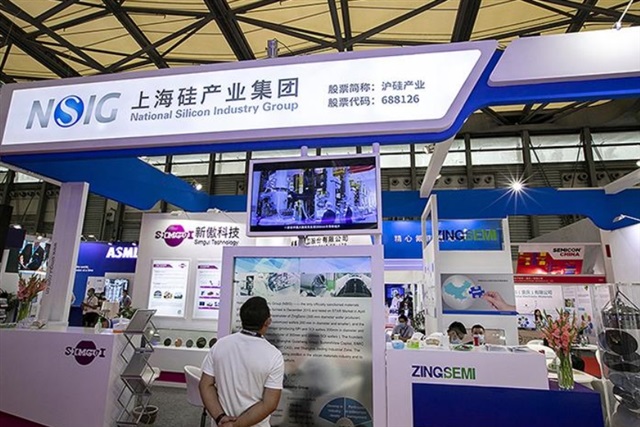
Chinese wafer manufacturer NSIG has announced a significant increase in revenue, a result primarily attributed to the growing demand and production of 300mm wafers. This data, reported by Yicai, highlights the dynamism of the semiconductor sector and the strategic importance of manufacturing capacity for fundamental components across the entire global technology industry. The push towards larger wafer sizes reflects a consolidated trend in the industry, aimed at optimizing processes and meeting the needs of a continuously expanding market.
For companies operating in the field of artificial intelligence and Large Language Models (LLM), the availability and efficiency in producing these components are critical factors. They directly influence the supply chain of GPUs and other hardware accelerators, which are essential for training and Inference of complex models. A country's ability to autonomously produce high-quality wafers is increasingly seen as a key element for technological sovereignty and economic resilience.
The Crucial Role of 300mm Wafers in the AI Era
300mm (or 12-inch) wafers represent the industrial standard for advanced semiconductor manufacturing. Their adoption has significantly increased the number of chips that can be obtained from a single silicio slice compared to previous 200mm wafers. This translates into greater production efficiency and reduced costs per chip, essential factors for supporting the demand for increasingly sophisticated and powerful electronic devices.
The transition to 300mm has been fundamental for the development of modern processors, including the high-performance GPUs that power AI and LLM workloads. These wafers allow for the integration of a greater number of transistors and the implementation of more complex architectures, necessary to manage the enormous amounts of data and intensive calculations required by machine learning algorithms. NSIG's ability to capitalize on this "momentum" indicates a maturation of its production capabilities and a strategic positioning in the global silicio landscape.
Implications for the Supply Chain and On-Premise Deployments
The increase in 300mm wafer production by players like NSIG has broad implications for the global semiconductor supply chain. In an era characterized by geopolitical tensions and supply chain disruptions, diversifying silicio production sources has become a priority for many nations and companies. Greater production capacity in different regions can help mitigate risks and ensure a more stable supply of critical components.
For organizations evaluating the Deployment of LLMs and other AI solutions in self-hosted or air-gapped environments, the stability and predictability of the hardware supply chain are crucial. The Total Cost of Ownership (TCO) of an on-premise infrastructure is strongly influenced not only by the initial hardware cost but also by its availability and delivery times. A robust and competitive wafer market can help keep costs under control and facilitate access to the GPUs and servers needed to build local stacks. AI-RADAR, for example, offers analytical frameworks on /llm-onpremise to evaluate these trade-offs, highlighting how silicio availability is an enabling factor for data sovereignty and infrastructural control.
The Global Race for Silicio and the Future of Innovation
NSIG's success in capitalizing on 300mm wafer production is an indicator of the ongoing global race for dominance in the semiconductor sector. Every nation and major technology player recognizes that silicio is the foundation of almost every digital innovation, from AI to IoT, through high-performance computing. Investing in wafer fabrication capacity is not just an economic matter but also one of national security and long-term technological competitiveness.
As the demand for computing power continues to grow exponentially, driven by the advancement of LLMs and other AI applications, the ability to produce fundamental silicio components will remain a determining factor. The growth of companies like NSIG helps shape the future of hardware, indirectly influencing the deployment possibilities, costs, and performance of AI solutions worldwide, both in the cloud and in on-premise environments.




💬 Comments (0)
🔒 Log in or register to comment on articles.
No comments yet. Be the first to comment!