
Nvidia and the "Vera Rubin" Acceleration: A Signal for the AI Market
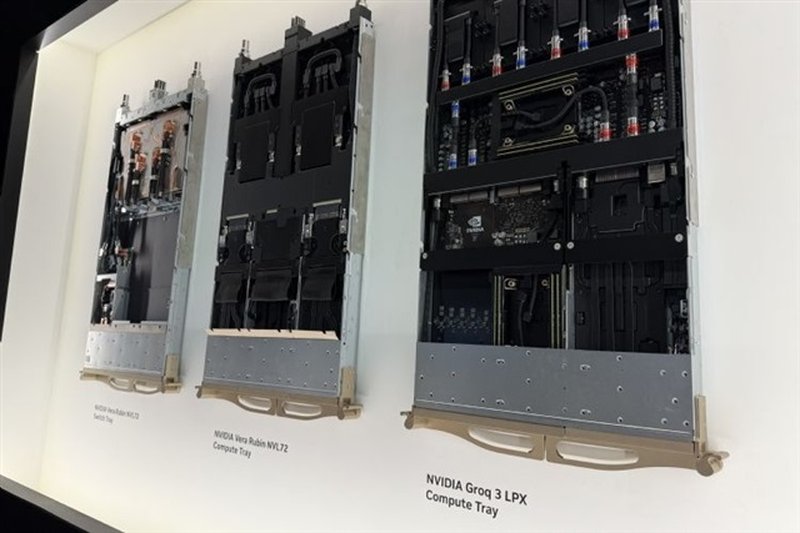
The artificial intelligence landscape is in constant evolution, with demand for computing power growing exponentially. In this context, the news that Nvidia intends to accelerate the production of the "Vera Rubin" project takes on particular significance. While specific details about "Vera Rubin" have not been disclosed, the commitment of a key player like Nvidia to intensify the production of such an initiative suggests the arrival or increased availability of crucial hardware or systems for the AI ecosystem.
This acceleration could have direct repercussions on companies' ability to implement and scale their workloads based on Large Language Models (LLM) and other AI applications. The availability of high-performance GPUs and computing platforms is a limiting factor for many organizations seeking to build or expand their AI infrastructures, both in the cloud and, especially, in self-hosted environments.
Quanta Computer: Strategic Expansion of Production Capacity in the United States
Parallel to Nvidia's announcement, Quanta Computer, one of the largest original design manufacturers (ODMs) globally, has revealed ambitious plans to expand its manufacturing presence in the United States. The company expects to add three new plants on American soil by the end of 2026. This strategic move by Quanta is significant for several reasons.
Firstly, expanding production capacity in a key region like the United States can help mitigate supply chain risks, which are often influenced by geopolitical tensions or logistical disruptions. For companies evaluating on-premise deployments of LLMs and other AI solutions, a more resilient and localized supply chain can translate into shorter delivery times and greater predictability in the procurement of essential servers, systems, and hardware components. This aspect is crucial for planning CapEx investments and managing the Total Cost of Ownership (TCO) of AI infrastructures.
Implications for On-Premise Deployments and Data Sovereignty
The increased availability of hardware, both through the acceleration of specific products like "Vera Rubin" by Nvidia and the expansion of production capacity by ODMs like Quanta, is positive news for organizations prioritizing on-premise deployments. The ability to more easily acquire servers equipped with high VRAM GPUs and high throughput capabilities is fundamental for training and inference of complex LLMs, especially in contexts where data sovereignty and regulatory compliance (such as GDPR) are absolute priorities.
A self-hosted infrastructure offers unprecedented control over data and the execution environment but requires reliable access to cutting-edge hardware. Deployment decisions, which often balance performance, cost, and security, benefit enormously from a more stable and predictable hardware market. For those evaluating on-premise deployments, significant trade-offs exist between availability, cost, and performance. AI-RADAR offers analytical frameworks on /llm-onpremise to support these decisions, providing tools to evaluate different options and their impacts on TCO and business strategy.
Future Outlook for AI Infrastructure
These joint announcements from Nvidia and Quanta underscore the growing maturity and strategic importance of the AI hardware market. Production acceleration and the geographical expansion of manufacturing capabilities are indicators of sustained demand and a long-term commitment from key industry players. For CTOs, DevOps leads, and infrastructure architects, this means potential improvements in access to critical resources, allowing greater flexibility in designing and implementing AI solutions.
However, hardware selection and deployment strategy remain complex decisions requiring in-depth analysis of each workload's specific requirements, budget constraints, and business objectives. Availability is only one piece of the puzzle; factors such as energy efficiency, scalability, ease of management, and integration with the existing software ecosystem continue to play a decisive role in defining a robust and future-proof AI infrastructure.









💬 Comments (0)
🔒 Log in or register to comment on articles.
No comments yet. Be the first to comment!