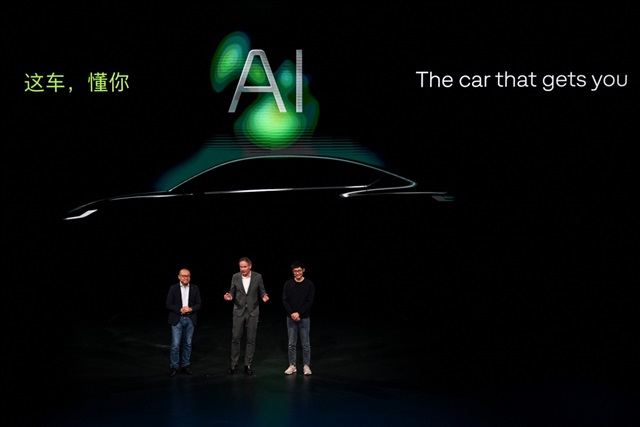
The quiet overtaking is happening on the crowded roads of China's megacities. According to the latest market figures, Nvidia firmly holds the lead in supplying chips for assisted-driving systems in China, while local platform Horizon Robotics has climbed to second place. This snapshot means more than a ranking: it tells the story of an entire ecosystem where the onboard processor becomes the real pillar of automation.
Intelligence on four wheels
Advanced driver-assistance systems (ADAS) and autonomous driving are no longer science fiction, yet they demand computing power that just a few years ago was confined to data centers. Specialized chips — GPUs, system-on-chips with neural accelerators — must process in real time data streams coming from cameras, lidar, radar, and ultrasonic sensors. In such a setting, every millisecond of latency can be the difference between a preventive braking and a collision. The choice of silicon is therefore not only a matter of performance: it is an architectural decision that defines the entire onboard inference pipeline, from environmental perception to trajectory planning.
Why computation stays on board (and what sovereignty has to do with it)
Unlike many cloud-native AI workloads, autonomous driving cannot afford dependencies on unstable connections or network latency. Inference must happen on-premise — actually, on-vehicle — turning each car into a mini data layer with strict reliability and safety requirements. In China, this principle intertwines with data sovereignty rules and regulatory compliance, pushing automakers to prefer local solutions that can often operate entirely offline. It is no surprise, then, that Horizon Robotics has risen, offering chips designed specifically for the domestic market, with an eye on Total Cost of Ownership and ease of integration into Chinese supply chains.
Beyond the duopoly: the ecosystem factor
Nvidia remains the global benchmark for raw power and compatibility with development frameworks, but Horizon Robotics' second place signals a deeper shift. Vehicle manufacturers are not merely looking for the fastest chip; they want a partner to build the entire stack — from drivers and deployment tooling to support for fine-tuning neural networks in resource-constrained environments. Competition is now played on the field of vertical integration, where owning the hardware platform becomes a lever to control both the driving experience and the data generated.
For those evaluating on-premise deployment in automotive or industrial edge settings, the Chinese lesson is clear: the choice of processor determines not only performance but the entire strategy of technological sovereignty. AI-RADAR follows these developments, offering analytical lenses on local compute architectures and the trade-offs to consider when data cannot leave the vehicle perimeter.






💬 Comments (0)
🔒 Log in or register to comment on articles.
No comments yet. Be the first to comment!