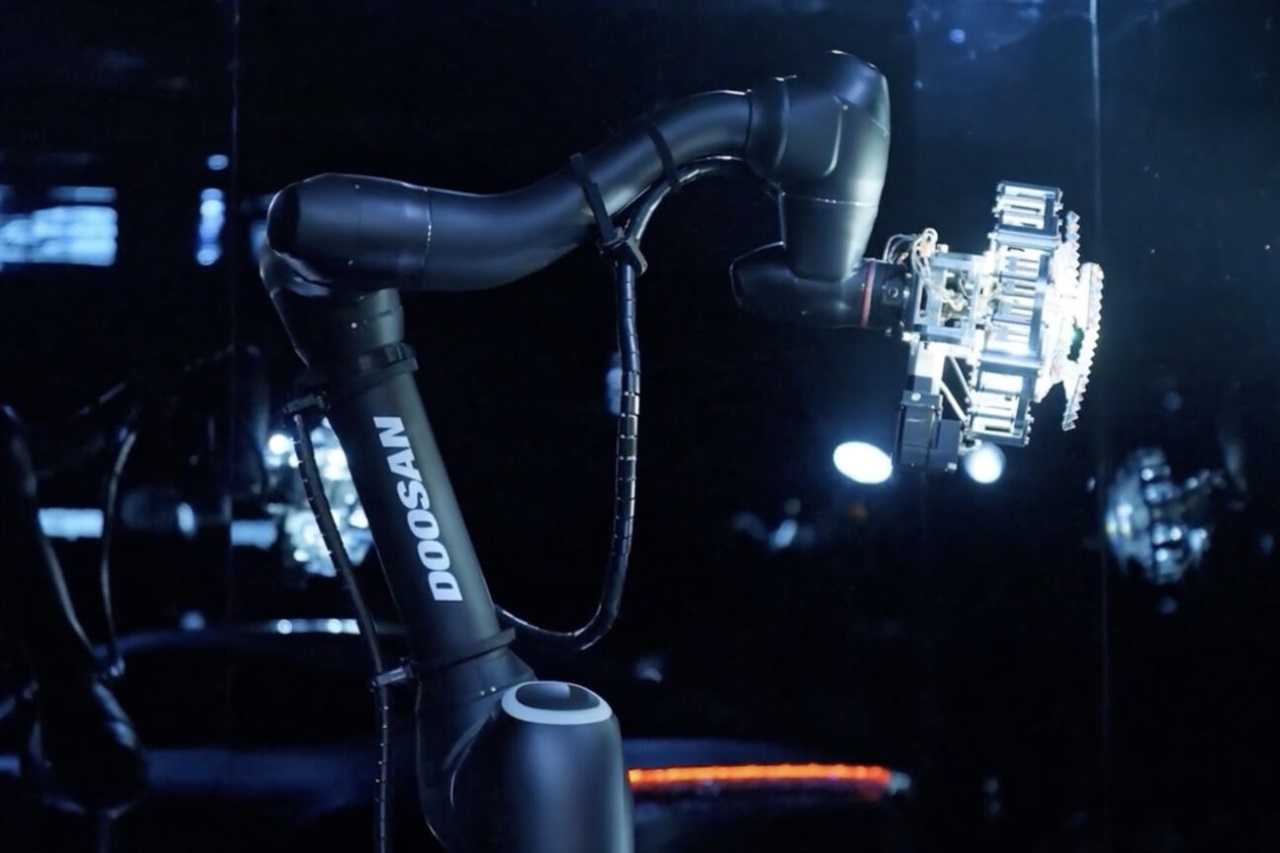
Nvidia and Doosan Strengthen Collaboration for Robotics and AI Infrastructure
Nvidia and Doosan, two leading players in their respective sectors, have announced an expansion of their strategic partnership. The stated goal is to accelerate the development and deployment of advanced solutions for robotics and AI-driven factory infrastructure. This move underscores the growing convergence between industrial automation and AI computing capabilities, a trend that is redefining the global manufacturing landscape.
For companies operating in technology-intensive sectors, this collaboration highlights the need to carefully evaluate computing architectures. The implementation of complex AI systems in industrial environments, such as those required by advanced robotics, often imposes specific constraints in terms of latency, data sovereignty, and operational control, pushing towards on-premise or hybrid solutions.
The Crucial Role of AI in Industrial Robotics
Artificial intelligence has become a fundamental pillar for the evolution of robotics and smart factories. From computer vision for quality control and autonomous navigation, to predictive maintenance and optimization of production processes, Large Language Models (LLM) and other AI models require significant computing power. These workloads, particularly real-time inference, necessitate high-performance GPU accelerators, such as Nvidia's A100 or H100 series, to process large volumes of data with low latency.
Modern factories generate an enormous amount of sensitive data, ranging from product information to operational parameters. Processing this data on-site, rather than through the cloud, offers substantial advantages in terms of security, regulatory compliance, and minimization of network latency. This approach is crucial for applications where every millisecond counts, such as controlling robotic arms or managing high-speed production lines.
Implications for On-Premise Deployments and TCO
The expanded partnership between Nvidia and Doosan reinforces the trend towards self-hosted and on-premise AI architectures in the industrial sector. Data sovereignty is a decisive factor: keeping data within corporate boundaries ensures greater control and facilitates compliance with stringent regulations like GDPR. Furthermore, the ability to customize the entire hardware and software pipeline allows for performance optimization for specific workloads, an aspect often limited in public cloud environments.
From a Total Cost of Ownership (TCO) perspective, although the initial investment in bare metal hardware and infrastructure can be significant, on-premise deployments can offer a lower TCO in the long run for consistent and predictable AI workloads. Recurring data transfer costs (egress fees) are eliminated, and greater predictability of operational costs is achieved. For those evaluating these decisions, AI-RADAR offers analytical frameworks on /llm-onpremise to understand the trade-offs between CapEx and OpEx, and the implications for performance and security.
Future Prospects and Industry Challenges
The collaboration between Nvidia and Doosan is indicative of a clear direction: AI is becoming increasingly pervasive in industrial environments, requiring integrated solutions that combine powerful hardware, advanced software, and specific expertise. The future of robotics and smart factories will depend on the ability to implement robust, scalable, and secure AI systems, often operating in air-gapped environments or with limited connectivity.
Challenges are plentiful, from the complexity of managing distributed AI infrastructures to the need for skilled personnel for fine-tuning and maintaining models. However, partnerships like that between Nvidia and Doosan aim to simplify this path, providing industrial operators with the necessary tools to fully leverage the potential of artificial intelligence, while maintaining control over their most valuable assets: data and operations.






💬 Comments (0)
🔒 Log in or register to comment on articles.
No comments yet. Be the first to comment!