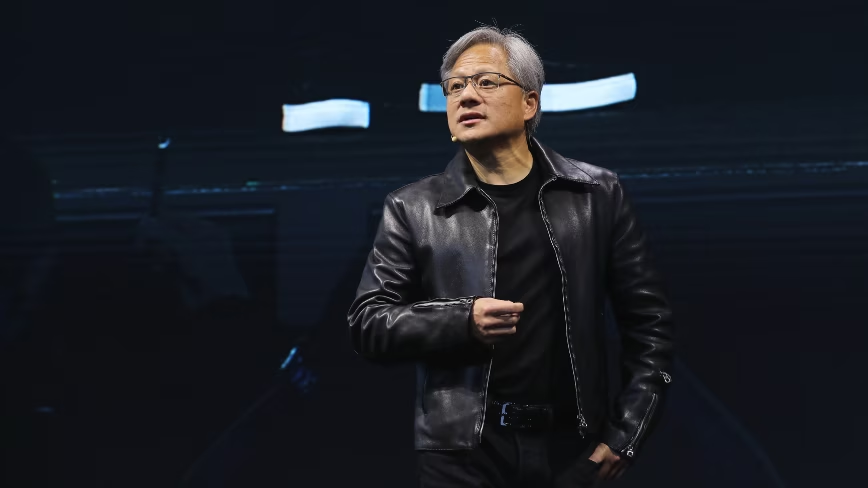
Nvidia and Hyundai: A Strategic Alliance for the Future of Robotics
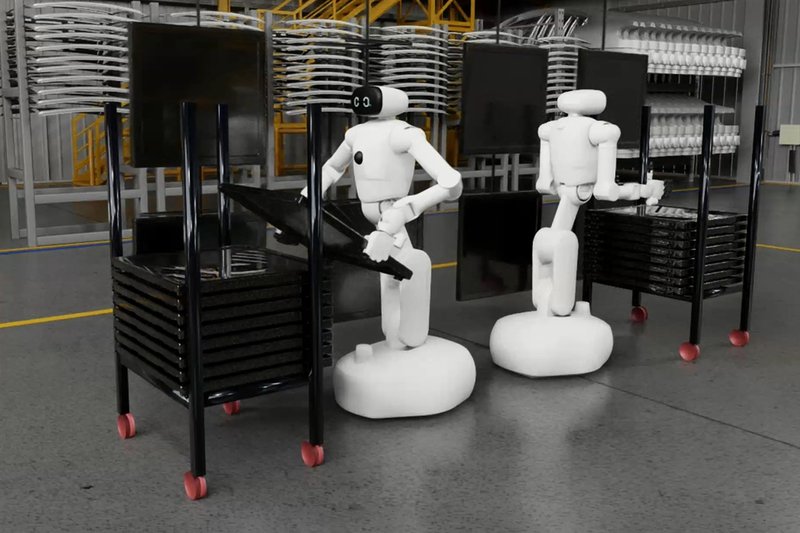
Jensen Huang, CEO of Nvidia, recently visited Hyundai's headquarters in Seoul, a meeting that underscored the intention to strengthen the collaboration between the chip giant and the automotive group. The event was accompanied by an eloquent demonstration: autonomous robots handling tasks such as plant watering, security, and deliveries within Hyundai's lobby. This display offered a concrete glimpse into the potential of integrating artificial intelligence and robotic systems within an enterprise context.
The alliance between Nvidia and Hyundai Motor Group is set against a technological backdrop where robotics is becoming a fundamental pillar for industrial and service automation. Huang's visit not only reaffirmed the strategic importance of this partnership but also highlighted how advanced computing capabilities are crucial for the development and deployment of intelligent robotic solutions, capable of operating in complex and dynamic environments.
The Role of AI and Hardware in Advanced Robotics
Modern robotics critically depends on artificial intelligence for essential functions such as environmental perception, autonomous navigation, object manipulation, and real-time decision-making. These tasks demand significant computing power, often provided by GPUs and specialized accelerators. The ability to execute AI algorithms, including Large Language Models (LLM) or vision models, directly on the robot or on local servers is fundamental to ensuring low latency and responsiveness.
For robotic applications, particularly those operating in industrial or security contexts, the choice of deployment infrastructure is crucial. While the training of complex models can occur in the cloud, real-time inference often requires on-premise or edge computing resources. This approach minimizes communication delays, which are essential for the safety and operational efficiency of robots, and allows for direct control over the processed data.
Implications for On-Premise Deployment and Data Sovereignty
The drive towards advanced robotics, as explored by Hyundai and Nvidia, raises significant questions regarding on-premise deployment. Companies implementing robot fleets for critical tasks must carefully consider data sovereignty. Robots collect sensitive data about the operating environment, people, and business processes. Keeping the processing of this data within the corporate infrastructure, in self-hosted or air-gapped environments, offers superior control over privacy and regulatory compliance.
Furthermore, Total Cost of Ownership (TCO) plays a key role. Although the initial investment in on-premise hardware can be substantial, long-term operational costs for large-scale inference may prove more advantageous compared to cloud-based models, especially for predictable and intensive workloads. For those evaluating on-premise deployment for AI and robotic workloads, AI-RADAR offers analytical frameworks at /llm-onpremise to assess the trade-offs between performance, costs, and security requirements.
Future Prospects and Technological Challenges
The deepening collaboration between Nvidia and Hyundai Motor Group highlights a clear trend: the increasingly close integration of AI, high-performance hardware, and autonomous physical systems. The future of robotics will depend on the ability to develop not only more sophisticated algorithms but also robust and scalable computing infrastructures capable of supporting the evolution of these technologies.
Challenges include optimizing the energy efficiency of robotic systems, developing reliable software pipelines for the deployment and management of large fleets, and ensuring interoperability between different hardware and software components. Strategic partnerships like that between Nvidia and Hyundai are essential to address these complexities, pushing the boundaries of innovation and defining the standards for the next generation of AI-powered robotic solutions.







💬 Comments (0)
🔒 Log in or register to comment on articles.
No comments yet. Be the first to comment!