Nvidia's Strategy for 'AI Factories'
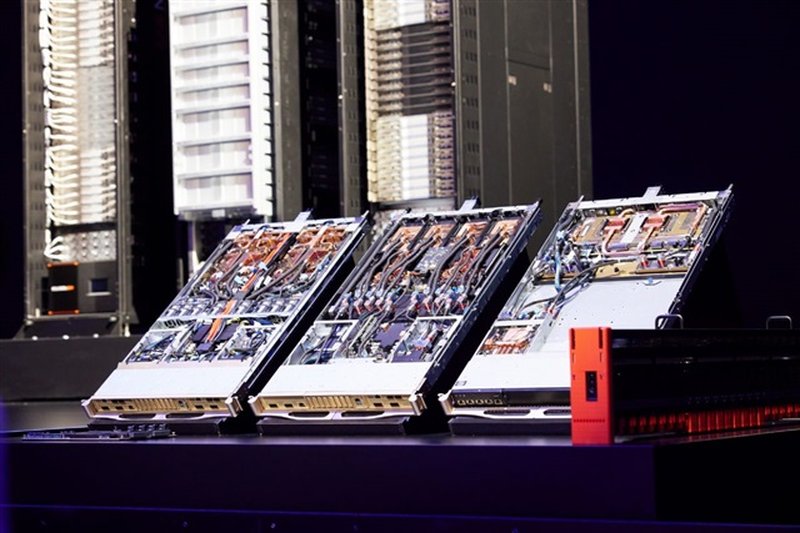
Nvidia continues to be a central player in the artificial intelligence landscape, constantly pushing innovation in dedicated hardware. With the introduction of the new Blackwell and Rubin architectures, alongside the Vera CPU, the company is outlining a clear strategy to dominate the race to build so-called 'AI factories.' These large-scale infrastructures are essential for training and Inference of Large Language Models (LLMs) and other complex workloads, representing the beating heart of innovation in the sector.
Nvidia's move is not limited to mere technological innovation but extends to a pricing policy that, according to analysts, could put competitors at a disadvantage. The goal is to consolidate an integrated ecosystem of hardware and software, making its solutions not only technologically advanced but also economically competitive, or at least difficult for rivals to replicate at comparable cost and performance.
The Evolution of AI Hardware
The progress of LLMs and AI applications is intrinsically linked to the evolution of the underlying hardware. Architectures like Blackwell and the future Rubin represent the culmination of years of research and development, designed to offer unprecedented computing power and Throughput. These systems are optimized to handle enormous amounts of data and parallelize complex operations, fundamental requirements for Fine-tuning and Inference of increasingly larger and more sophisticated models.
Integrating a dedicated CPU like Vera within this hardware stack underscores the importance of a holistic approach. It's no longer just about powerful GPUs, but about an orchestrated synergy between graphics processors, CPUs, and high-speed interconnects, such as NVLink, to eliminate bottlenecks and maximize overall system efficiency. The ability to manage large volumes of VRAM and ensure low latencies is crucial for companies aiming to Deploy LLMs in production environments.
Implications for On-Premise Deployment and TCO
Nvidia's strategy has profound implications for organizations evaluating the Deployment of AI infrastructures, both on-premise and in the cloud. The high initial cost (CapEx) and Total Cost of Ownership (TCO) of leading AI solutions can represent a significant barrier. For those opting for a self-hosted Deployment, the investment in hardware like Blackwell and Rubin requires meticulous planning, considering not only the cost of the units but also power, cooling, and infrastructure management.
Nvidia's ability to offer a complete and high-performing stack can simplify integration, but at the same time, it can limit options for those seeking more Open Source or alternative hardware solutions. For those evaluating on-premise deployments, AI-RADAR offers analytical frameworks on /llm-onpremise to assess the trade-offs between initial costs, operational costs, data sovereignty, and compliance requirements—critical aspects in regulated sectors or for Air-gapped environments. The choice between a proprietary architecture and more flexible solutions is a delicate balance between performance, control, and long-term costs.
Future Prospects and Competitive Challenges
The 'AI factory' race is an indicator of the growing demand for dedicated computing capacity for artificial intelligence. Nvidia's strategy, focused on hardware innovation and aggressive market positioning, aims to maintain a significant competitive advantage. However, the market is dynamic, with other players investing in alternative solutions, both at the chip level and in software Frameworks.
Enterprises will need to continue balancing the need for extreme performance with economic sustainability and architectural flexibility. The ability to adapt quickly to new technologies and optimize operational costs will be fundamental. Competition is not just about raw power but also about energy efficiency, ease of Deployment, and the ability to support a wide range of AI models and applications, thus defining the future of global AI infrastructure.





💬 Comments (0)
🔒 Log in or register to comment on articles.
No comments yet. Be the first to comment!