Nvidia and the Growing Power Demand for AI
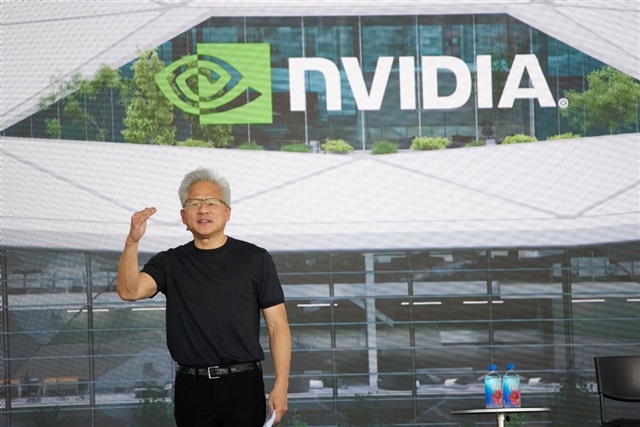
Nvidia's expansion into Taiwan's Beitou-Shilin Tech Park marks a significant step for the company at the heart of Asian technological innovation. However, this strategic move brings with it a considerable infrastructural challenge: a substantial increase in electricity demand, directly linked to the computational intensity required by artificial intelligence operations. The need to power data centers and GPU clusters dedicated to AI raises crucial questions about the capacity of existing infrastructures to support such growth.
This scenario is not isolated but reflects a global trend. As companies invest in computing capabilities for Large Language Models, machine learning, and other AI applications, the demand for energy becomes an increasingly pressing limiting factor. The planning and development of adequate energy infrastructures are therefore essential to sustain technological advancement.
The Impact of AI on Infrastructure Requirements
Artificial intelligence workloads, particularly the training and Inference of Large Language Models, are notoriously resource-intensive. Modern GPUs, such as those produced by Nvidia, offer unprecedented computing power but also require an enormous amount of energy to operate efficiently. A single rack of AI servers can consume as much as an entire office building, and a large-scale data center can equal the consumption of a small city.
This energy intensity translates into direct pressure on local power grids. For organizations considering on-premise deployments of LLMs or other AI solutions, the availability of reliable and sufficient power is not just an operational cost but a fundamental prerequisite. The choice of location for a new data center or the expansion of an existing one must take into account not only network connectivity but also the capacity of the nearest electrical substation and the stability of the grid.
Taipower's Strategies to Address the Challenge
Facing this growing demand, Taipower, Taiwan's electric power company, has announced a "dual-track strategy" for substation development. While the specific details of this strategy have not been elaborated, a dual-track approach typically suggests a combination of expanding existing capacity and building new infrastructure. This could include upgrading existing substations to handle larger loads, implementing new technologies to improve grid efficiency, and planning new substations in high-tech growth areas.
Managing energy demand in a context of rapid technological expansion requires long-term planning and significant investment. Utilities must collaborate closely with technology companies to anticipate future needs and ensure that supporting infrastructure is ready. This includes not only power generation and distribution but also the integration of renewable sources and the optimization of energy efficiency at the data center level.
Implications for On-Premise AI Deployments
For CTOs, DevOps leads, and infrastructure architects evaluating self-hosted LLM deployments, the situation in Taiwan offers an important warning. The Total Cost of Ownership (TCO) of an on-premise AI infrastructure is not limited to the purchase of hardware like GPUs and servers but significantly includes energy costs and the necessary investments to ensure adequate power supply. Data sovereignty and complete control over the deployment environment are key advantages of self-hosting, but they require a realistic assessment of local infrastructural capabilities.
Power availability and grid resilience become critical factors in the decision between an on-premise approach and using cloud services. While the cloud can abstract these complexities, self-hosting makes them a direct responsibility. AI-RADAR, for instance, offers analytical frameworks on /llm-onpremise to help companies evaluate these trade-offs, emphasizing the importance of considering the entire infrastructural pipeline, from the GPU to the electrical substation, for a successful AI deployment.









💬 Comments (0)
🔒 Log in or register to comment on articles.
No comments yet. Be the first to comment!