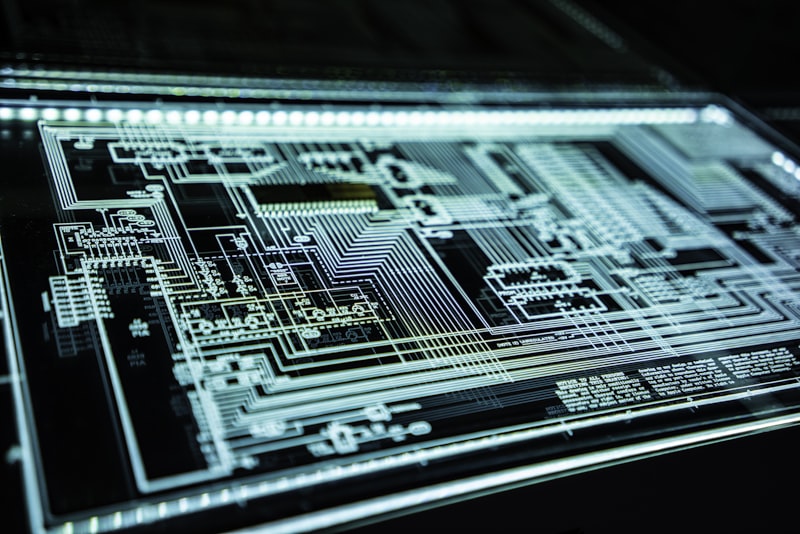
Nvidia's Initiative for Data Center Power Delivery
Nvidia, a key player in AI acceleration, is pushing for the adoption of a new power architecture in data centers, based on an 800V to 12V conversion. This strategic move aims to optimize power distribution within infrastructures hosting high-computational intensity workloads, such as those related to Large Language Models (LLM) and AI Inference.
The primary goal of such a change is twofold: to improve overall energy efficiency and to increase power density per rack. By utilizing higher voltages (800V) for primary distribution, it's possible to reduce currents, minimizing energy losses along cables and allowing for the use of smaller gauge conductors. This approach promises to free up valuable space within racks and simplify thermal management, crucial aspects for modern data centers housing thousands of GPUs.
Technical Details and Implementation Challenges
Nvidia's proposed architecture involves converting high-voltage power (800V) locally to 12V, the standard voltage required by most IT components, including GPUs. This necessitates the introduction of new Power Supply Units (PSUs) and busbar systems designed to handle higher voltages and perform the conversion efficiently and safely.
While the benefits in terms of efficiency and density are clear on paper, implementing such a system presents significant challenges. Existing data centers would face substantial CapEx costs for upgrading their electrical infrastructure, which goes beyond merely replacing IT equipment. It involves rethinking power distribution at the rack and room level, with implications for safety, maintenance, and compatibility with non-Nvidia hardware.
Reasons for Industry Skepticism
Despite its potential, Nvidia's initiative is meeting with some skepticism from the industry. One of the main concerns revolves around the lack of a consolidated standard. The data center sector has historically favored standardized solutions, such as 48V power, to ensure interoperability, reduce development costs, and mitigate the risk of vendor lock-in. The introduction of a new proprietary or less widespread standard could complicate the supply chain and infrastructure management.
Furthermore, the added complexity in designing and maintaining high-voltage systems acts as a deterrent. Companies must invest in staff training and adopt new safety procedures. For CTOs and infrastructure architects evaluating on-premise Deployments, the decision to adopt a new power architecture must carefully consider the long-term Total Cost of Ownership (TCO), balancing potential efficiency gains with initial costs and operational complexity.
Prospects for On-Premise Deployments and the Future of AI Infrastructure
For organizations focusing on on-premise Deployments for their AI workloads, the choice of power infrastructure is a critical component of their strategy. Nvidia's proposal, while innovative, requires a careful evaluation of trade-offs. On one hand, it offers the possibility of building more efficient and denser data centers, ideal for large-scale LLM Inference and training. On the other hand, it entails significant investment and a potential deviation from widely adopted industry standards.
The debate surrounding the 800V-12V architecture highlights the constant evolution of the infrastructure required to support AI. As the industry seeks solutions to manage increasing power and cooling demands, standardization and interoperability remain absolute priorities for many operators. AI-RADAR continues to monitor these developments, providing analytical Frameworks to help companies evaluate the trade-offs between different infrastructural solutions for on-premise Deployments, ensuring data sovereignty and control over their local stacks.








💬 Comments (0)
🔒 Log in or register to comment on articles.
No comments yet. Be the first to comment!