The AI Hardware Race: A Market in Flux
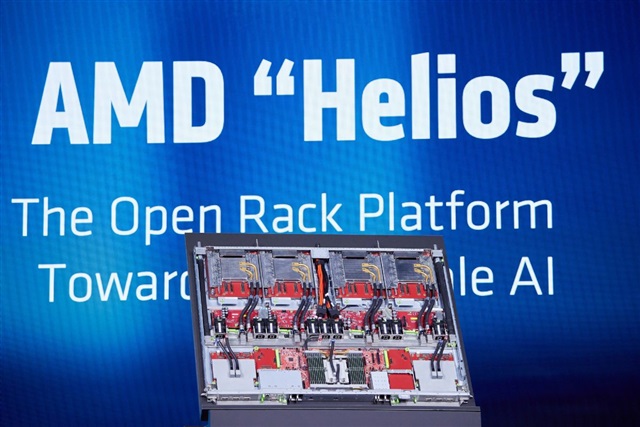
The artificial intelligence sector continues to be a driver of innovation and growth, with tech giants like Nvidia, Intel, and AMD positioning themselves at the heart of this revolution. Their active participation in the development and supply of dedicated AI hardware underscores the strategic importance of these components in enabling the computational capabilities required by the most demanding workloads, including Large Language Models (LLMs).
However, despite the commitment of these key players, the market is showing signs of strain. The global supply chain for servers, particularly those optimized for AI, is facing a shortage of three resources deemed critical. This scenario suggests a high and persistent demand for specific components, which could influence deployment strategies and access to the necessary infrastructure for AI.
Critical Resources and Their Implications
While the source does not specify which three resources are critical, industry experience suggests that common bottlenecks in the AI ecosystem often involve high-performance GPUs, HBM (High Bandwidth Memory), and advanced packaging capabilities. These elements are fundamental to ensuring the performance and VRAM capacity required for training and Inference of complex LLMs.
The scarcity of such components can have significant repercussions. Companies aiming to build or expand their on-premise AI infrastructures may encounter extended delivery times and higher acquisition costs. This makes strategic planning and the evaluation of TCO (Total Cost of Ownership) even more crucial for CTOs and infrastructure architects.
Impact on On-Premise Deployments and Data Sovereignty
For organizations prioritizing self-hosted deployments for reasons of data sovereignty, compliance, or for air-gapped environments, hardware availability becomes a decisive factor. A shortage of critical resources can delay the implementation of internal AI projects or push companies towards cloud solutions, even when these are not the preferred option for data control and security.
The choice between an on-premise infrastructure and a cloud-based alternative involves a complex set of trade-offs. Limited availability of AI-specific hardware can alter the TCO equation, making the on-premise path initially more expensive or slower. It is essential for decision-makers to carefully evaluate these constraints, considering not only the initial cost (CapEx) but also long-term operational costs (OpEx) and the impact on flexibility and control.
Future Outlook and Mitigation Strategies
The current situation highlights the need for companies to adopt a proactive approach to AI infrastructure planning. This includes exploring alternative hardware architectures, optimizing the use of existing resources through techniques like model Quantization, and diversifying suppliers where possible. Competition among Nvidia, Intel, and AMD could, in the long term, help mitigate some of these shortages by stimulating innovation and increasing production capacity.
For those navigating these complexities, AI-RADAR offers analytical frameworks and insights on /llm-onpremise to evaluate the trade-offs between different deployment strategies. Understanding supply chain constraints and concrete hardware specifications is essential for making informed decisions that balance performance, cost, security, and data sovereignty in an ever-evolving AI landscape.









💬 Comments (0)
🔒 Log in or register to comment on articles.
No comments yet. Be the first to comment!