
NVIDIA Releases CUDA 13.3: A Key Update for the LLM Ecosystem
NVIDIA has recently announced the release of CUDA 13.3, the latest iteration of its Compute Unified Device Architecture. This toolkit is a cornerstone for developing and executing high-performance applications that leverage the computational power of NVIDIA GPUs, particularly in the field of artificial intelligence and Large Language Models (LLMs). The availability of downloads and release notes marks an important step for the developer community.
Each new version of CUDA brings with it improvements in performance, new features, and broader hardware support. These updates are crucial for optimizing the execution of complex algorithms, reducing latency, and increasing throughput, which are critical aspects for AI workloads.
Technical Details and Relevance for llama.cpp
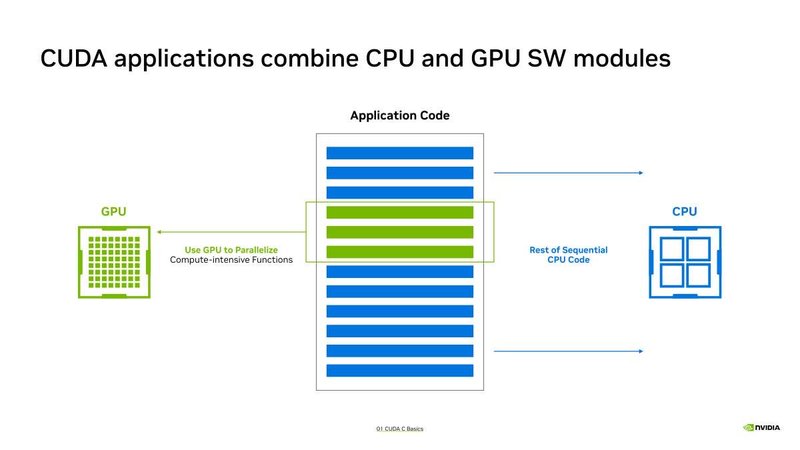
The CUDA toolkit provides the necessary software infrastructure to program NVIDIA GPUs, allowing developers direct access to the massive parallelism offered by these architectures. With CUDA 13.3, users can expect optimizations that potentially enhance computational efficiency, essential for LLM inference and fine-tuning.
An area of particular interest for the community is the interaction of CUDA 13.3 with projects like llama.cpp. This Open Source framework has become a benchmark for efficient LLM execution on consumer hardware and mid-range servers, often in self-hosted contexts. The CUDA update can directly influence llama.cpp's performance, enabling faster inference and more efficient use of available VRAM, crucial aspects for those aiming to maximize the capabilities of their local systems.
Impact on On-Premise LLM Deployments
For organizations prioritizing on-premise or air-gapped deployments for their LLMs, the evolution of CUDA is of paramount importance. Improvements in the toolkit translate into greater efficiency in utilizing existing hardware resources, potentially postponing the need for investments in new GPUs or reducing the overall Total Cost of Ownership (TCO). The ability to run complex LLMs with greater speed and lower resource consumption on local infrastructures strengthens data sovereignty and regulatory compliance.
Optimizing inference on specific hardware, from bare metal to hybrid clusters, is a decisive factor for the scalability and sustainability of AI projects. Companies evaluating self-hosted alternatives versus cloud solutions for AI/LLM workloads find continuous support for their control and autonomy strategies in these updates.
Future Prospects and Strategic Choices
The release of CUDA 13.3 underscores the continuous innovation in hardware acceleration for artificial intelligence. For CTOs, DevOps leads, and infrastructure architects, understanding the impact of such updates is fundamental for making informed decisions about their technology stack. The choice between different CUDA versions, in combination with specific frameworks and models, can have significant repercussions on performance, costs, and hardware requirements.
AI-RADAR is committed to providing in-depth analyses of these trade-offs, helping companies navigate the complex landscape of LLM deployments. For those evaluating on-premise deployments, analytical frameworks are available at /llm-onpremise that can support the assessment of constraints and opportunities, without direct recommendations but with a focus on facts and technical implications.





💬 Comments (0)
🔒 Log in or register to comment on articles.
No comments yet. Be the first to comment!