
The Evolution of GPU Cooling: The Vera Rubin Case
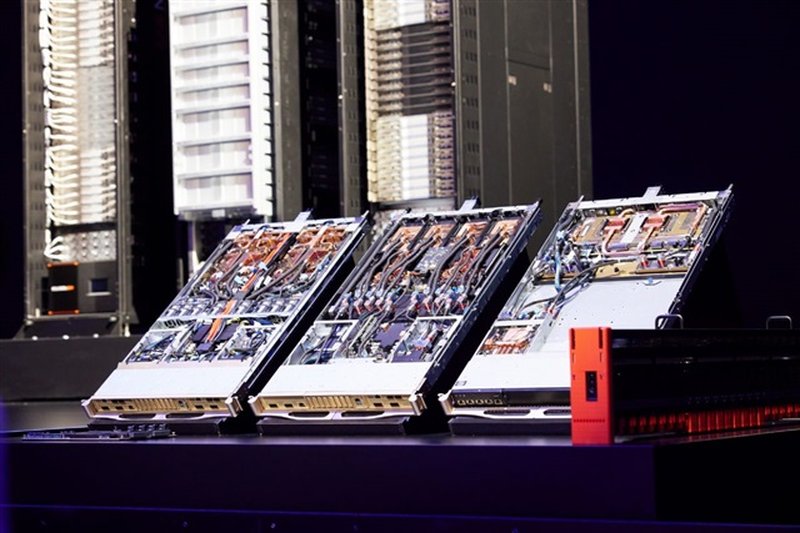
According to a report by DIGITIMES, Nvidia is making a significant change to the cooling architecture for its upcoming Vera Rubin platform. The news indicates a departure from a dual-piece design, suggesting a strategic evolution in how the company intends to manage the thermal demands of its future generations of AI accelerators. This move underscores the increasing importance of thermal efficiency in the artificial intelligence hardware landscape.
Modern GPUs, particularly those intended for intensive workloads such as Large Language Model training and Inference, generate considerable amounts of heat. The ability to effectively dissipate this heat is fundamental not only to ensure hardware stability and longevity but also to maximize performance and computational density within data centers. Every innovation in this field can have direct repercussions on operational efficiency and costs.
Technical Implications of the New Approach
Moving away from a dual-piece cooling architecture could signify a shift towards a more integrated or monolithic solution. Traditionally, a dual-piece design might refer to separate cooling components, such as distinct heatsink and fan modules, or a system that distributes the thermal load across multiple units. A unified approach, on the other hand, could aim to improve heat transfer from the GPU, reducing thermal resistances and potentially allowing for a more compact design.
This transition could lead to several technical advantages. A more efficient cooling system can enable GPUs to operate at higher frequencies for extended periods, improving overall Throughput. Furthermore, a more compact solution could increase compute density per rack, a critical factor for data centers looking to optimize physical space. Reduced component complexity might also simplify assembly and maintenance, although this depends on the specific implementation of the new design.
Impact on On-Premise Deployments
For CTOs, DevOps leads, and infrastructure architects evaluating on-premise Deployments of AI/LLM workloads, hardware design decisions like this are of primary importance. Thermal management is a key component of a data center's Total Cost of Ownership (TCO). A more efficient cooling system translates into lower energy consumption for cooling itself and greater hardware reliability, reducing long-term operational costs.
In self-hosted environments, where data sovereignty and control over infrastructure are priorities, optimizing space and energy is crucial. The ability to integrate more computing power into less space while maintaining optimal operating temperatures is a competitive advantage. For those evaluating on-premise Deployments, AI-RADAR offers analytical Frameworks on /llm-onpremise to assess the trade-offs between thermal efficiency, density, and operational costs, providing tools for informed decisions without direct recommendations.
Future Prospects for AI Hardware
Nvidia's announcement reflects a broader trend in the AI hardware industry: the continuous pursuit of innovative solutions to overcome the physical limitations imposed by computational power. As Large Language Models become increasingly complex and demand greater computational resources, the efficiency of every hardware component, from the silicon to the cooling system, becomes critical.
These architectural evolutions are not just incremental improvements; they represent fundamental steps towards building more powerful, sustainable, and economically viable AI infrastructures. For companies investing in local AI capabilities, understanding and anticipating these hardware trends is essential for building resilient and high-performing infrastructures capable of supporting future training and Inference.



💬 Comments (0)
🔒 Log in or register to comment on articles.
No comments yet. Be the first to comment!