
NVIDIA RTX PRO 6000 Blackwell: The Investment for Local AI
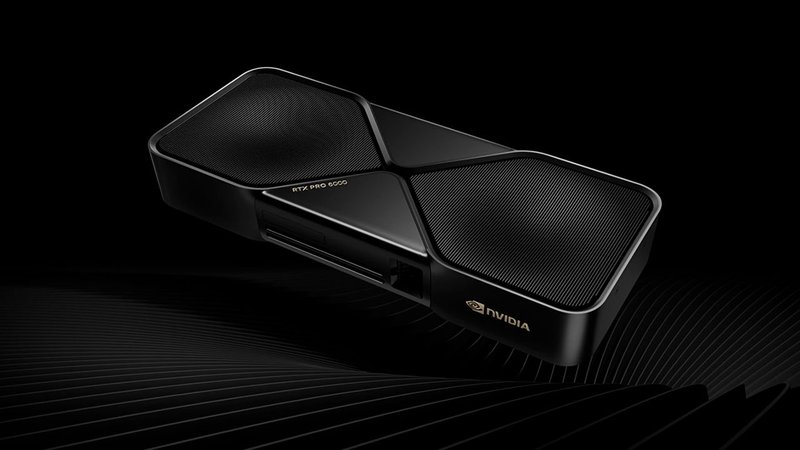
The artificial intelligence landscape continues to evolve rapidly, and with it, the hardware requirements to support increasingly complex workloads. Recently, attention has focused on the NVIDIA RTX PRO 6000 Blackwell Workstation Edition, which appeared on NVIDIA's official marketplace with a list price of $13,250. This quotation has not gone unnoticed, underscoring the magnitude of the investment required for high-end computing solutions intended for professional use and, in particular, for on-premise deployments.
The availability of a GPU of this caliber for workstations indicates a clear direction: to provide professionals with powerful tools for the development, fine-tuning, and inference of Large Language Models (LLM) directly on-premises. For CTOs, DevOps leads, and infrastructure architects, the price of this card represents a starting point for evaluating the Total Cost of Ownership (TCO) of a dedicated AI infrastructure, as opposed to cloud-based models.
Performance and Control for AI Workloads
The RTX PRO 6000 series, based on the Blackwell architecture, is designed to tackle the most demanding workloads in sectors such as simulation, advanced visualization, and increasingly, artificial intelligence. In an on-premise deployment context, a GPU like the RTX PRO 6000 Blackwell offers tangible benefits in terms of latency and throughput for critical operations. The ability to run complex models, including large LLMs, directly on a local workstation, eliminates dependencies on network connectivity and resource queues typical of cloud environments.
This level of control is fundamental for companies developing proprietary AI applications or managing sensitive data. The ability to maintain the entire AI stack, from hardware to software, within their own corporate perimeter, ensures greater flexibility in configuring and optimizing pipelines. Furthermore, it allows for experimentation with different quantization techniques and model optimization without the incremental costs associated with using cloud resources.
TCO, Data Sovereignty, and Deployment Decisions
The $13,250 price tag for the NVIDIA RTX PRO 6000 Blackwell Workstation Edition is a key factor in evaluating the TCO for an on-premise AI infrastructure. While it represents a significant initial investment (CapEx), for many organizations, the long-term benefits can outweigh the recurring operational costs (OpEx) of the cloud. These benefits include data sovereignty, regulatory compliance (such as GDPR), and the ability to operate in air-gapped environments, where external connectivity is limited or absent for security reasons.
The decision between an on-premise and a cloud deployment for AI workloads is complex and depends on numerous factors, including data volume and sensitivity, performance requirements, and available budget. Investment in high-end hardware like the RTX PRO 6000 Blackwell is often justified when the need for direct control, low latency, and maximum data security becomes a priority. AI-RADAR offers analytical frameworks on /llm-onpremise to evaluate these trade-offs, helping companies make informed decisions.
Future Prospects for Professional AI Hardware
The introduction of GPUs like the NVIDIA RTX PRO 6000 Blackwell at such a defined market price underscores the growing maturity of the professional AI hardware segment. As Large Language Models become more pervasive and their applications extend to increasingly critical sectors, the demand for robust and reliable computing solutions, capable of operating in controlled environments, is set to grow.
For companies aiming to build internal AI capabilities, purchasing dedicated hardware represents a strategy to consolidate expertise and ensure technological independence. Although the initial cost may seem high, the ability to manage the entire AI development and deployment pipeline with proprietary resources offers a significant competitive advantage in terms of agility, security, and strategic control.






💬 Comments (0)
🔒 Log in or register to comment on articles.
No comments yet. Be the first to comment!