Nvidia RTX Spark and the New Competitive Landscape
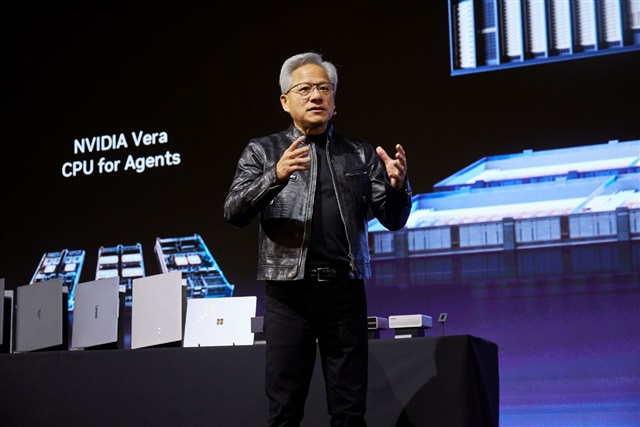
Nvidia's RTX Spark initiative is outlining a new strategic horizon for the company, with significant implications for the artificial intelligence sector. According to reports from DIGITIMES, CEO Jensen Huang is redefining the landscape of key competitors. In this emerging context, Nvidia's most direct rivals are not traditional chip manufacturers like Qualcomm, but rather tech giants such as Apple and Google.
This perspective suggests a fundamental shift in Nvidia's strategy, moving from a focus on pure hardware competition to a broader battle for control of the AI agent ecosystem. Such agents, capable of operating autonomously and intelligently, require increasingly sophisticated processing capabilities, often directly on the device or in local environments, posing new challenges and opportunities for on-premise and edge deployments.
The Role of AI Agents and Local Processing
The concept of an AI agent implies systems capable of perceiving their environment, making decisions, and acting to achieve specific goals, often with a high degree of autonomy. To function effectively, these agents require substantial computing power, especially for the inference of Large Language Models (LLM) or other complex models. The ability to perform these operations locally, without constant reliance on cloud services, is a critical factor.
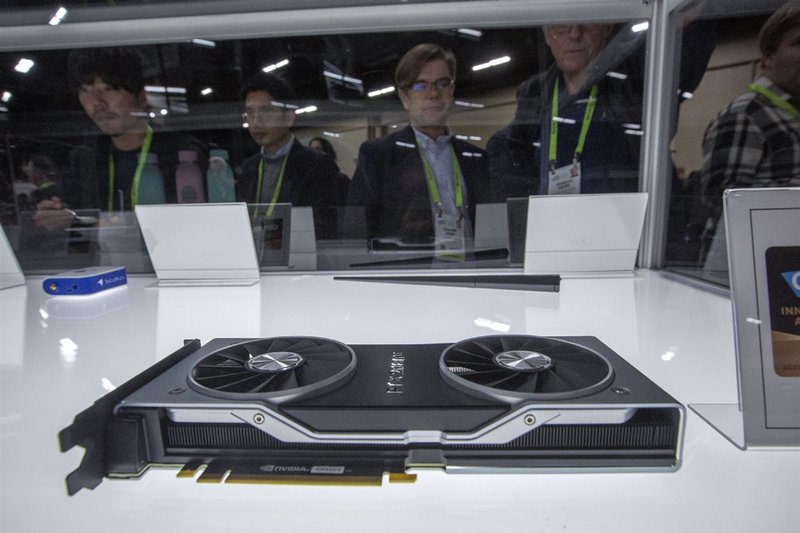
Nvidia's RTX series GPUs, traditionally associated with gaming and content creation, are taking on an increasingly central role in this context. They offer the VRAM and computing power necessary to run LLMs and other AI models directly on workstations or local servers, supporting self-hosted deployment scenarios. This approach is particularly relevant for companies prioritizing data sovereignty, regulatory compliance, and latency reduction, which are fundamental aspects for on-premise or air-gapped architectures.
Implications for On-Premise Deployments and Trade-offs
The competition with Apple and Google in the field of AI agents highlights a trend towards distributed and local AI processing. Apple, with its emphasis on on-device AI and hardware-software integration, and Google, with its solutions spanning both cloud and edge, represent formidable challengers. Nvidia, with its leadership in GPUs, aims to position itself as a key enabler for running these agents on hardware ranging from the data center to the edge.
For organizations evaluating self-hosted alternatives to cloud for AI/LLM workloads, this evolution is crucial. On-premise deployments offer unprecedented control over infrastructure and data but require careful evaluation of the Total Cost of Ownership (TCO), which includes not only the initial hardware investment (CapEx) but also operational costs (OpEx) related to power, cooling, and maintenance. The choice of hardware, such as GPU VRAM and throughput specifications, becomes critical for optimizing performance and efficiency.
Future Prospects in the AI Agent Market
Jensen Huang's vision, identifying Apple and Google as the primary contenders, underscores a battle not just for hardware market share, but for the entire architecture and ecosystem of AI agents. This scenario prompts companies to carefully consider their AI deployment strategies, balancing performance, security, and control needs with cost and operational complexity constraints. Nvidia's ability to provide robust hardware solutions optimized for local inference will be a key factor for its success in this new era of artificial intelligence.
For those evaluating on-premise deployments, AI-RADAR offers analytical frameworks on /llm-onpremise to assess the trade-offs between different architectures and hardware solutions, helping to make informed decisions in a rapidly evolving technological landscape.





💬 Comments (0)
🔒 Log in or register to comment on articles.
No comments yet. Be the first to comment!