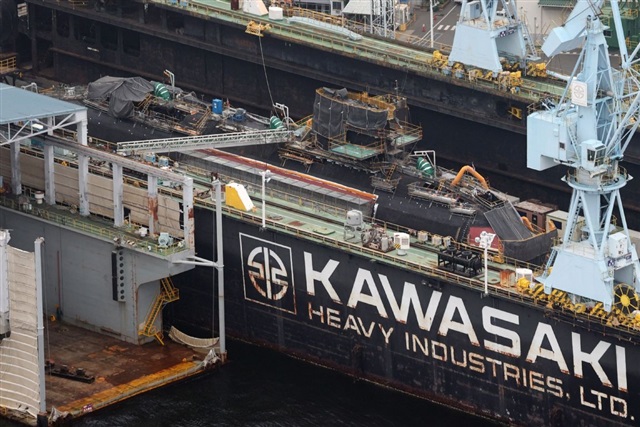
The announcement lacks technical details or a roadmap, but the direction is clear: Nvidia is targeting Japan's industrial fabric as a proving ground for artificial intelligence applied to the physical world. The partnerships with Kawasaki Heavy Industries, Toyota and other manufacturing groups mark a strategic expansion beyond cloud data centers, toward factories, production lines and vehicles where inference must run locally.
Japan represents an ideal landscape for this shift. The presence of robotics and automotive giants coexists with strict data protection regulations and an industrial culture that prefers direct control over critical infrastructure. For Japanese companies, adopting LLMs and computer vision models on-premises is not purely a technology choice: it is a necessity driven by digital sovereignty and operational continuity.
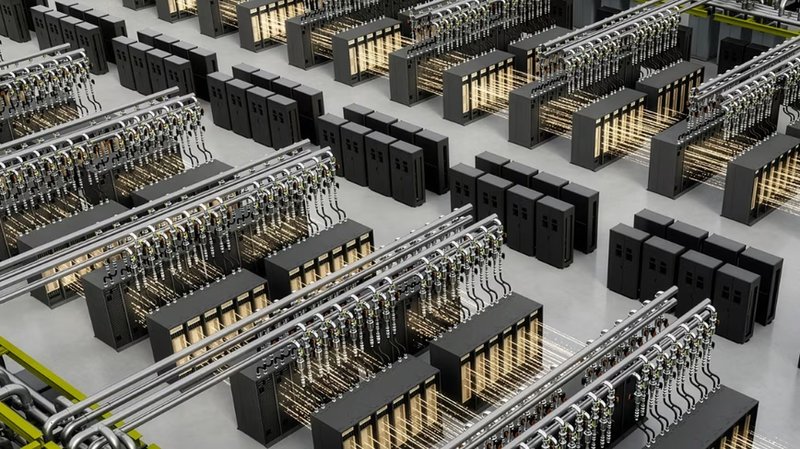
In this scenario, Nvidia's role should be read through its integrated hardware and software framework offering. On one hand, GPUs such as the H100 series or upcoming Blackwell chips provide the compute power to run large models with latencies compatible with production cycles; on the other, tools like TensorRT and Triton Inference Server enable the construction of efficient inference pipelines, even in contexts where VRAM is limited and quantization becomes essential to contain TCO. The Japanese move shows how Nvidia is trying to make self-hosted deployment accessible even to sectors traditionally far from cutting-edge IT.
For Toyota, the agreement could accelerate the development of autonomous driving and internal production AI assistants, but the real test lies in the ability to handle real-time data without relying on the cloud. For Kawasaki Heavy Industries, AI integration could translate into predictive maintenance for complex machinery or advanced robotics. In both cases, data remains within the company—a non-negotiable aspect for many Japanese executives.
Looking beyond the players, Nvidia's Japanese expansion signals a structural trend: industrial AI is becoming a vertical ecosystem where the silicon vendor seeks to lock in the end user with a complete stack, from training to edge inference. This shrinks the room for alternative solutions, such as custom ARM-based chips or FPGAs, and raises the stakes for competitors.
For those evaluating similar architectures today, the core challenge remains the economic and operational sustainability of on-premise deployment. AI-RADAR explores these topics in depth in its section on on-premise LLMs, offering analytical frameworks to assess trade-offs among cost, performance and compliance. Without delving into the specific agreements—whose details remain confidential—Nvidia's initiative in Japan acts as a litmus test for a market striving to combine innovation with sovereignty.









💬 Comments (0)
🔒 Log in or register to comment on articles.
No comments yet. Be the first to comment!