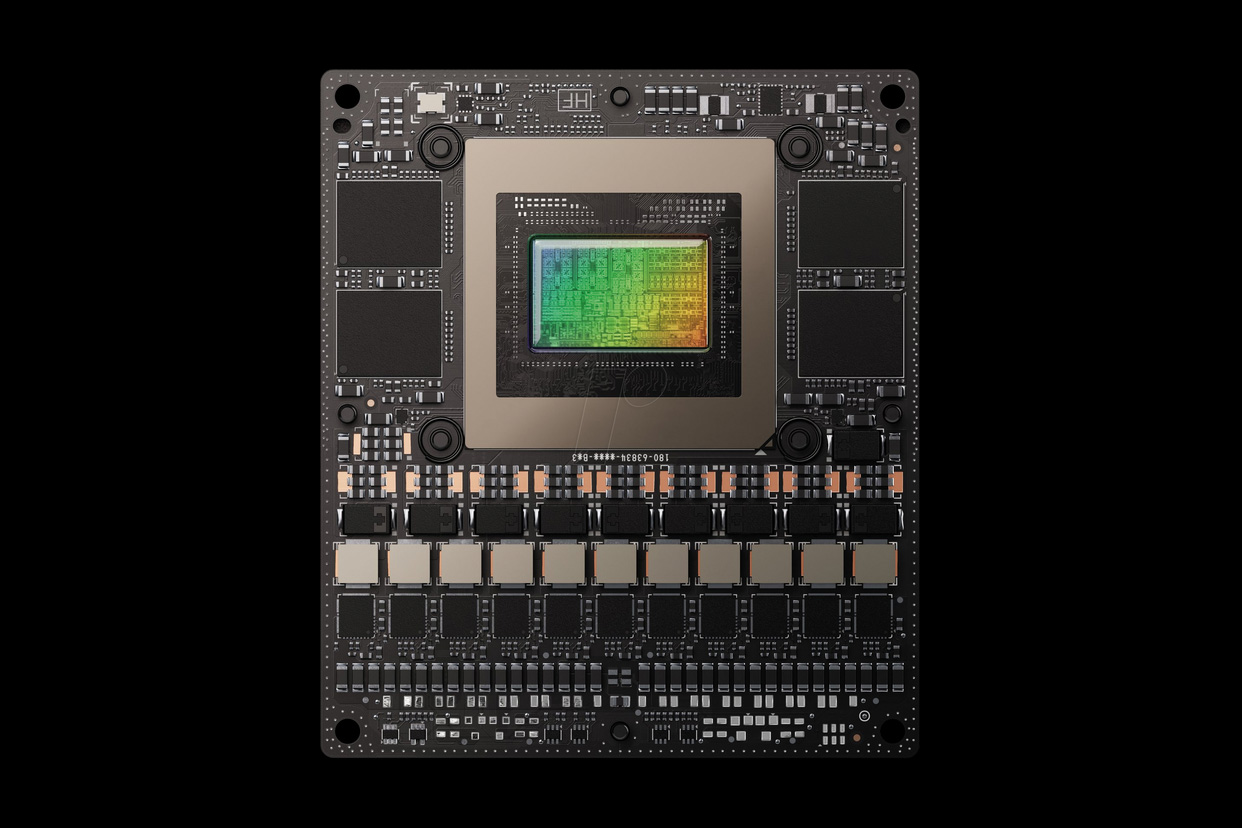
NVIDIA has announced an expansion of the Jetson Thor family with two new modules: T3000 and T2000. Set to arrive in the first quarter of 2027, this move squarely targets the mid-range segment, answering growing demand for more cost-effective solutions for edge AI. Memory cost pressure – a critical component for LLM inference and robotic workloads – was explicitly cited as the driver. But what does this expansion really signal, beyond the product news?
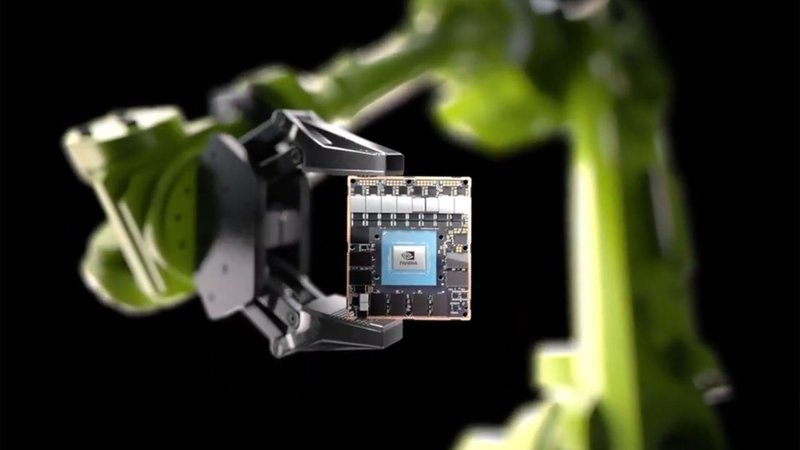
The Jetson ecosystem, historically developer-focused and embedded, leaped forward in compute with Orin. Thor brings NVIDIA's Blackwell architecture to the edge, aiming for data-center-class inference capabilities in compact form factors with low power draw. The T3000 and T2000, slotting below the already-anticipated high-end modules, act as a bridge between affordability and real-world performance.
Memory takes center stage. Today's cutting-edge edge modules need ever more VRAM – often HBM or LPDDR5X – to handle larger models, with costs that risk locking out whole market segments. NVIDIA's move to offer mid-range variants isn't just customer feedback; it's a structural acknowledgment that the real barrier to on-premise AI, especially for smaller enterprises, isn't raw compute but TCO, dominated by memory. Cutting price, even at the cost of capacity or bandwidth, opens up deployments that were previously unviable.
For the AI-RADAR readership, this announcement carries second-order implications. More accessible modules ease adoption of self-hosted architectures for quantized LLM inference, reducing cloud dependence. A manufacturing firm wanting to run a model like Llama 3 8B locally for quality control might find a mid-range Jetson Thor module the ideal on-ramp: enough power, acceptable latency, and, crucially, data that never leaves the premises. Digital sovereignty rests on such accessible hardware.
Uncertainties remain. We don't yet have precise specs: core count, memory bandwidth, support for INT8/FP16 precision. But the logic is clear: fragmenting the lineup to cover more price points pulls the entire ecosystem downward, accelerating the spread of AI inference capabilities everywhere. Competitors like Qualcomm or ARM-based ecosystems will need to respond, perhaps with even more integrated solutions. Meanwhile, those building robotic or computer vision systems will find fertile ground.
The announcement also signals a less-trumpeted shift: the race to ever-larger, resource-hungry models isn't the only path. NVIDIA itself, with these modules, legitimizes the idea that smaller, efficient, well-optimized models (via quantization and fine-tuning) are the true frontier of real deployment. For AI infrastructure planners, the message is that 2027 won't just be the year of supercomputers, but also the year when local inference finally becomes mundane.





💬 Comments (0)
🔒 Log in or register to comment on articles.
No comments yet. Be the first to comment!