The Rise of On-Device AI and Silicon Giants' Strategies
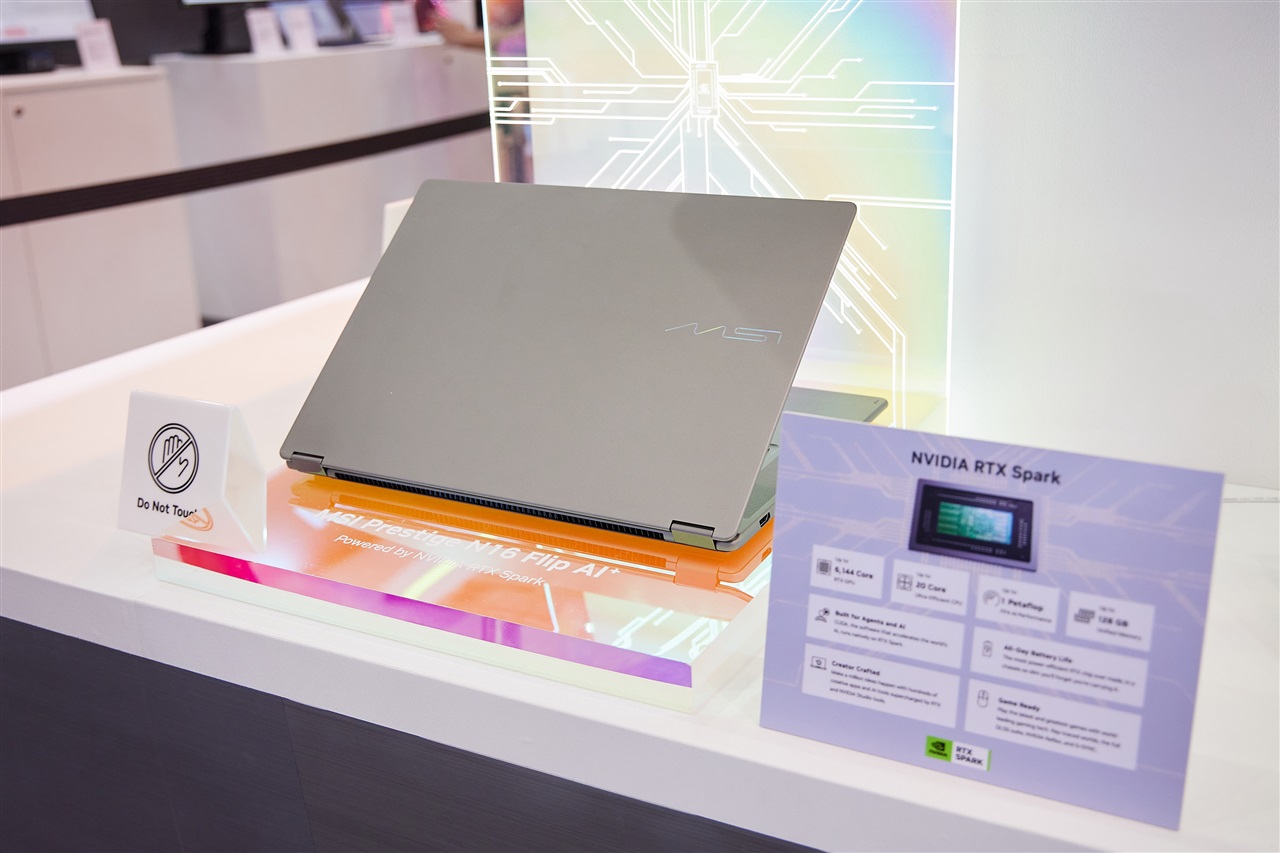
Nvidia recently outlined its vision for the AI PC, a concept promising to bring artificial intelligence capabilities directly to personal devices. This strategic move underscores a growing trend in the tech industry: the decentralization of AI workloads, shifting them from the cloud towards the edge and local systems. Concurrently, Intel, a historical player in the processor market, appears to be adopting a more cautious approach, focusing on a period of reflection rather than announcing new products specifically for this emerging segment.
This divergence in strategies highlights the differing perspectives of the two silicon giants regarding the future of AI. While Nvidia pushes for deep AI integration at the hardware level to enable new user experiences and local applications, Intel may be busy redefining its offerings to compete effectively in a rapidly evolving landscape. For businesses and IT professionals, this dynamic is crucial for understanding future deployment options for Large Language Models (LLMs) and other AI workloads.
Nvidia's Vision for On-Device AI and Its Implications
Nvidia's vision for the AI PC is not limited to a simple performance upgrade; it aims to transform how users interact with AI. The idea is to enable the execution of LLMs and other complex AI applications directly on the device, leveraging the power of integrated or discrete GPUs. This approach offers numerous advantages, including enhanced data privacy, as sensitive information does not need to leave the device to be processed in the cloud. Furthermore, latency and dependence on network connectivity are significantly reduced, improving the user experience in critical scenarios.
For organizations considering on-premise LLM deployment, Nvidia's push towards the AI PC is particularly relevant. An ecosystem of AI-powered PCs could serve as a foundation for distributed edge computing solutions, where AI inference occurs close to the data source. This scenario is ideal for sectors with stringent data sovereignty requirements or for air-gapped environments where cloud connectivity is limited or absent. The availability of consumer/prosumer hardware capable of handling significant AI workloads could also influence the Total Cost of Ownership (TCO) for specific enterprise use cases, offering alternatives to expensive cloud servers or dedicated data centers.
Intel's Context and Enterprise Challenges
Intel's positioning, currently favoring "reflection" over product announcements, suggests a phase of strategic reorganization. Historically, Intel has dominated the CPU market, but the increasing importance of AI acceleration has shifted focus towards GPUs and dedicated Neural Processing Units (NPUs). While Intel has already introduced processors with integrated AI capabilities, its strategy for the AI PC may still be in its definition phase to compete with Nvidia's GPU-centric approach.
For businesses, selecting hardware for on-premise LLM deployment is a complex decision involving significant trade-offs. Factors such as available VRAM, compute capability, throughput, and energy efficiency are crucial. While Nvidia GPU-based solutions are often preferred for intensive training and inference workloads, Intel's offerings with integrated NPUs might find a niche in low-power AI scenarios or for running smaller, optimized models directly on workstations or edge devices. Intel's challenge will be to demonstrate how its solutions can offer competitive TCO and adequate performance for enterprise needs, balancing integration with raw power.
Future Prospects and Deployment Trade-offs
The future of on-device AI and the evolution of the AI PC will profoundly impact enterprise deployment strategies. The ability to run LLMs and other AI applications locally opens new possibilities for personalization, security, and operational efficiency. However, choosing between a cloud-first approach, traditional on-premise deployment, or a hybrid model with AI at the edge will require careful analysis. Companies will need to consider not only hardware specifications, such as GPU VRAM or NPU power, but also aspects related to scalability, software lifecycle management, and regulatory compliance.
The competition between Nvidia and Intel in this emerging space will stimulate innovation, leading to increasingly powerful and efficient hardware solutions. For those evaluating on-premise deployment, AI-RADAR offers analytical frameworks on /llm-onpremise to assess the trade-offs between initial (CapEx) and operational (OpEx) costs, data sovereignty, and required performance. The final decision will depend on each organization's specific needs, balancing the demand for control and security with the flexibility and scalability offered by different deployment architectures.







💬 Comments (0)
🔒 Log in or register to comment on articles.
No comments yet. Be the first to comment!