A Quarter of Architecture Shifts
As Q2 2025 wraps up, the Linux community has been buzzing about a trio of developments that could reshape on-premise AI infrastructure. According to Phoronix, the most-read news among 872 original articles and 54 hardware reviews included NVIDIA’s upcoming Vera CPU, Intel’s Arc Pro B70 GPU, and a wave of performance optimizations. On the surface, these are hardware announcements; beneath lies a growing toolkit for organizations that want to run LLM training and inference locally, maintaining control over data and costs.
Vera: NVIDIA’s Next ARM Bet for Local AI
NVIDIA is expanding its CPU roadmap with Vera, an ARM-based processor designed as a companion to its GPUs in next-generation servers. While specifications are still under wraps, the anticipation stems from the prospect of tightly integrated nodes where high memory bandwidth and energy efficiency lower the Total Cost of Ownership for intensive AI workloads. For teams deploying on-premise clusters, Vera could mean fewer bottlenecks when streaming thousands of tokens per second through large models, whether during fine-tuning or real-time inference. The chip’s reception in the Q2 rankings underscores a hunger for self-hosted infrastructure that doesn’t rely on cloud SLAs.
Arc Pro B70: A Rival on the Desktop and Beyond
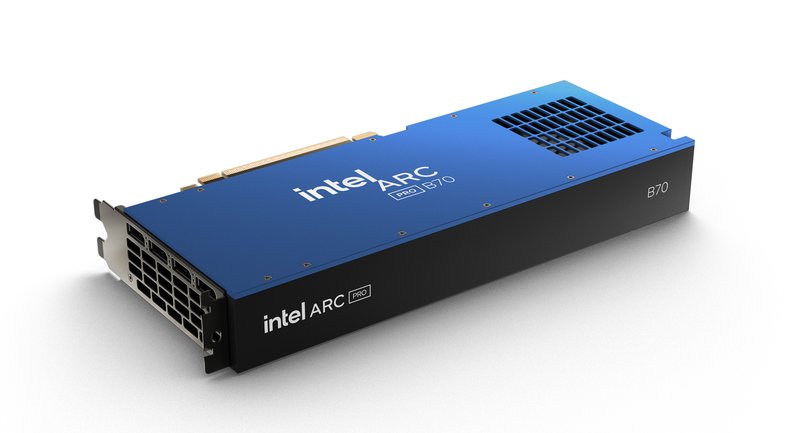
Intel’s Arc Pro B70 also drew significant attention. Positioned for professional workstations, this GPU is designed to handle quantized inference—such as FP16 or INT8 pipelines—without the power draw of a data-center accelerator. Its appeal lies in its potential to bring cost-effective, on-premise inference to smaller labs or edge deployments where data sovereignty is paramount. Still, the road to adoption depends on Linux driver maturity and support within popular frameworks. The B70 signals that the AI hardware landscape is diversifying, a trend that can only benefit organizations evaluating local alternatives to dominant cloud offerings.
The Software Edge: Why Every Optimization Matters
Beyond new silicon, Q2 brought a flurry of kernel and compiler improvements that directly impact inference latency and throughput. Better memory allocation, thread scheduling, and hooks into compute libraries can shave milliseconds off each request. At scale, these savings translate into lower operational costs or higher throughput from existing hardware. For teams running on-premise AI pipelines, tracking such system-level changes is a quiet but critical part of TCO management—software efficiency often makes the difference between a viable local deployment and a cost overrun.
Looking Ahead: On-Premise Gains Momentum
The excitement of the past quarter reveals a shifting landscape: public cloud is no longer the only rational home for AI workloads. Vera and Arc Pro B70 show that hardware vendors are serious about the self-hosted space, while ongoing performance tuning reinforces Linux’s role as the foundation for local inference. Trade-offs remain: on-premise systems demand dedicated expertise, and cloud elastic scaling is hard to match. Yet for those prioritizing data residency, regulatory compliance, or long-term cost predictability, Q2’s highlights provide fresh reasons to reconsider where the compute should live.





💬 Comments (0)
🔒 Log in or register to comment on articles.
No comments yet. Be the first to comment!