NVIDIA Vera: Olympus Cores Redefine ARM Performance for Data Centers
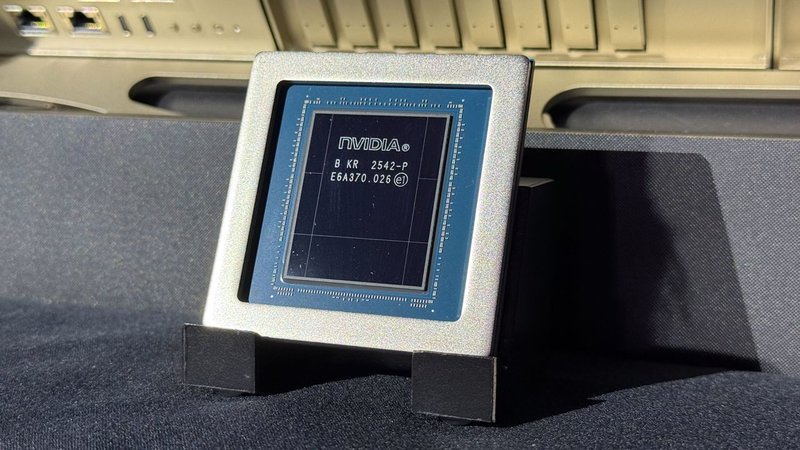
NVIDIA is preparing to introduce its Vera CPU, an ARM-based data center processor poised to redefine performance standards for agentic AI workloads. While its widespread rollout is anticipated later this year, initial assessments indicate a surprising competitiveness against established Intel and AMD x86_64 CPUs.
This new offering from NVIDIA, featuring internally designed Olympus CPU cores, stands out for a level of performance previously unseen in ARM or non-x86_64 processors. Early benchmarks, conducted in a Linux environment, suggest a significant leap forward that could have profound implications for AI infrastructure deployment strategies, particularly for those prioritizing on-premise solutions.
Technical and Architectural Details
The core of the Vera CPU lies in its Olympus cores, a proprietary architecture developed by NVIDIA with a specific focus on agentic AI workloads. This architectural specialization is crucial, as the computational demands of agentic AI – often involving complex decision cycles, extensive context management, and environmental interaction – differ from those of traditional server workloads.
Vera's ability to compete with Intel and AMD's x86_64 CPUs represents a breakthrough. Historically, ARM processors have excelled in energy efficiency and areas like mobile devices or edge computing but have struggled to match the raw computing power required for more demanding server workloads. NVIDIA's approach with the Olympus cores appears to overcome this barrier, positioning Vera as a credible and high-performing alternative in the data center segment.
Implications for On-Premise Deployments
The emergence of a high-performance ARM CPU like NVIDIA Vera has direct implications for organizations evaluating on-premise deployment strategies for their AI workloads. The availability of a viable alternative to traditional x86_64 architectures can significantly influence the Total Cost of Ownership (TCO) and decisions related to data sovereignty.
Self-hosted infrastructures, often preferred for compliance, security, or managing air-gapped environments, could benefit from new hardware options that balance performance and power consumption. The choice between different CPU architectures, in conjunction with NVIDIA's GPUs, offers greater flexibility in designing local stacks optimized for Large Language Models (LLM) inference and training, as well as other AI models. For those evaluating on-premise deployments, AI-RADAR provides analytical frameworks on /llm-onpremise to assess the trade-offs between various solutions.
Future Prospects and Final Considerations
The debut of NVIDIA's Vera CPU marks an important moment in the evolution of artificial intelligence hardware. NVIDIA's move to develop its own ARM data center CPU underscores the growing importance of vertical integration between CPU, GPU, and software to optimize the performance of the most complex AI workloads.
The competitive landscape is enriched, offering CTOs and infrastructure architects new levers to optimize their resources. NVIDIA Vera's ability to deliver competitive performance within an ARM architecture could accelerate the adoption of more efficient and specialized solutions, driving innovation not only in the CPU field but also across the entire hardware and software ecosystem dedicated to AI.




💬 Comments (0)
🔒 Log in or register to comment on articles.
No comments yet. Be the first to comment!