Nvidia Vera: The 88-Core Processor Challenges Epyc and Xeon in Early Linux Benchmarks
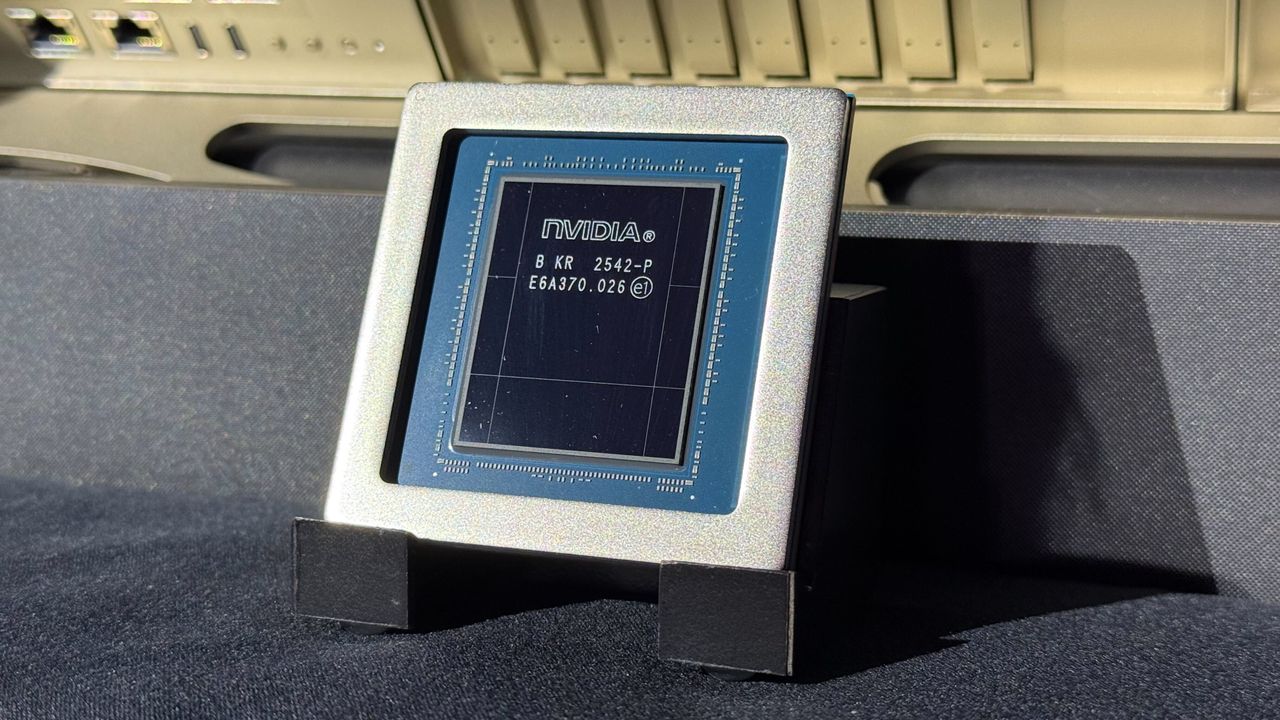
Nvidia, a company historically dominant in the GPU sector for AI and graphics acceleration, is expanding its presence in the server processor market. The company recently initiated restricted access distribution of its Vera CPU, an 88-core processor, for an initial round of benchmarks on Linux systems. This step marks a strategic evolution for Nvidia, aiming to offer comprehensive solutions for high-performance computing infrastructure.
Nvidia's move signals a clear intention to compete directly with industry giants AMD and Intel, whose Epyc and Xeon lines hold significant shares of the server market. The introduction of Vera could redefine competitive dynamics, especially in contexts where Nvidia's integrated hardware and software offerings can provide distinct advantages.
Technical Details and Initial Performance
The Nvidia Vera processor stands out for its 88-core architecture, a configuration designed to handle intensive workloads. Initial benchmarks conducted on Linux platforms, although with restricted access and on selected tests, have shown competitive performance. Vera managed to match or surpass the performance of AMD Epyc and Intel Xeon processors in specific scenarios.
It is crucial to note that the results come from "selected tests," implying that optimal performance might have been achieved in areas where Vera's architecture is particularly optimized. This is a common aspect of initial benchmarks for new architectures, where vendors tend to highlight their strengths. For technical decision-makers, it will be essential to await broader, independent analysis to fully understand Vera's positioning across a wide range of workloads, including those related to LLM inference and training on specific datasets.
Implications for On-Premise Deployments
The arrival of a powerful CPU like Nvidia Vera has significant implications for organizations evaluating on-premise deployments for their AI and high-performance computing workloads. A robust server processor is a key component in a local stack, not only for operating system and application management but also for supporting complex data pipelines and orchestrating GPU resources.
For companies prioritizing data sovereignty, regulatory compliance, and security in air-gapped environments, the option of powerful, locally controllable server hardware is fundamental. Vera could offer an interesting alternative for building self-hosted infrastructures, reducing reliance on external cloud services and allowing more granular control over TCO. The choice between cloud and on-premise solutions always involves a careful evaluation of trade-offs between initial (CapEx) and operational (OpEx) costs, scalability, and flexibility. For those evaluating on-premise deployments, AI-RADAR offers analytical frameworks on /llm-onpremise to assess these trade-offs in a structured manner.
Future Prospects and Market Context
Nvidia's entry into the server CPU market with Vera represents a strategic move that could accelerate innovation and competition. The ability to offer an integrated ecosystem of GPUs and CPUs could attract companies seeking optimized and unified hardware solutions for their data centers. This is particularly true for AI workloads, where the synergy between CPU and GPU is increasingly critical.
Vera's success will depend on its ability to demonstrate consistent added value across a wide range of applications and its integration into the existing software ecosystem. Decision-makers will need to consider not only raw performance but also factors such as software support, energy efficiency, and long-term total cost of ownership. Competition with established players like AMD and Intel will be intense, but Nvidia's approach could open new opportunities for AI infrastructure optimization.



💬 Comments (0)
🔒 Log in or register to comment on articles.
No comments yet. Be the first to comment!