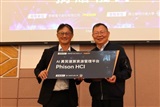
The announcement is brief: Taiwan’s National Yang Ming Chiao Tung University (NYCU) and Phison Electronics have joined forces to build a platform for managing heterogeneous computing resources in AI workloads. No details yet on timeline or tech stack, but the move signals something important: the need to coherently orchestrate GPUs, CPUs, and various accelerators is becoming critical well beyond the major cloud providers.
The hidden heterogeneity in on-premise infrastructure
In a landscape where on-premise inference of Large Language Models (LLMs) is no longer an exception but an architectural choice driven by data sovereignty and TCO, hardware fragmentation is a constant headache. Local infrastructures often grow by accumulation: older NVIDIA GPUs, new custom silicon, FPGAs, NPUs—each with its own drivers, libraries, and VRAM footprint. Making them work together, or simply assigning the right workload to the right device, demands a management layer that today belongs to a few.
What the NYCU-Phison collaboration promises
The announced platform could fill that gap, delivering to enterprise and academic environments a middleware capable of abstracting hardware heterogeneity for training and inference. Phison, historically known for its NAND controllers, has shifted some of its research toward high-performance computing, leveraging expertise in resource efficiency. The university, for its part, provides a testbed for real-world distributed computing scenarios.
Implications for self-hosted deployments
For teams evaluating on-premise deployment, such a tool could cut management complexity and lower the technical barriers to getting the most out of mixed hardware without writing custom orchestration glue. From a TCO standpoint, optimal allocation curbs computational waste, which is often the biggest hidden cost in heterogeneous environments. Add to that the ability to manage everything locally, without depending on third-party cloud schedulers, and you get a tangible reinforcement of data control.
Challenges and what lies ahead
The challenge, of course, will be integration with mainstream serving frameworks and the ability to handle LLM-specific workloads, where memory and bandwidth requirements may tilt the balance toward certain accelerators. We don’t know yet whether the platform will support automatic quantization or offer APIs for model versioning. But the initiative points to a trend: the commoditization of AI hardware is pushing the market toward tools that make life easier for those who build and maintain these machines. While we await further details, one thing is clear: university‑industry partnerships like this often precede open‑source projects or products that eventually show up in self‑hosted stacks. And in an ecosystem that demands increasingly granular control, that is an inevitable direction.









💬 Comments (0)
🔒 Log in or register to comment on articles.
No comments yet. Be the first to comment!