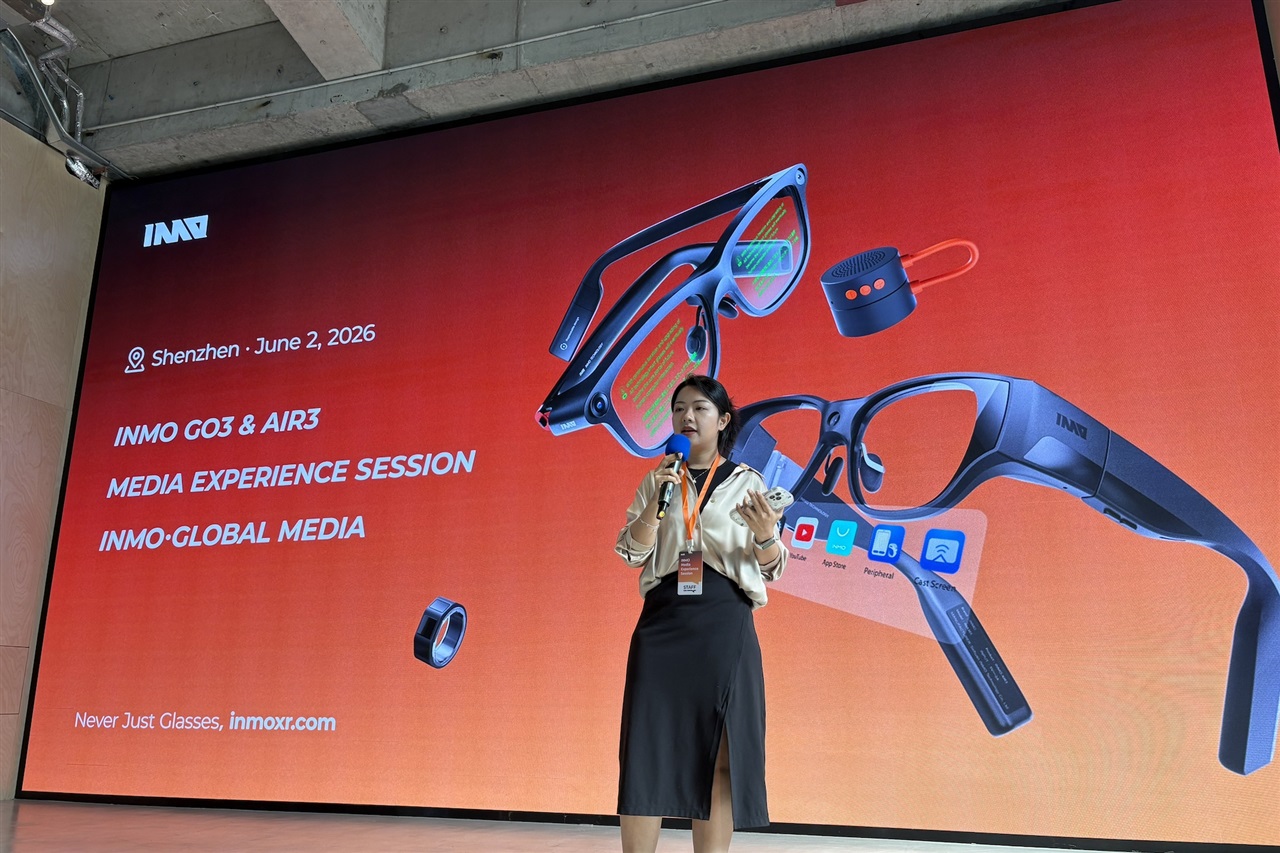
The Rise of AI Glasses: Chinese Challenge and Mass Adoption Barriers
The smart glasses sector, increasingly equipped with artificial intelligence capabilities, is experiencing a phase of intense innovation, with local Chinese brands playing an increasingly prominent role. These domestic players are emerging as significant challengers to traditionally dominant brands, bringing new perspectives and technologies to the market. However, despite the innovative ferment, the mass adoption of these devices still faces significant hurdles, linked to both technological limitations and market and user acceptance challenges.
The interest in AI glasses reflects a broader trend towards artificial intelligence processing at the network's edge, or "edge AI." This approach aims to bring computing power directly to the device, reducing latency and enhancing data privacy. For CTOs and infrastructure architects, designing systems for AI glasses involves managing strict constraints: the need for low-power processors, limited VRAM, and a compact form factor. The ability to run Large Language Models (LLM) or other AI models directly on the device, perhaps through advanced Quantization techniques, is crucial for the success of these products.
Technical Constraints and Deployment Implications
The primary challenge for AI glasses lies in balancing performance with power consumption. Running complex AI workloads, such as real-time speech recognition, translation, or visual analysis, typically requires computing power found in servers with dedicated GPUs and ample VRAM. Integrating such capabilities into a wearable device means facing significant trade-offs. The choice of hardware, from specific silicon for edge AI to memory modules, becomes critical for the throughput and latency the device can offer.
From a deployment perspective, AI glasses represent a paradigmatic example of "edge deployment." This scenario raises fundamental questions about data sovereignty and compliance. If data is processed locally, dependence on the cloud is reduced, and privacy guarantees are strengthened—a crucial aspect for sectors like healthcare or defense. However, managing and updating models on thousands or millions of edge devices requires robust and scalable MLOps pipelines, with direct implications for the Total Cost of Ownership (TCO) for companies developing and maintaining these solutions.
The Competitive Landscape and Adoption Challenges
Competition between Chinese and global brands is accelerating innovation, driving towards more efficient and performant solutions. However, the path to mass adoption is still long. Factors such as device cost, battery life, comfort, and social acceptance play a crucial role. Furthermore, the maturity of software ecosystems and the availability of useful and intuitive applications are key elements to move beyond the niche phase.
For companies evaluating the integration of AI technologies into edge products, it is essential to carefully analyze the trade-offs between on-premise/on-device development and reliance on cloud services. AI-RADAR offers analytical Frameworks on /llm-onpremise to evaluate these scenarios, considering aspects such as data sovereignty, security requirements, and overall TCO. The decision to process data locally or in the cloud has profound impacts on architecture, operational costs, and long-term product strategy.
Future Prospects and Balancing Trade-offs
Despite current challenges, the potential of AI glasses remains high. Continuous innovation in low-power silicon, Quantization techniques for LLM, and optimized Inference Frameworks promises to overcome many of today's limitations. The ability to offer fluid and contextually intelligent user experiences, without compromising privacy or battery life, will be key to unlocking the mass market.
For technology decision-makers, evaluating these technologies requires a deep understanding of hardware constraints, deployment implications, and associated costs. The choice between fully on-device, hybrid, or cloud-based solutions is never trivial and depends strictly on strategic objectives, compliance requirements, and available budget. Brands that can balance innovation, functionality, and practicality will be those that, in the long term, succeed in capturing a significant share of this emerging market.









💬 Comments (0)
🔒 Log in or register to comment on articles.
No comments yet. Be the first to comment!