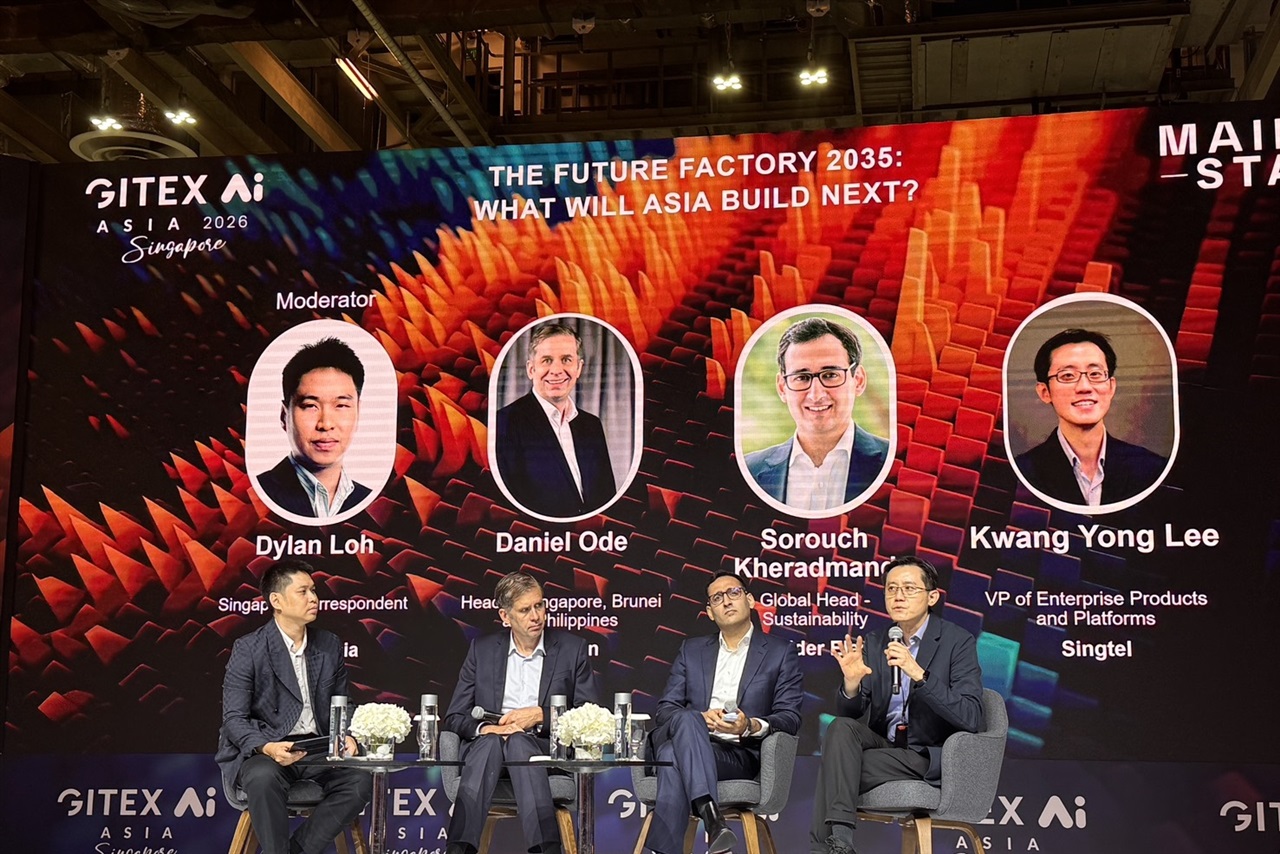
AI as a Tool, Not the Sole Driver
The debate surrounding artificial intelligence (AI) often focuses on its transformative capabilities, but the evolution of the industrial landscape, particularly in Asia, suggests that other macroeconomic and geopolitical factors are taking on a predominant role. While AI is undoubtedly a catalyst for innovation and efficiency, its implementation and long-term impact will be shaped by broader considerations.
The "factories of the future" in Asia, and by extension globally, will not be defined solely by the sophistication of their algorithms or computing power. Instead, elements such as access to energy, the availability of capital, and the growing emphasis on technological sovereignty are emerging as the true strategic pillars that will guide investment decisions and infrastructural development.
Energy and Capital: Pillars of AI Infrastructure
Building and maintaining advanced AI infrastructures, which include data centers, high-performance GPU servers, and cooling systems, require significant energy consumption. In a context of volatile energy prices and increasing attention to sustainability, the availability of stable and cost-competitive energy sources becomes a critical factor for the Total Cost of Ownership (TCO) of on-premise deployments. Companies evaluating self-hosted solutions must carefully consider the energy impact of their training and inference pipelines.
Concurrently, access to capital is fundamental. The investments required to acquire cutting-edge hardware, develop local expertise, and build resilient data centers are substantial. Decisions between CapEx (capital expenditures) for proprietary infrastructures and OpEx (operational expenditures) for cloud services depend heavily on an organization's investment capacity and long-term financial strategy. This balance between initial and operational costs is a key element in strategic planning for large-scale AI adoption.
Data and Technological Sovereignty: A Strategic Imperative
Another defining factor is sovereignty. This concept manifests on multiple fronts: from data residency and regulatory compliance (such as GDPR or local equivalents) to the need to maintain control over the entire technology stack. For many nations and large enterprises, reliance on external cloud providers, often located in different jurisdictions, raises significant concerns regarding security, privacy, and strategic autonomy.
The push towards self-hosted and air-gapped deployments reflects the desire to ensure that sensitive data remains within national or corporate boundaries, reducing the risks of unauthorized access or service interruptions. This need for control also extends to the silicio supply chain and the development of internal competencies, aiming to build a more resilient and independent technological ecosystem.
Prospects for the Factories of the Future
In summary, while AI will continue to be a driving force for innovation, its impact in Asian factories will be intrinsically linked to these strategic factors. Companies and governments that can effectively balance energy needs, capital investments, and sovereignty priorities will be better positioned to capitalize on the benefits of AI and maintain a competitive advantage.
For those evaluating on-premise deployments of Large Language Models (LLM) and other AI solutions, it is essential to consider these complex trade-offs. AI-RADAR offers analytical frameworks on /llm-onpremise to support strategic decisions, highlighting how the choice between cloud and self-hosted solutions is not merely technical, but deeply rooted in economic, energy, and geopolitical considerations. The future of Asian industry, and beyond, will be a delicate balance between technological innovation and strategic autonomy.





💬 Comments (0)
🔒 Log in or register to comment on articles.
No comments yet. Be the first to comment!