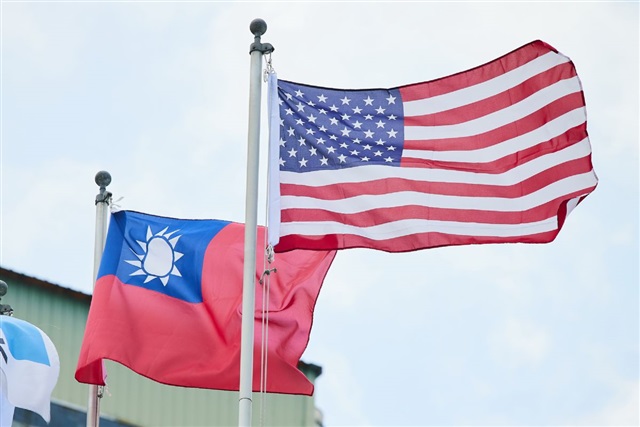
The news comes in a terse, almost anonymous report from DIGITIMES: Taiwanese OSATs are moving capacity out of China, with new investments in the United States and Southeast Asia. A few lines that illuminate a structural shift: the semiconductor assembly and test chain, often overlooked, is repositioning. And with it, the entire physical pipeline for AI chips.
For organizations planning on-premise LLM deployments, this is far from a peripheral matter. The servers that house GPUs like NVIDIA H100s or AMD Instinct accelerators are born, in part, on the floors of ASE Technology, Powertech, and KYEC. If their geographic footprint changes, so do availability constraints, geopolitical risks, and ultimately the Total Cost of Ownership (TCO) of internally managed AI infrastructure.
The most immediate effect is the reduction of a single point of failure. In recent years, a disproportionate share of OSAT capacity was concentrated in China, creating a dependency that went well beyond commercial dynamics. The shift toward the US and Southeast Asia—Malaysia, Vietnam, Singapore—insulates supply chains from trade tensions and the logistical bottlenecks that plagued the sector during the pandemic. For an enterprise sizing an on-premise cluster, this means more predictable lead times and greater supply chain resilience.
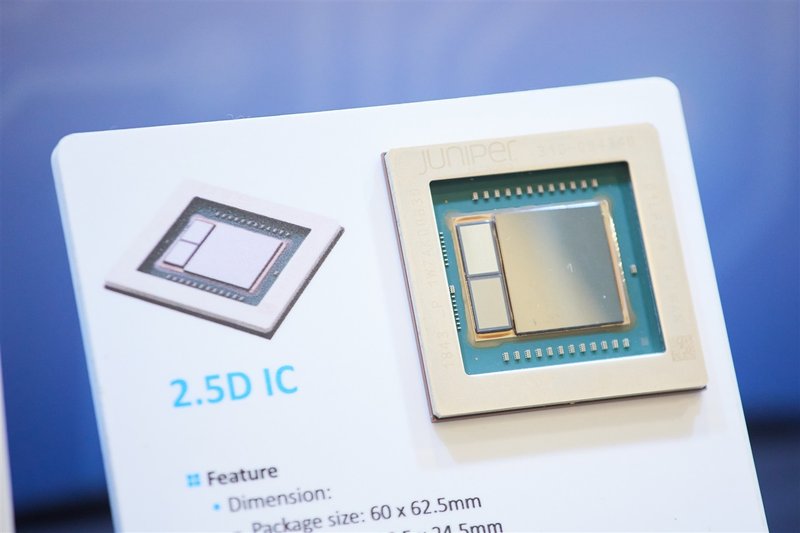
Then there is advanced packaging. While TSMC’s CoWoS technology remains the celebrated bottleneck for AI accelerators, OSATs are investing in alternatives such as FOCoS (Fan-Out Chip-on-Substrate). Their expansion in regions less saturated by Chinese demand means incremental capacity that could ease volume constraints and, over time, moderate costs. It is not unrealistic to imagine that, in a stabilization scenario, the cost per equivalent GPU might fall, lowering the entry threshold for self-hosted projects that have so far been the preserve of big tech.
On the data sovereignty front, the new OSAT geography bolsters the argument for organizations building air-gapped environments or those governed by regulations like GDPR. Knowing that the entire testing and packaging chain of the silicon powering their models does not traverse jurisdictions at risk of industrial espionage shrinks the attack surface and simplifies compliance audits. At a time when many organizations are shunning the public cloud precisely to maintain data control, the ability to source from suppliers that have moved upstream facilities into aligned territories strengthens the business case for on-premise.
Of course, the transition brings its own friction: building advanced production lines takes years, and upfront costs may be reflected in short-term pricing. US expansion also carries higher labor and regulatory costs. But the direction is clear: the semiconductor chain is being deliberately fragmented, not chaotically. It is a derisking process that rewards those betting on local infrastructure, because it reduces the likelihood of finding servers idle waiting for chips stuck somewhere between Shanghai and Shenzhen.
For those making deployment decisions today, the OSAT expansion signals that the window to negotiate supply contracts with preferential origin clauses may already be open. It’s not just about buying hardware: it’s about choosing a procurement architecture that anticipates the structural decoupling now underway.







💬 Comments (0)
🔒 Log in or register to comment on articles.
No comments yet. Be the first to comment!