
OpenAI and the New Compute Acquisition Strategy
OpenAI, the pioneering organization in Large Language Model development, is reportedly nearing the finalization of a leasing agreement for a massive 10-gigawatt computing infrastructure in Ohio. This operation, which would see the backing of Nvidia, a leader in graphics processors for artificial intelligence, marks a significant strategic shift for OpenAI. The company appears to be moving from a model of building and directly managing its own computing resources to one of renting computational capacity.
News, reported by sources close to the operation, highlights the increasing demand for computing power necessary for training and inference of increasingly complex LLMs. A 10-gigawatt infrastructure represents a colossal energy and computational scale, comparable to that of several power plants, underscoring the resource intensity required by modern AI.
The Challenges of Compute for Large Language Models
Developing and deploying LLMs demand an astronomical amount of computational resources, particularly high-performance GPUs. Training large models can require weeks or months of continuous computation on clusters of thousands of GPUs, while inference, though less intensive, still necessitates optimized hardware to ensure low latency and high throughput.
For companies operating with AI workloads, the decision between building their own on-premise infrastructure or relying on cloud services is crucial. Constructing proprietary data centers involves significant capital expenditures (CapEx) and managing operational complexities, from power supply and cooling to hardware maintenance. Renting compute, on the other hand, shifts costs towards an operational expenditure (OpEx) model, offering greater flexibility and scalability, but potentially with less direct control over data sovereignty and specific hardware optimization.
Strategic Implications and Nvidia's Role
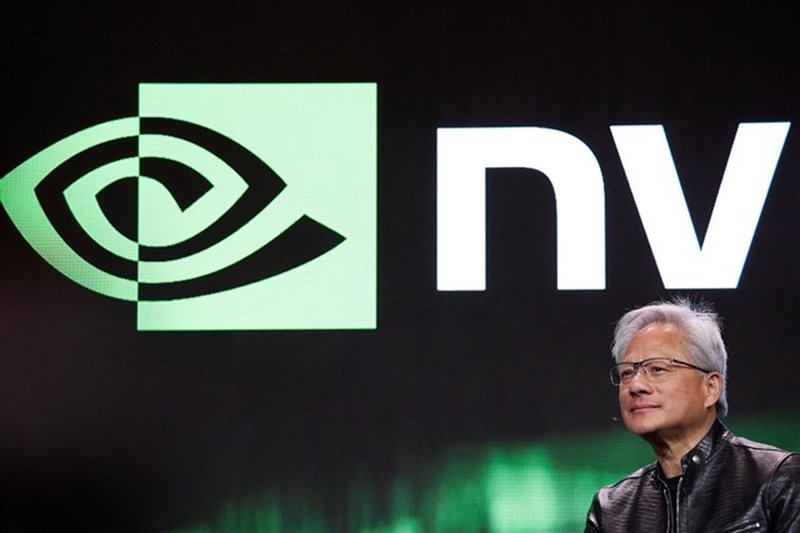
OpenAI's choice to "rent" rather than "build" reflects a maturation of the AI market, where rapid and scalable access to computing resources becomes a critical success factor. This approach allows OpenAI to focus on its core business – AI model research and development – by delegating infrastructure management to third parties or specialized partners. Nvidia's involvement is not coincidental: the company is the dominant provider of silicon for AI, and its participation in a project of this magnitude further strengthens its position as a key enabler for the LLM ecosystem.
For companies evaluating self-hosted versus cloud alternatives for AI/LLM workloads, OpenAI's move offers an interesting perspective. While OpenAI is shifting towards renting, the need for a 10GW capacity underscores that even with an OpEx model, resource demands remain immense. For those considering on-premise deployments, there are significant trade-offs in terms of TCO, data sovereignty, and hardware control, aspects that AI-RADAR analyzes in detail within its frameworks on /llm-onpremise.
The Future of AI Compute: Energy, Scalability, and Partnerships
OpenAI's potential deal in Ohio highlights a clear trend: the future of AI compute will be increasingly tied to the availability of large-scale energy and the ability to deploy massive infrastructures. Partnerships with players like Nvidia, who can guarantee the supply of necessary silicon, become fundamental. This scenario suggests that the market will see increasing specialization, with some entities focused on providing compute as a service and others on model development.
OpenAI's decision could influence other major tech companies and startups, prompting them to reconsider their infrastructure investment strategies. The AI race is not just a race for algorithms, but also a race for the physical resources that power them, with significant implications for innovation, sustainability, and global competitiveness in the technology sector.









💬 Comments (0)
🔒 Log in or register to comment on articles.
No comments yet. Be the first to comment!