
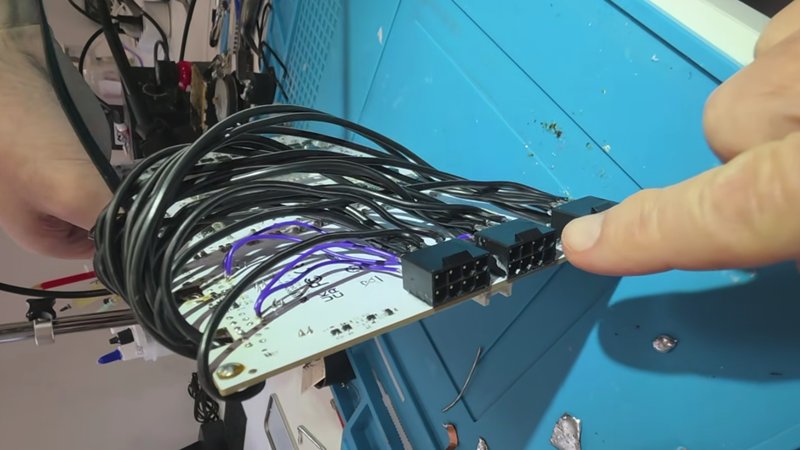
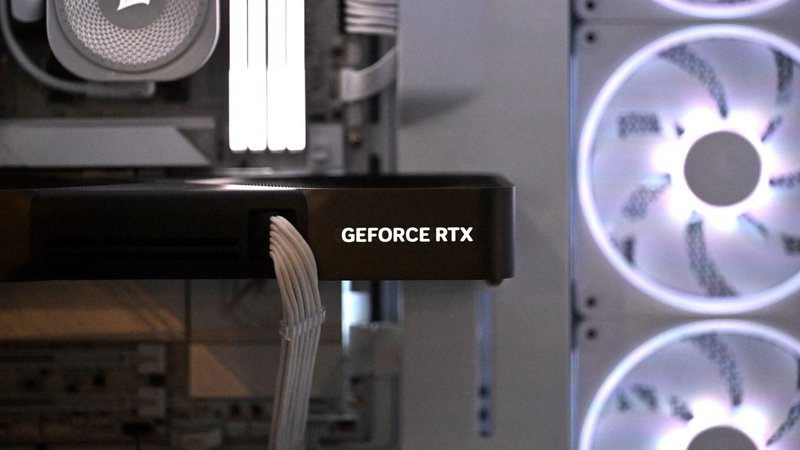
A repair shop received eight GeForce RTX 5090 and RTX 4090 cards with melted 16-pin connectors in two days. This is not an isolated statistic: it involves two successive generations in the same batch of failures, making the defect more relevant for those who view these cards not as gaming hardware but as engines for local inference workloads.
The 16-pin connector has become the thermal and mechanical bottleneck of high-end boards. When current draw is high and the contact surface is small, a connector that is not fully seated, bent, or under lateral stress increases electrical resistance and accumulates heat. The result is melting. In a workstation left running for fine-tuning or continuous inference, thermal cycling can amplify micro-movements and turn a marginal contact into a failure.
For those evaluating on-premise deployment, the issue is not cosmetic but tied to TCO. A self-hosted system built on consumer GPUs often looks cheaper than datacenter accelerators on paper, but if the power delivery chain fails after months of operation, the real cost includes downtime, returns, potential damage to the power supply, and manual labor to disassemble the node. A melted connector is not just a visual defect: it can damage the board, the power supply, and create a fire risk in a rack or closet. In on-premise contexts the risk grows because the machine may run unattended.
The case signals that high-end consumer boards are being pushed beyond the safety margins of their connector. Vendors could respond with more robust connectors, locking mechanisms, or per-pin current monitoring, but those changes take time. In the short term, the immediate beneficiaries are suppliers of higher-quality cables and power supplies, while repair shops become the first aggregator of field failure data—a role played in datacenters by maintenance teams. The losers are the individual teams or professionals who bought an RTX 5090 for AI workloads and now face longer downtime than expected.
Structurally, the case highlights the gap between consumer GPUs and datacenter accelerators in power delivery design. Datacenter cards are engineered for sustained loads and more tolerant power stages; consumer cards are not. This gap matters when AI teams bypass the cloud and build local machines. The connector flaw will not automatically push everyone back to the cloud, but it raises the hidden cost of the do-it-yourself on-premise path.
The fact that eight cards arrived at a single repair shop in two days suggests this is not a rare manufacturing defect but a load-dependent failure mode that emerges under real workloads. For those evaluating local LLM hardware, the power connector deserves the same attention as VRAM or compute power.



💬 Comments (0)
🔒 Log in or register to comment on articles.
No comments yet. Be the first to comment!