Panjit Pivots to AI and Robotics for Future Growth
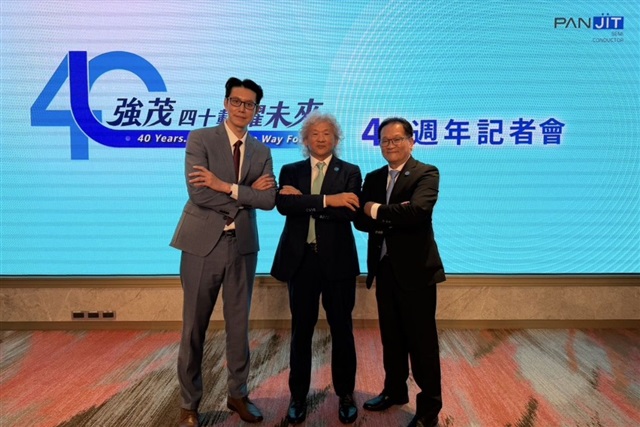
Panjit International, a Taiwanese company specializing in power chip manufacturing, has outlined its strategy for the next growth phase, decisively focusing on the artificial intelligence (AI) and robotics sectors. This strategic direction, announced by CEO Fang Ming-tsung, President Fang Ming-ching, and COO Edgar Chen, reflects the increasing demand for advanced and reliable electronic components necessary to power emerging technologies.
Panjit's decision underscores a broader trend in the global technology landscape, where AI and robotics are becoming fundamental drivers of innovation and development. For a power chip manufacturer, this means addressing challenges related to energy efficiency, heat dissipation, and robustness—crucial elements for the stable and high-performance operation of sophisticated AI and robotic systems.
The Critical Role of Power Components in the AI Ecosystem
Power chips are fundamental elements in any electronic system, but their importance is exponentially amplified in the context of artificial intelligence and robotics. Graphics Processing Units (GPUs) and dedicated AI accelerators, essential for training and Inference of Large Language Models (LLM) and for controlling robotic systems, require significant amounts of power. This power must be supplied stably, efficiently, and with minimal losses.
Ineffective or unstable power delivery can compromise not only performance but also the reliability and longevity of the hardware. High-quality power components help reduce overall energy consumption, better manage generated heat, and ensure systems operate within optimal parameters—a crucial aspect for infrastructures running 24/7.
Implications for On-Premise Deployments
For CTOs, DevOps leads, and infrastructure architects evaluating on-premise deployments of AI/LLM workloads, the quality and efficiency of power components are decisive factors. In a self-hosted environment, the Total Cost of Ownership (TCO) is heavily influenced not only by the initial hardware cost but also by operational expenses related to energy consumption and cooling. More efficient power chips directly translate into lower energy bills and reduced cooling system requirements, thereby lowering the overall TCO.
Furthermore, data sovereignty and the need for air-gapped environments for compliance and security make hardware reliability an absolute priority. An on-premise AI infrastructure demands robust and high-performing components that can sustain intensive workloads without interruption. Choosing suppliers like Panjit, who invest in specific solutions for AI and robotics, can offer advantages in terms of stability and performance for those building local stacks. For those evaluating on-premise deployments, AI-RADAR offers analytical frameworks on /llm-onpremise to assess these trade-offs.
Future Outlook and Technological Challenges
Panjit's strategic orientation towards AI and robotics highlights a clear vision for the future of the semiconductor market. With the continuous evolution of increasingly complex LLMs and the growing adoption of robotics in industrial and service sectors, the demand for specialized power components is set to increase. Companies in the sector will need to continue innovating to offer solutions that balance performance, efficiency, and cost.
Challenges include miniaturization, the integration of advanced power management functionalities, and the ability to operate under extreme environmental conditions. The competition to provide the most efficient and reliable silicon for the AI era will be intense, and a company's ability like Panjit to adapt and innovate in this space will be crucial for its long-term success.






💬 Comments (0)
🔒 Log in or register to comment on articles.
No comments yet. Be the first to comment!