Restricted AI GPU Procurement: A Chinese Nvidia Partner Under Scrutiny
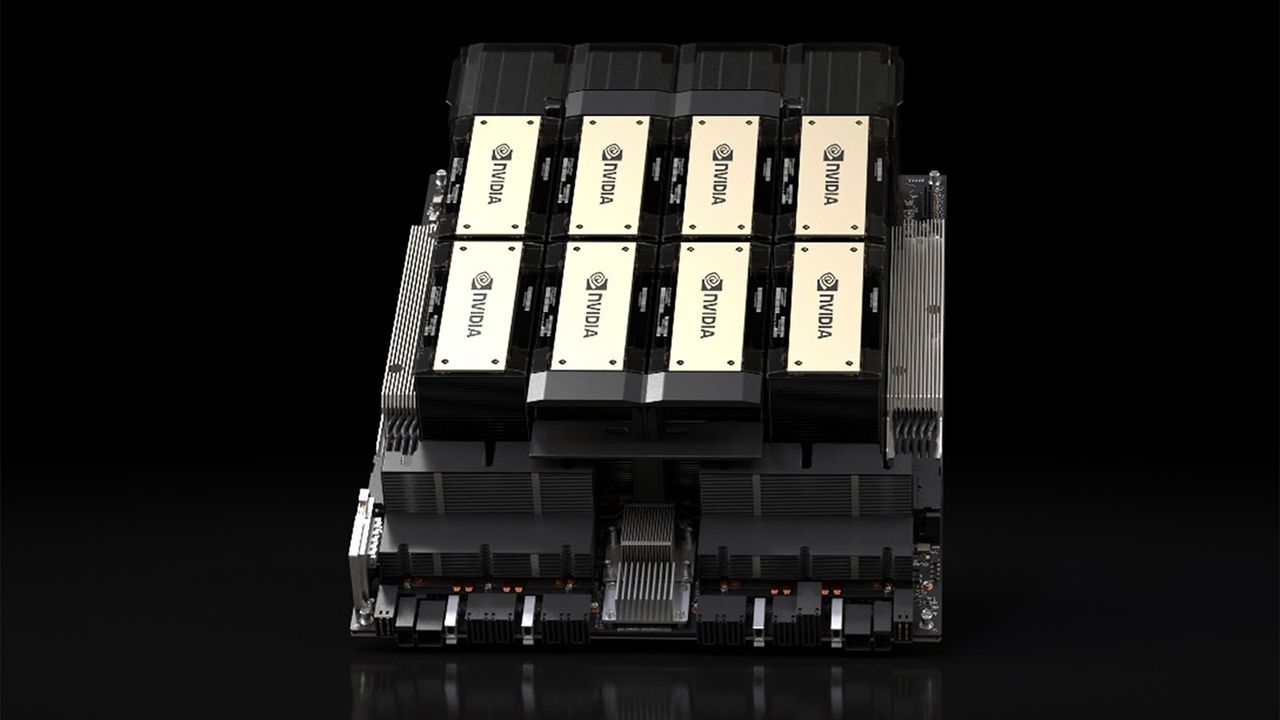
A recent incident in the global artificial intelligence hardware market has highlighted the increasing tensions and regulatory complexities surrounding the supply of critical components. A Chinese Nvidia cloud partner, whose identity was not specified in the source, acquired a significant batch of 300 servers equipped with restricted AI GPUs. The operation, valued at an estimated $92 million, had immediate repercussions on the stock market, with shares of data center supplier Sharetronic experiencing a drastic drop.
This event is part of a broader context of export controls and geopolitical strategies that directly influence the technological supply chain. News of Sharetronic's plummet followed a smuggling arrest involving Super Micro, suggesting a correlation between the investigations and the difficulties faced by suppliers in navigating the complex landscape of international regulations. The GPUs in question were generically identified as "Nvidia server GPUs," implying their destination for intensive artificial intelligence workloads.
The Implications of AI Hardware Restrictions
The "banned AI GPUs" referred to in the source are almost certainly those affected by export controls imposed by certain nations, particularly the United States, to limit China's access to advanced technologies that could have military or strategic applications. These restrictions aim to curb the development of AI computing capabilities in specific sectors, making it extremely difficult for Chinese companies to purchase latest-generation accelerators, such as certain variants of Nvidia H100 or A100 GPUs, which are essential for training and inference of Large Language Models (LLM) and other complex AI models.
For organizations seeking to implement AI solutions, the availability and access to high-performance hardware are critical factors. The scarcity of high-end GPUs, exacerbated by restrictions, can slow innovation and increase costs. This scenario prompts many companies to carefully evaluate their deployment strategies, considering alternatives such as optimizing existing models through quantization techniques or seeking less restricted hardware solutions, albeit with performance trade-offs.
Geopolitical Context and Data Sovereignty
The incident highlights how geopolitical decisions directly impact companies' ability to access the necessary infrastructure for AI workloads. For enterprises aiming for data sovereignty and full control over their operations, the on-premise deployment of LLMs and other AI systems is often the preferred choice. However, acquiring specific hardware, such as Nvidia server GPUs, becomes a significant challenge in a market fragmented by restrictions and trade tensions.
The difficulty in procuring top-tier hardware can push companies to explore hybrid options or invest in distributed computing solutions that leverage less powerful but more available resources. Planning the Total Cost of Ownership (TCO) for an on-premise AI infrastructure must now consider not only direct purchase and maintenance costs but also risks related to the supply chain and regulatory compliance. For those evaluating on-premise deployments, AI-RADAR offers analytical frameworks on /llm-onpremise to assess trade-offs and constraints, providing neutral guidance without direct recommendations.
Future Outlook for the AI Hardware Market
The AI hardware market is set to remain a fertile ground for geopolitical tensions and supply challenges. Demand for high-performance GPUs continues to outstrip supply, and export restrictions only exacerbate this disparity. Companies will need to adapt to an environment where supply chain resilience and the ability to navigate international regulations become key competencies.
This scenario could also stimulate innovation in alternative sectors, such as the development of local AI chips or software optimization for less powerful hardware. The case of the Chinese Nvidia cloud partner and Sharetronic's plummet is a clear indicator that control over AI hardware is not just a technological issue but a central element of global strategic competition. Deployment decisions, whether on-premise or cloud, will increasingly be influenced by these external factors, requiring careful evaluation of risks and opportunities.








💬 Comments (0)
🔒 Log in or register to comment on articles.
No comments yet. Be the first to comment!