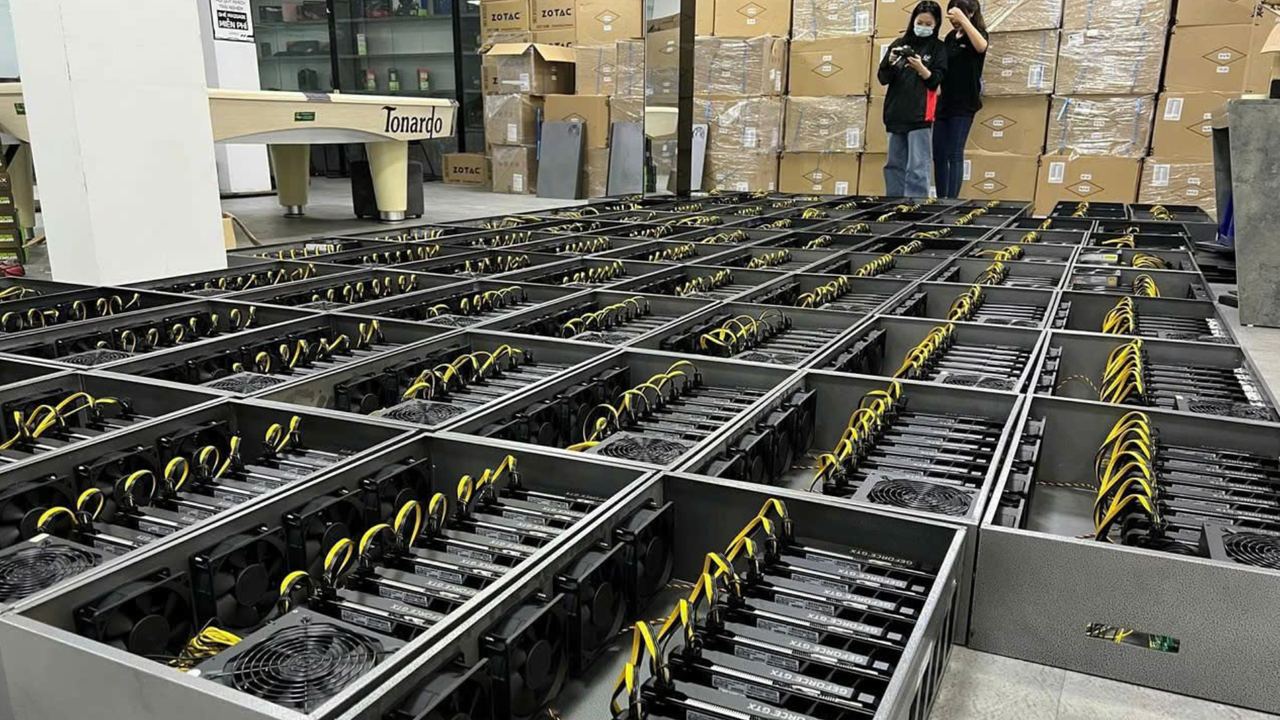
The GPU Mining Rush for AI-Compute and the Pearl Case
The recent introduction of the Pearl cryptocurrency, which aims to incentivize “mining” through AI-compute workloads, has sparked a significant rush to acquire dedicated GPUs. This phenomenon has once again highlighted the crucial role of graphics hardware, traditionally used for training and inference of Large Language Models (LLMs), within the digital currency landscape. The idea of monetizing GPU computing power through artificial intelligence-related tasks has attracted numerous operators, driving demand for high-end cards.
However, as often happens in the volatile world of cryptocurrencies, initial enthusiasm has quickly collided with economic reality. Despite the appeal of a model that links mining to supposed artificial intelligence workloads, profitability for miners is already showing strong signs of decline. This scenario raises important questions about the long-term sustainability of such initiatives and the stability of returns on investments in dedicated hardware.
Technical Details and Profitability Decline
An emblematic example of this downturn is represented by the performance of the NVIDIA RTX 5090, a leading GPU in the consumer and prosumer segment, often considered for intensive workloads. According to available data, the daily revenue generated by a single RTX 5090 for Pearl mining has halved since April, now standing at approximately $17.19. This significant drop in such a short period highlights the speed with which market conditions can change, directly impacting the Total Cost of Ownership (TCO) and the profitability of mining operations.
For operators who have invested in mining rigs, TCO includes not only the initial cost of GPUs and other hardware components but also ongoing operational expenses, primarily electricity. A halving of daily revenues drastically impacts the investment's payback period and its ability to generate profit. This aspect is crucial for anyone evaluating the use of high-performance hardware, whether for speculative purposes like mining or for more structured enterprise AI workloads.
Implications for On-Premise AI Infrastructure
The Pearl story offers insights for companies considering the deployment of on-premise AI infrastructures. While cryptocurrency mining and LLM inference are different domains, both heavily depend on the availability and efficiency of GPU hardware. The volatility observed in Pearl mining underscores the importance of rigorous strategic planning when investing in silicon for AI. Decisions must be based on sustainable business models and a thorough TCO analysis, considering not only initial CapEx but also long-term OpEx, scalability, and data sovereignty.
Organizations opting for self-hosted solutions for their LLMs seek control, security, and cost predictability. Unlike mining, where revenues can fluctuate wildly, an on-premise deployment for AI aims to provide stable and measurable computing capabilities for critical applications. For those evaluating on-premise deployments for more stable AI workloads, AI-RADAR offers analytical frameworks on /llm-onpremise to assess the trade-offs between initial and operational costs and data sovereignty, providing tools for informed decisions.
Future Prospects and Strategic Decisions
The Pearl case serves as a warning about the speculative nature of some uses of GPU computing power. While innovation in cryptocurrencies continues to explore new models, companies requiring reliable AI-compute capabilities must maintain a pragmatic approach. The choice between cloud and on-premise infrastructures for AI cannot ignore a careful evaluation of specific workload requirements, compliance needs, and long-term strategy.
Investing in hardware like the latest generation GPUs requires a clear vision of the return on investment and its stability. Whether it's powering a mining algorithm or performing inference for a proprietary LLM, efficient management of computational resources remains an absolute priority for CTOs and infrastructure architects. The lesson from Pearl reinforces the idea that, in the world of AI, operational stability and economic predictability are often more valuable than rapid, volatile gains.









💬 Comments (0)
🔒 Log in or register to comment on articles.
No comments yet. Be the first to comment!