
The Evolution of the PCB Industry and Supply Chain Challenges
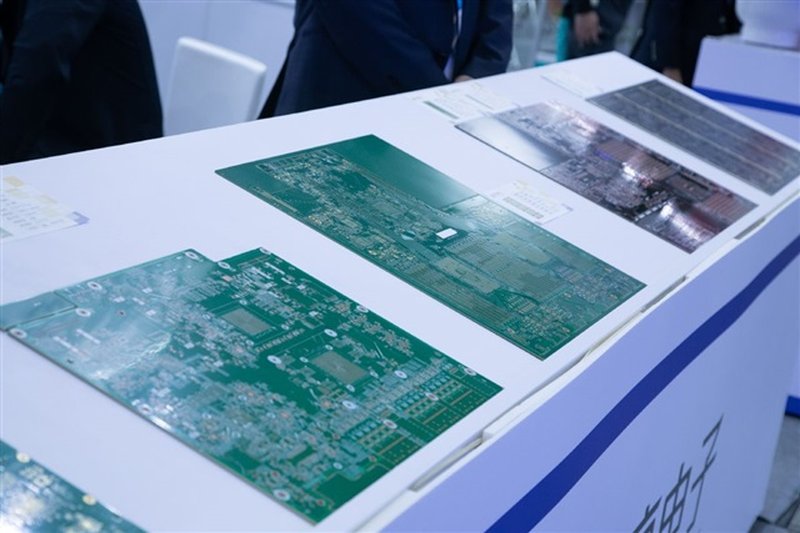
Thailand's Printed Circuit Board (PCB) industry is undergoing an evolutionary phase, aiming to position itself in higher value-added market segments. However, this growth is accompanied by persistent gaps in the local supply chain. A significant finding reveals that as many as 46% of Thai PCB manufacturers source less than 20% of their components locally, indicating a strong reliance on external sources for most raw materials and semi-finished products.
PCBs are the backbone of every modern electronic device, from simple home appliances to complex servers and high-performance GPUs, which are fundamental for Large Language Models (LLM) workloads and other artificial intelligence applications. The fragmentation and dependence on global suppliers, often concentrated in a few regions, expose the entire tech industry to risks related to disruptions, price fluctuations, and geopolitical tensions. For companies planning AI infrastructure, understanding these dynamics is crucial.
Impact on On-Premise AI Deployments and TCO
For organizations evaluating on-premise AI deployments, the stability and resilience of the hardware supply chain are critical factors. The availability of crucial components, such as the PCBs that form motherboards and graphics cards (GPUs), directly influences procurement times, costs, and ultimately, the Total Cost of Ownership (TCO) of the infrastructure. An excessive reliance on external suppliers, as highlighted in the Thai context, can lead to longer lead times and higher costs for acquiring specialized hardware, such as GPUs with high VRAM necessary for LLM inference and fine-tuning.
Infrastructure architects and CTOs must consider that supply chain vulnerabilities can compromise the ability to scale rapidly or replace faulty components. This is particularly relevant for environments requiring high availability and consistent performance. Choosing a self-hosted approach for AI, while offering advantages in terms of control and customization, demands meticulous planning that accounts for the availability and cost of silicio and other fundamental hardware components.
Data Sovereignty and Infrastructural Resilience
The issue of the supply chain is closely intertwined with data sovereignty and security. Although the source does not directly refer to data localization, the physical security of the hardware on which data resides is a fundamental prerequisite. An on-premise AI infrastructure, often chosen to ensure control over sensitive data and comply with regulations like GDPR, greatly benefits from a transparent and reliable hardware supply chain.
For companies operating in regulated sectors or handling critical information, the ability to trace the origin of components and mitigate risks of counterfeiting or tampering is essential. Air-gapped environments, for example, require not only network isolation but also certainty that the hardware itself has been manufactured and assembled according to high security standards. The resilience of the PCB supply chain, therefore, is not just an economic or logistical matter, but a pillar of the security and compliance of the entire AI infrastructure.
Future Perspectives and Strategic Trade-offs
The situation in Thailand's PCB industry reflects a global trend towards regionalization and diversification of supply chains, driven by an awareness of the risks associated with excessive geographical concentration. For technology decision-makers, evaluating on-premise AI deployments involves a thorough analysis of the trade-offs between costs, performance, control, and supply chain resilience.
Investing in greater vertical integration or supporting the development of local manufacturing capabilities can reduce external dependence, but often entails higher initial costs or longer development times. However, the long-term benefits in terms of control, security, and operational stability can outweigh these obstacles. For those evaluating on-premise deployments, analytical frameworks exist to assess these trade-offs, considering not only the technical specifications of the hardware but also the macroeconomic and geopolitical dynamics that influence the availability and TCO of AI infrastructure.








💬 Comments (0)
🔒 Log in or register to comment on articles.
No comments yet. Be the first to comment!