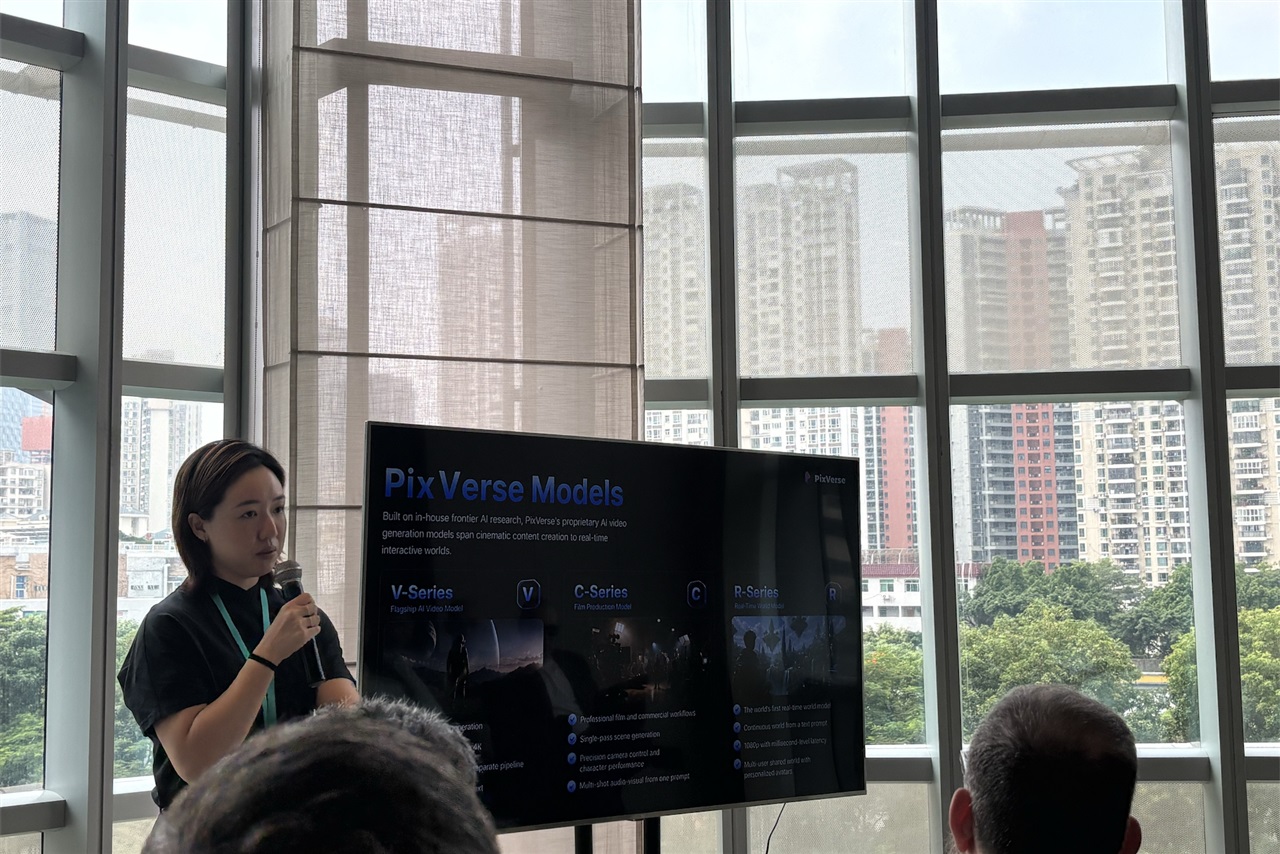
The Rise of AI Video Generation: The Pixverse Case
Pixverse AI is entering the artificial intelligence video generation landscape, proposing a solution that promises speed and economic efficiency. In a rapidly evolving market, where the demand for personalized and large-scale visual content is constantly growing, the ability to produce videos quickly and affordably represents a significant distinguishing factor. This offering is part of a broader trend that sees Large Language Models (LLM) and generative models extending their capabilities from text and images to the video domain, opening new frontiers for content creation.
However, the introduction of such powerful technologies is not without complexities. The same source that highlights its advantages in terms of performance and accessibility also raises persistent questions regarding ethical implications. These concerns, often related to content authenticity, intellectual property, and potential misuse, have become a central element in the debate on the adoption of generative AI, especially in enterprise contexts where reputation and compliance are paramount.
Technical Challenges and Deployment Trade-offs
AI-driven video generation is a computationally intensive process, requiring significant hardware resources. To achieve the speed and economic efficiency promised by solutions like Pixverse AI, high-end GPUs with ample VRAM, such as NVIDIA A100 or H100, are often necessary, capable of handling complex models and large data volumes. Throughput and latency become crucial metrics for evaluating the effectiveness of a deployment, whether on-premise or cloud-based.
For organizations considering a self-hosted deployment, evaluating the Total Cost of Ownership (TCO) is fundamental. An on-premise infrastructure offers advantages in terms of data sovereignty, direct control over hardware, and potentially lower operational costs in the long run, especially for consistent and predictable workloads. However, it requires a significant initial investment (CapEx) for purchasing servers, GPUs, and cooling systems, in addition to specialized skills for managing and optimizing the AI pipeline. The choice between cloud and on-premise therefore depends on a careful analysis of the trade-offs between flexibility, scalability, costs, and security and compliance requirements.
The Weight of Ethical Considerations in Generative AI
The ethical concerns associated with AI-driven video generation are numerous and complex. Among the most discussed are the creation of "deepfakes," altered or falsified video content that can be used for misinformation or fraud, and issues related to copyright and intellectual property of the data used for model training. The provenance of training datasets and transparency regarding generation processes are crucial aspects for ensuring the integrity and reliability of the produced content.
Furthermore, questions arise about the potential amplification of biases present in training data, which could lead to the generation of discriminatory or stereotypical videos. For businesses, addressing these challenges means implementing robust AI governance frameworks, adopting responsible use policies, and investing in technologies for detecting artificially generated content. Compliance with regulations like GDPR and future AI laws becomes a non-negotiable requirement for ethical and sustainable adoption.
Evaluating Enterprise Adoption: Performance, Costs, and Responsibility
For CTOs, DevOps leads, and infrastructure architects, evaluating solutions like Pixverse AI requires a holistic approach that goes beyond mere speed and cost metrics. It is essential to consider how these technologies integrate into the existing IT ecosystem, what the security requirements are for air-gapped environments or those with stringent data sovereignty constraints, and what the long-term implications are for TCO. The ability to perform Inference locally, maintaining control over data and models, is often a determining factor for sectors such as finance, healthcare, or public administration.
AI-RADAR focuses precisely on these dynamics, providing analyses and frameworks to evaluate the trade-offs between on-premise deployment and cloud solutions for LLM workloads. The final decision is never straightforward, but the result of careful consideration of expected performance, real costs, compliance requirements, and the ability to autonomously manage the entire development and deployment pipeline. Innovation in AI video generation is undeniable, but its responsible and strategic adoption requires a clear vision of both constraints and opportunities.






💬 Comments (0)
🔒 Log in or register to comment on articles.
No comments yet. Be the first to comment!