AI to Unlock Renewable Energy
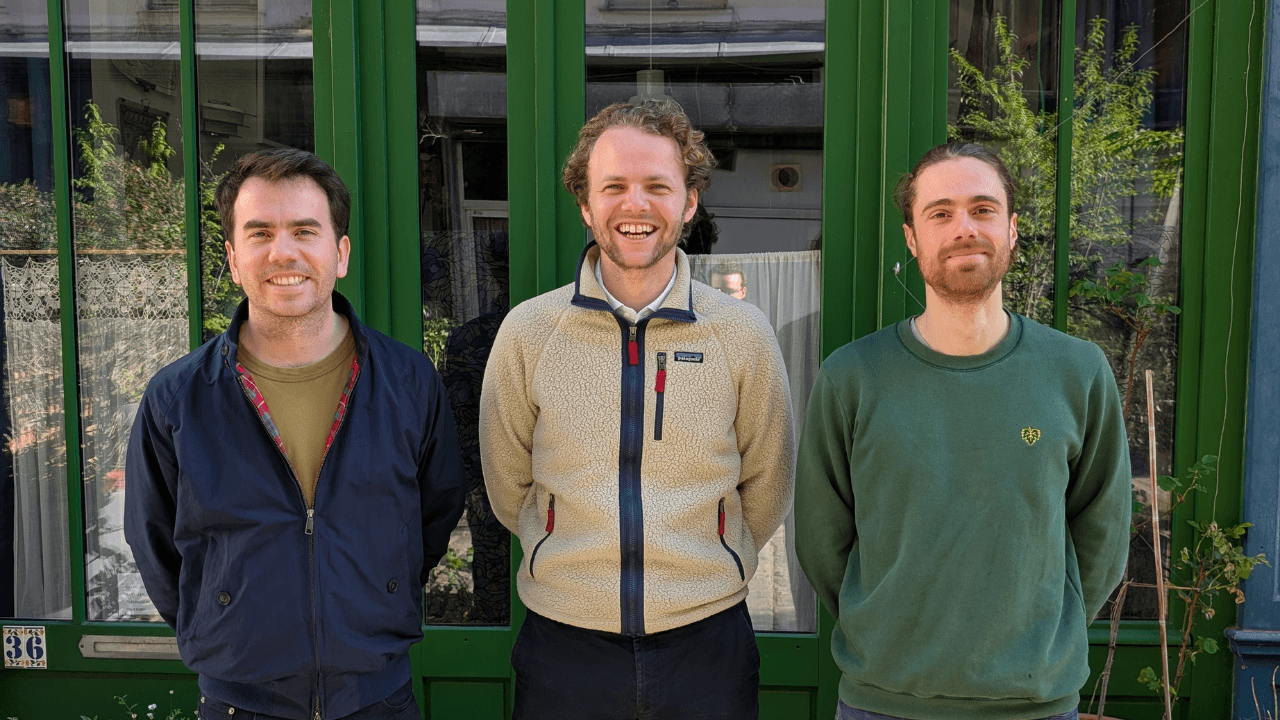
Plume, a Franco-American startup specializing in geospatial artificial intelligence for the renewable energy sector, has announced a €3.3 million funding round. The investment was led by AENU, with participation from Y Combinator, Kima Ventures, Raise Phiture, Better Angle, and Collab Fund. Founded by Edouard Labarthe, formerly of Palantir, and Marc Watine, a former Harvard researcher in AI and geospatial technology, the company aims to revolutionize the development processes for solar, wind, and energy storage projects.
While the renewable energy sector is crucial for the global energy transition, the development of new facilities is often hampered by lengthy and complex processes. The planning and permitting phases can take years, due to the need to manually cross-reference an enormous amount of geographical, regulatory, and environmental data. Plume aims to address this inefficiency by accelerating the entire project lifecycle, from prospecting to grid connection.
The Technological Core: AI Agents and Geospatial Data
Plume's platform centralizes over 150 continuously updated geographical datasets. In addition, it deploys AI agents capable of analyzing thousands of unstructured documents, such as municipal deliberations, permit archives, environmental studies, and grid development plans. This integrated approach overcomes the challenges associated with managing fragmented information, which traditionally requires large teams and months of manual work.
For the development of a renewable energy project, it is essential to correlate zoning data, grid capacity, protected areas, and land parcel maps. In France, for example, this work involves nearly a hundred layers of geographical data, in addition to urban planning documents and agricultural chamber records. Plume's AI agents can synthesize this complex information, providing a site analysis in seconds, where previously weeks of manual work were required. This not only speeds up the process but also improves site selection and early risk detection, reducing unforeseen setbacks in the final stages of development.
Implications for Deployment and Data Sovereignty
The adoption of AI-powered platforms for managing critical data, such as geospatial and regulatory information, raises important considerations for enterprises. The sensitive nature of this data, often linked to national infrastructure and stringent compliance requirements, makes data sovereignty and control over the deployment environment priority factors. Although Plume offers a solution based on AI agents, organizations implementing it must carefully evaluate where and how data is processed and stored.
For companies operating in regulated sectors, the choice between cloud and self-hosted deployment, or a hybrid model, is crucial. An on-premise or air-gapped approach for managing specific AI modules or sensitive datasets can ensure greater control, security, and adherence to local regulations, such as GDPR. This directly impacts the Total Cost of Ownership (TCO) and long-term strategy. AI-RADAR offers analytical frameworks on /llm-onpremise to evaluate the trade-offs between these different deployment options, considering aspects like latency, throughput, and VRAM requirements for Large Language Models Inference, should these AI agents utilize them.
Future Prospects and Plume's Expansion
According to Plume's clients, the platform enables site analyses to be conducted up to 20 times faster and with three times greater accuracy compared to traditional methods. This translates into increased capital investment efficiency and a significant reduction in delays. Currently, the solution is already deployed in France, Spain, Romania, and the Czech Republic, with plans to expand into Italy and the United States in 2026.
The recently secured funding will be allocated to team expansion, launching into new European markets, and developing additional functionalities, such as platform stakeholder mapping, AI-based competitive intelligence, and automated drafting of permit applications. The company is actively recruiting professionals in the fields of AI systems, geospatial engineering, and energy analysis, solidifying its role as a key player in the digitalization and acceleration of the global energy transition.








💬 Comments (0)
🔒 Log in or register to comment on articles.
No comments yet. Be the first to comment!