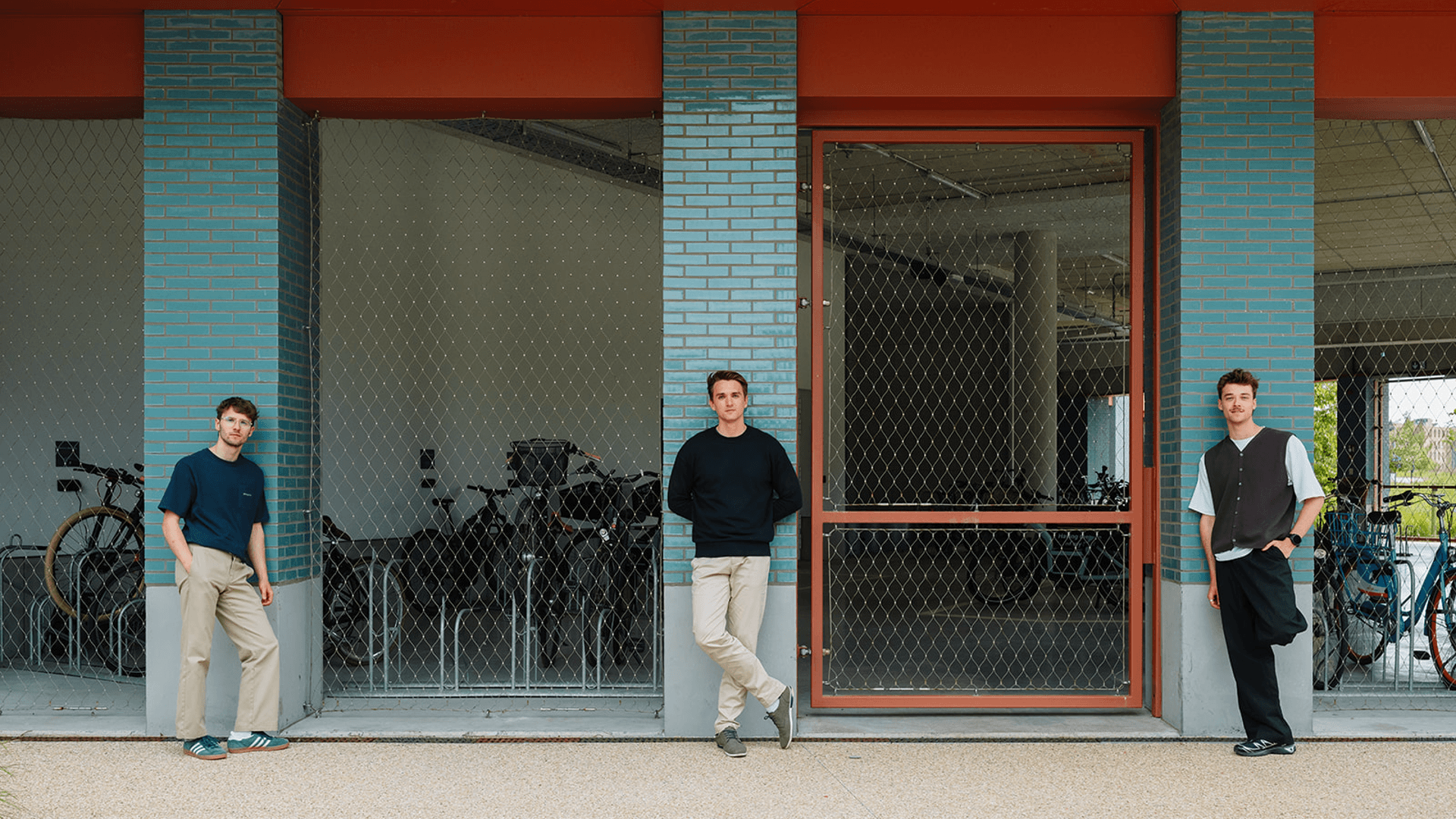
Just 14 months after a $2.2 million initial round, Belgian startup Polysense has closed an oversubscribed $10.7 million seed funding. The capital fuels the international rollout of a quality control and process optimization platform already running on production lines at companies such as Agristo, Darta, and Poppies Bakeries across Europe, the United States, and the Middle East.
The system’s core is continuous in-line inspection: cameras and sensors capture real-time imaging data, while models trained also on synthetic data detect deviations and, via the Polysense AutoControl module, automatically adjust machine parameters. The stated goal is to stop waste before it happens, in a sector where, according to Eurostat, food and beverage manufacturing accounts for 19% of the EU’s total food waste.
Why the edge is the real story
For those tracking industrial AI deployment models, this case is emblematic: the entire inference stack runs at the edge of the production line, not in the cloud. “Continuous in-line” inspection imposes latency constraints that no round trip to a data center could satisfy, and operational data stays inside the plant. That is more than a detail. It means that Polysense’s platform – and dozens of similar solutions emerging in food manufacturing – shifts the computational center of gravity away from the canons of remote SaaS and closer to a pure on-premise, or strictly edge, model. For plant managers, this translates into complete control over process data, immunity to connectivity hiccups, and a TCO that slashes recurring costs for external transmission and storage.
The architecture is not publicly disclosed, but it is plausible that Polysense entrusts inference to computer vision models optimized to run on compact hardware: embedded GPUs, industrial compute units, or even dedicated accelerators. It is the classic scenario where quantization and lightweight models become competitive levers, because on the production line every millisecond counts and onboard space is limited. Not coincidentally, the company emphasizes the use of synthetic data: generating artificial data reduces dependence on expensive real-world datasets and trains networks that can operate with a reduced footprint at runtime.
Who wins and who loses in the on-prem race
Polysense’s growth – from pilots to multinational commercial deployments in a single year – signals a structural shift. The big public cloud providers are not locked out, but their role is sliding toward managing aggregated data and periodic model training, while the critical inference consolidates on the physical facility. Factory automation integrators, embedded hardware manufacturers, and developers of frameworks capable of orchestrating distributed inference across heterogeneous lines emerge as winners. Platforms that assume a constant flow of data to remote servers lose relevance, at least during daily production.
Then there is a sovereignty dimension that matters more in food manufacturing than many assume: recipes, baking parameters, and quality tolerances are closely guarded intellectual property. Keeping data in-house, without transiting through third‑party clouds, becomes a contractual and compliance requirement that accelerates adoption of edge‑native solutions.
The next lap in the local hardware race
With $10.7 million in the bank and plans to cover more stages of the production process, Polysense will need to multiply inference points. That translates into growing demand for on‑premise compute capacity – not centralized servers, but distributed units attached to individual lines. The geographic expansion into the United States and the Middle East also raises questions of hardware supply chains and local technical support, a test bed for the maturity of the entire industrial AI ecosystem.
For those accustomed to weighing cloud, on‑premise, and hybrid trade‑offs, Polysense’s trajectory shows that local inference is not a niche reserved for a few pioneers but a backbone of the next wave of automation. The connected factory is not the one that sends everything to the cloud, but the one that processes on the spot, without giving up periodically updated intelligent models.







💬 Comments (0)
🔒 Log in or register to comment on articles.
No comments yet. Be the first to comment!