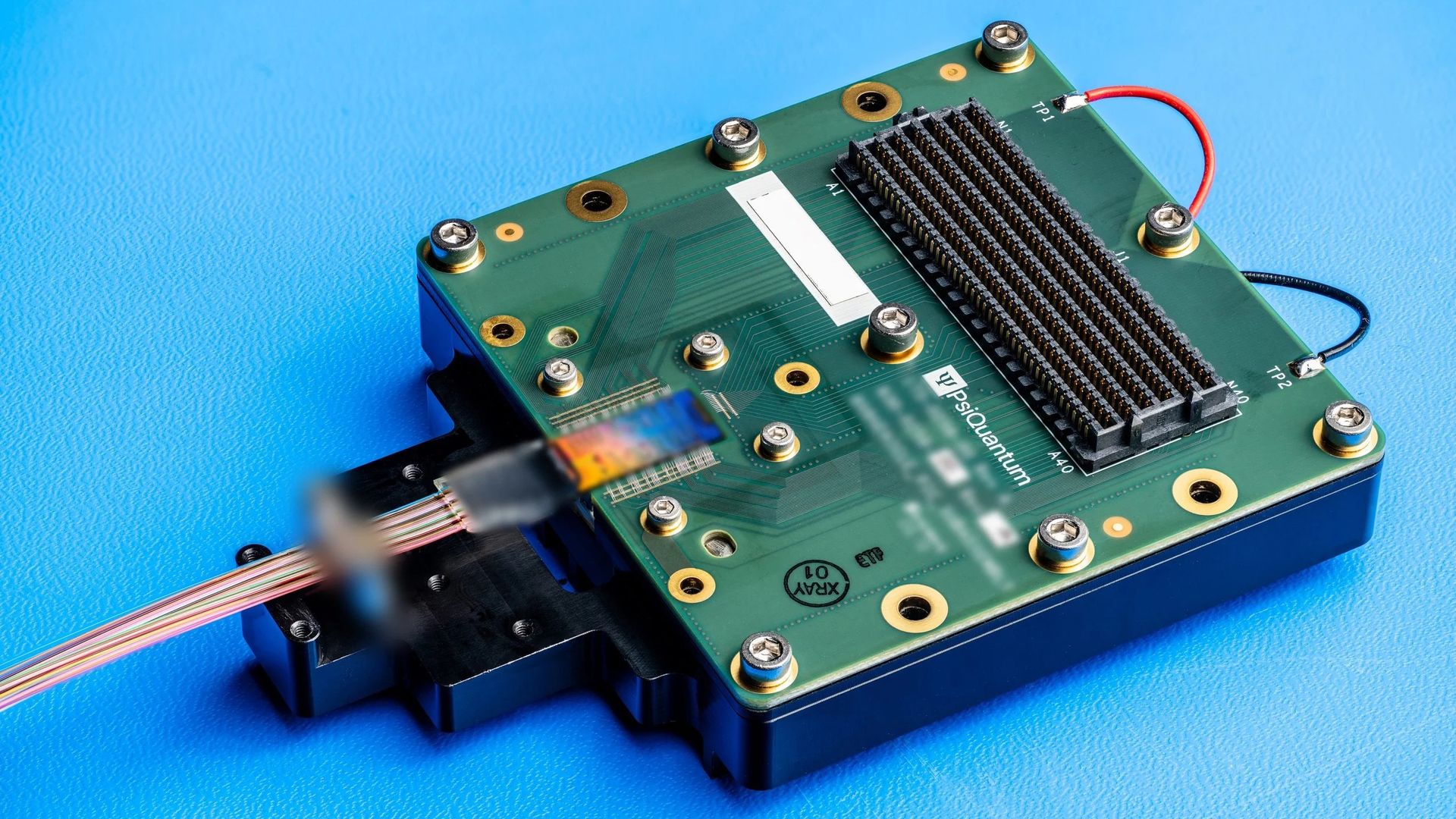
PsiQuantum has turned its photonics expertise into an optical switch aimed at the GPU networks inside AI data centers. The lab prototype is an 8x8 device that loses less light than rival designs, and the company says it plans to build larger versions. This is not a conventional networking startup but a company known for photonic quantum computing. The shift is telling: expertise in photonic integrated circuits developed for qubits is becoming a resource for classical infrastructure.
The critical issue is interconnect between GPUs. In clusters used for training and inference of large models, communication between accelerators often becomes a more severe bottleneck than compute itself. High-speed electrical networks consume energy, introduce latency, and impose rigid topologies. Optical switches promise to reduce conversion between electrical and optical domains, but the cost is signal loss and fabrication complexity. A prototype that loses less light than competitors, even at 8x8 scale, is a meaningful signal because optical loss accumulates with port count and limits fabric size.
There is a thesis worth developing: photonics is no longer just a niche for long-haul telecommunications, but is entering the heart of the data center. PsiQuantum is not the first company to explore optical switches for AI, but it arrives with a different background: the need to control phase and amplitude of photons at very small scales for qubits. That kind of precision is exactly what low-loss switches require. If the promise holds, the beneficiaries would not only be hyperscalers but also those designing self-hosted infrastructure: more efficient optical networks could increase GPU utilization in smaller clusters, reducing pressure to consolidate into centralized clouds.
Incentives also shift for traditional data center switch vendors. An architecture that moves switching into the optical domain reduces the role of conventional electronic switches and changes buying criteria: no longer just throughput and port density, but also signal loss, maturity of photonic packaging, and roadmap toward larger scale. Those selling high-capacity electrical gear today must decide whether to integrate photonics, acquire startups, or risk being overtaken by players with different fabrication expertise.
For those evaluating on-premise deployments, there are trade-offs between capital costs, energy consumption, and management complexity; AI-RADAR offers analytical frameworks at /llm-onpremise to dig into these aspects. The structural point remains: AI is driving innovation in network components not as a side effect but as a prerequisite. The fact that a photonic quantum computing company is devoting resources to a GPU switch shows how central interconnect has become.






💬 Comments (0)
🔒 Log in or register to comment on articles.
No comments yet. Be the first to comment!