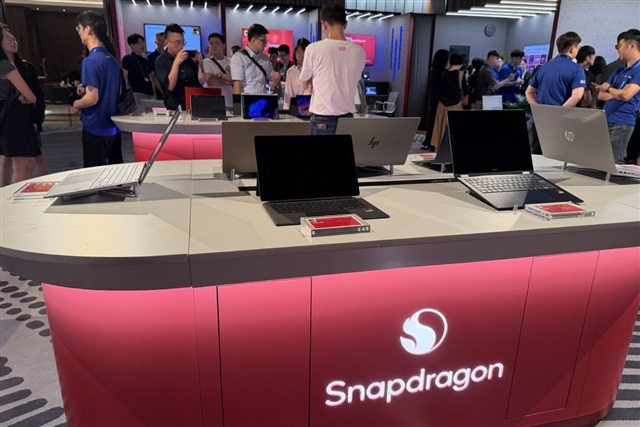
Qualcomm and Snapdragon C: A New Player in the Entry-Level AI PC Segment
Qualcomm has announced the positioning of its Snapdragon C platform, designed to address the emerging segment of AI-capable PCs at the entry-level. This initiative aims to fill a market gap by offering dedicated artificial intelligence hardware solutions directly on devices. A key aspect of Qualcomm's strategy is its clear distinction from the Apple ecosystem, indicating a focus on diverse environments and broad adoption.
This strategic move by Qualcomm underscores the growing importance of on-device AI processing, a trend that is redefining hardware and software architectures in the industry. The goal is to make artificial intelligence capabilities more accessible and widespread, extending them beyond data centers and cloud services to reach a broader audience of users and applications.
The Strategic Positioning of Snapdragon C
The concept of an "entry-level AI PC gap" refers to the need for hardware solutions that can efficiently and affordably execute basic AI workloads without requiring the power or cost of high-end systems. Snapdragon C aims to meet this demand, enabling features such as the acceleration of Small Language Models or real-time image and video processing directly on the device. This approach is crucial for applications that benefit from low latency and enhanced privacy.
Qualcomm's statement that the platform is "not tied to Apple" highlights its intention to compete and innovate in the vast market of Windows PCs and other operating systems. This positioning opens new opportunities for hardware manufacturers and software developers to integrate native AI capabilities into a wider range of devices, free from the restrictions or specificities of a single proprietary ecosystem.
The Importance of On-Device AI for Enterprises
For CTOs, DevOps leads, and infrastructure architects, the expansion of on-device AI, or edge AI, represents a significant evolution. Running AI workloads directly on end devices offers substantial advantages in terms of data sovereignty, reducing the need to transfer sensitive information to the cloud. This is particularly relevant for sectors with stringent compliance requirements or for air-gapped environments.
Furthermore, local Inference can drastically reduce latency, improving user experience and enabling new real-time applications that would be impractical with cloud-based processing. Although entry-level devices have limitations in computing power and VRAM, model optimization through techniques like Quantization allows for the execution of smaller, optimized LLMs. For those evaluating on-premise deployments or hybrid strategies, AI-RADAR offers analytical Frameworks on /llm-onpremise to assess the trade-offs between costs, performance, and security requirements.
Future Prospects and Market Impact
Qualcomm's entry with Snapdragon C into the entry-level AI PC segment intensifies competition with established players like Intel and AMD, who are also heavily investing in processors with integrated AI accelerators. This market dynamic is set to stimulate innovation, leading to more performant and energy-efficient devices for AI processing.
In the future, we may witness an even greater democratization of AI capabilities, with LLMs and generative models operating more smoothly and autonomously on everyday PCs. This will not only enhance individual productivity but also pave the way for new enterprise applications that leverage distributed artificial intelligence, reducing reliance on centralized cloud infrastructures and offering greater control and flexibility.





💬 Comments (0)
🔒 Log in or register to comment on articles.
No comments yet. Be the first to comment!