
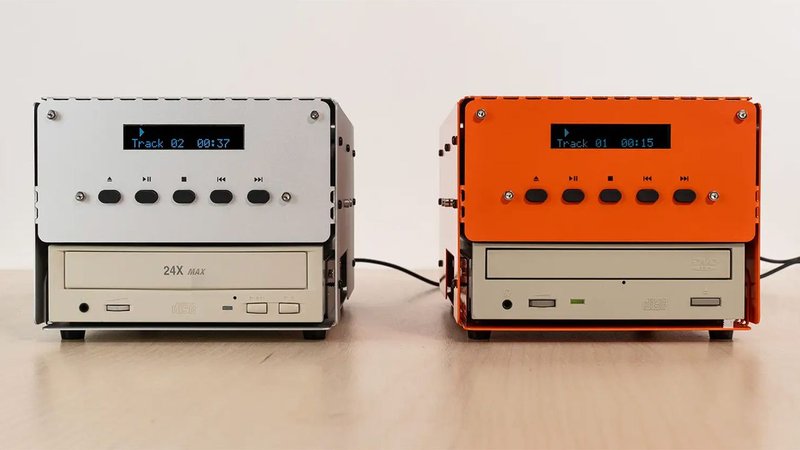
The whining groan of a graphics card under load is one of the most loathed sounds among hardware enthusiasts. Yet an anonymous engineering student decided to tackle it head-on, turning that electrical hum into a genuine symphony. The story, bouncing around forums and social media, is more than a maker curiosity: it opens an unexpected window into the physics of modern workloads, especially what happens when AI inference pounds hard on silicon.
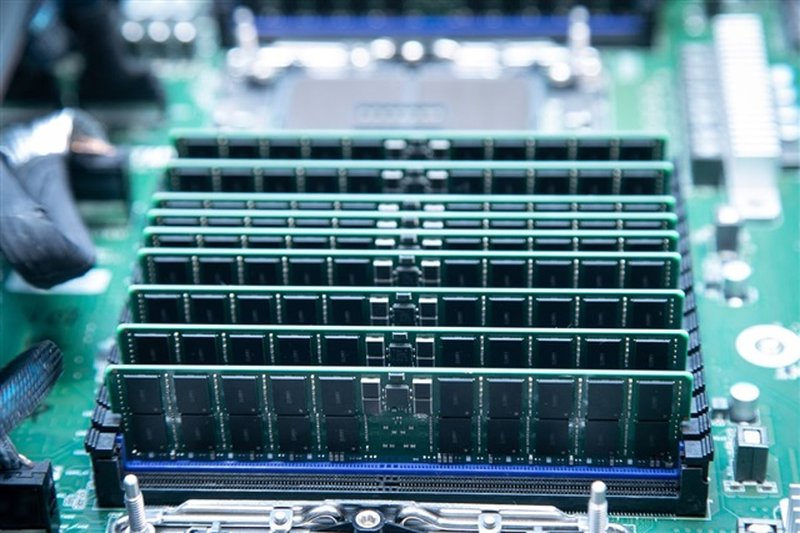
The phenomenon is called coil whine. It's produced by inductors and capacitors vibrating at audible frequencies when traversed by intense, rapidly changing currents. In a GPU crunching through LLM training or sustained inference batches, the voltage regulation modules (VRMs) oscillate quickly to control voltage, squeezing hundreds of watts into a few square centimeters. The result is a hiss, a crackle, or a buzz that many users mistake for a defect. It isn't: it is the very material sound of computation forcing its way out of the digital domain.
Anyone running on-premise machines knows this well. In an office server rack or a home lab, the acoustic signature of workloads is not just a comfort issue. It can become an inadvertent indicator of system state—a noise spike signaling a burst of GPU activity, a shift in pitch accompanying a memory bottleneck. The student's project, mapping electrical patterns onto musical notes, takes this idea to the extreme: if coil whine is unavoidable, why not make it pleasant, or at least informative?
The hack has deep roots in hardware culture. From LED fans to transparent cases, the modding community has always sought to reclaim the aesthetics—and the sonic aesthetics—of components. Now, with the explosion of self-hosted LLMs, the acoustic challenge returns to center stage. The most powerful consumer cards, such as NVIDIA's GeForce RTX 90-class GPUs or AMD Radeon Pro workstations, can turn into veritable sirens when hammered by continuous prompt processing. Those who choose to keep their data at home and reject the cloud must live with this physicality. Some opt for liquid cooling, which also reduces fan noise but doesn't completely eliminate coil whine; others build soundproof cabinets; still others simply crank up their headphones.
Beneath the student's anecdote lies a structural signal. The rise of on-premise LLMs—from LLaMA and Mistral to locally optimized Yi variants—is shifting attention away from raw energy throughput toward a more complex set of operational metrics. Noise is one of them: in a co-working space or a small business, a server that shrieks under load may be as unacceptable as an inflated electricity bill. Musical coil whine reminds us that the total cost of ownership of an AI setup isn't measured solely in teraflops and tokens per second, but also in decibels and the social acceptability of the hardware.
There's a subtle irony here. The same technology that enables a Transformer to generate coherent text, distilling knowledge from billions of parameters, produces a hum that can be sampled and played. It is as if the physical infrastructure of artificial intelligence peeks out from its metal box, claiming a place in the real world. And perhaps, for those deploying models locally, that coil whine song is the soundtrack of technological sovereignty.




💬 Comments (0)
🔒 Log in or register to comment on articles.
No comments yet. Be the first to comment!